Parsa Behnoosh, Zatsiorsky Vladimir M, Latash Mark L
Department of Kinesiology, Rec.Hall-268N, The Pennsylvania State University, University Park, PA, 16802, USA.
Moscow Institute of Physics and Technology, Moscow, Russia.
Exp Brain Res. 2017 Feb;235(2):457-470. doi: 10.1007/s00221-016-4806-2. Epub 2016 Oct 24.
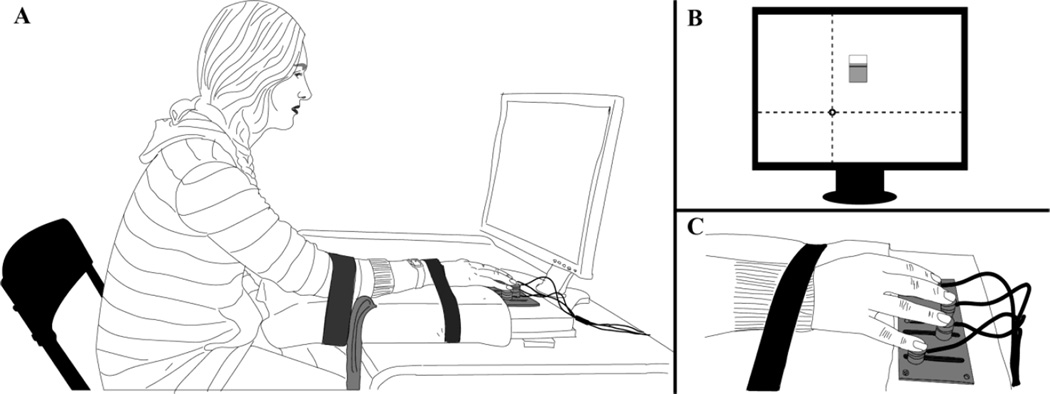
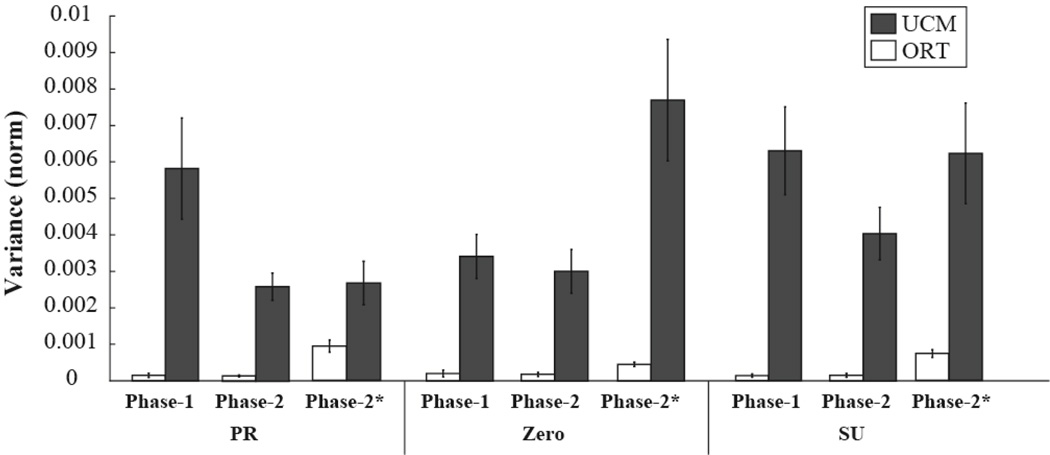
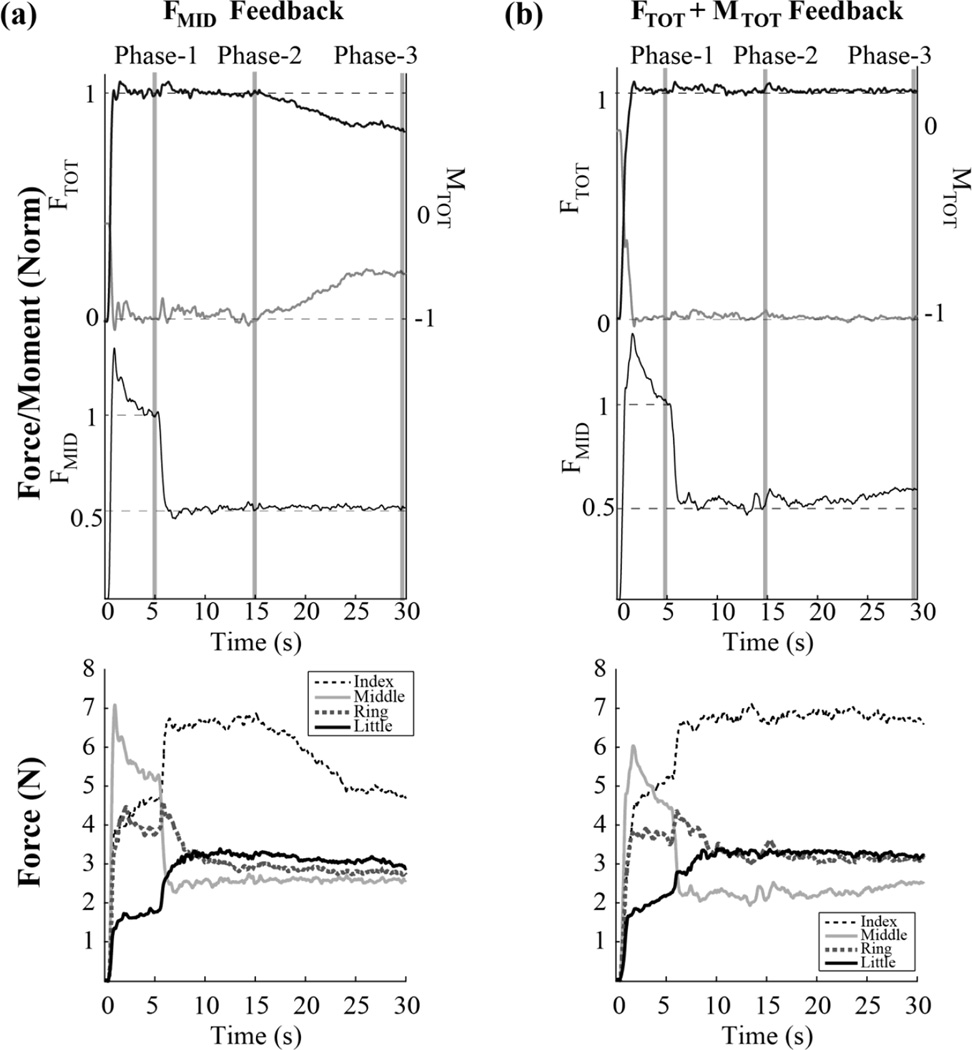
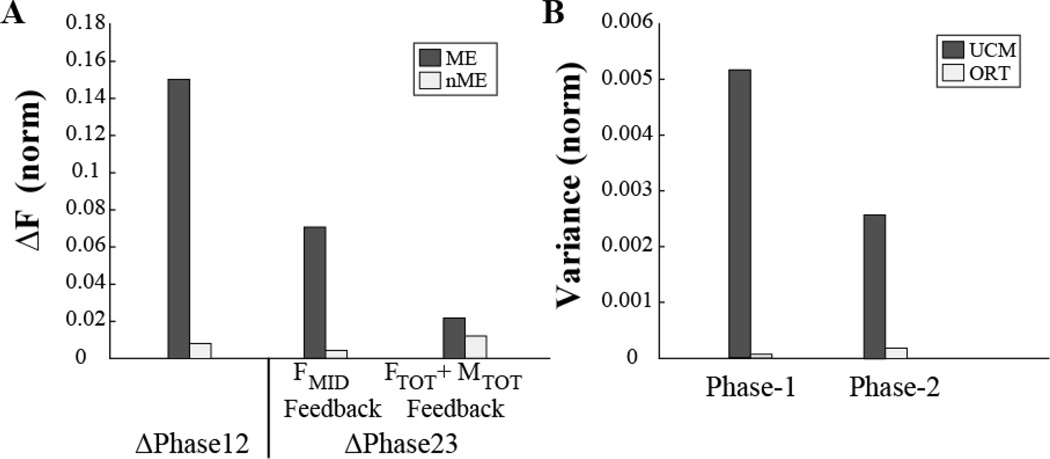
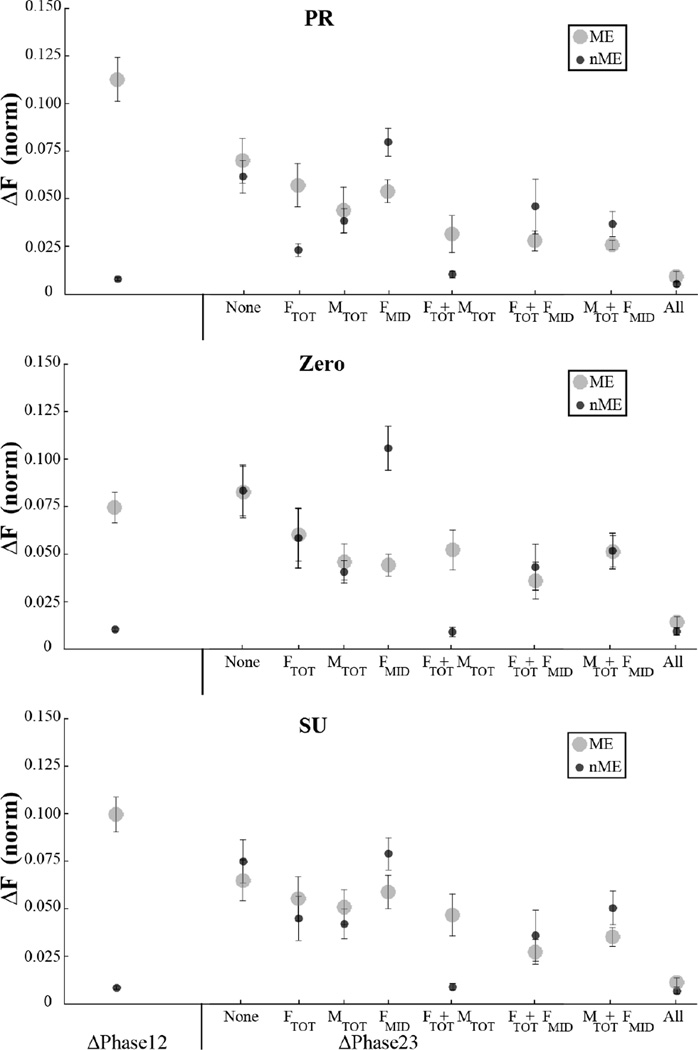
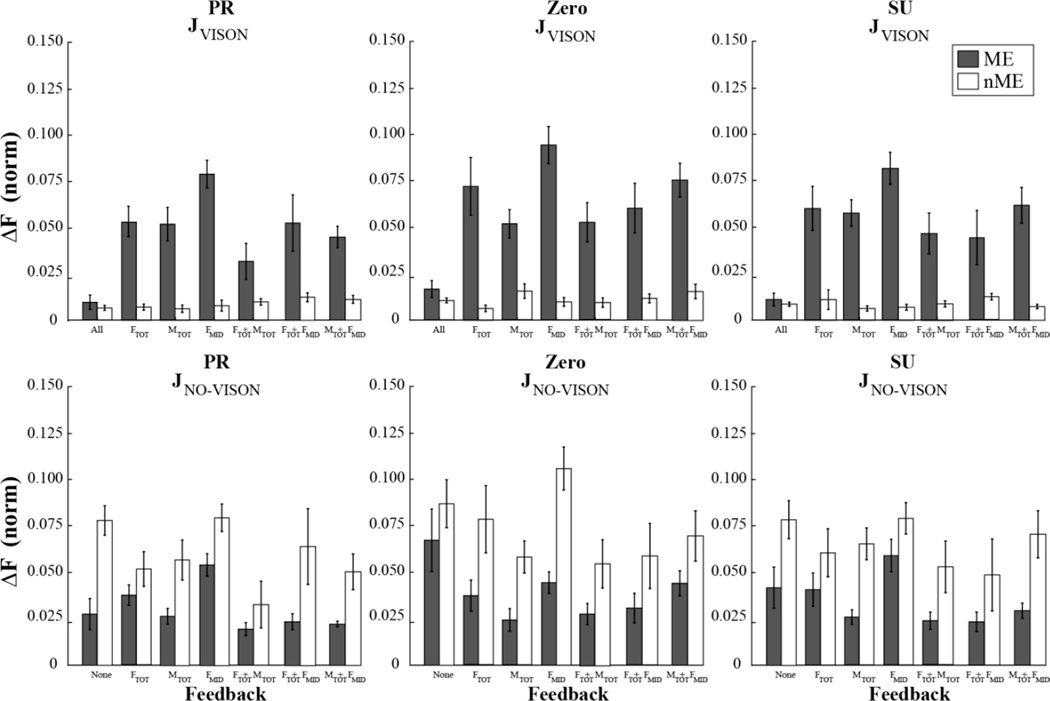
We address the nature of unintentional changes in performance in two papers. This second paper tested hypotheses related to stability of task-specific performance variables estimated using the framework of the uncontrolled manifold (UCM) hypothesis. Our first hypothesis was that selective stability of performance variables would be observed even when the magnitudes of those variables drifted unintentionally because of the lack of visual feedback. Our second hypothesis was that stability of a variable would depend on the number of explicit task constraints. Subjects performed four-finger isometric pressing tasks that required the accurate production of a combination of total moment and total force with natural or modified finger involvement under full visual feedback, which was removed later for some or all of the salient variables. We used inter-trial analysis of variance and drifts in the space of finger forces within the UCM and within the orthogonal to the UCM space. The two variance components were used to estimate a synergy index stabilizing the force/moment combination, while the two drift components were used to estimate motor equivalent and non-motor equivalent force changes, respectively. Without visual feedback, both force and moment drifted toward lower absolute magnitudes. The non-motor equivalent component of motion in the finger force space was larger than the motor equivalent component for variables that stopped receiving visual feedback. In contrast, variables that continued to receive visual feedback showed larger motor equivalent component, compared to non-motor equivalent component, over the same time interval. These data falsified the first hypothesis; indeed, selective stabilization of a variable over the duration of a trial allows expecting comparably large motor equivalent components both with and without visual feedback. Adding a new constraint (presented as a target magnitude of middle finger force) resulted in a drop in the synergy index in support of the second hypothesis. We interpret the force drift as a natural relaxation process toward states with lower potential energy in the physical (physiological) system involved in the task. The results show that presenting sensory feedback on a performance variable makes synergies stabilizing that variable dependent on that particular sensory feedback.
我们在两篇论文中探讨了表现中无意变化的本质。第二篇论文检验了与使用非控制流形(UCM)假设框架估计的特定任务表现变量稳定性相关的假设。我们的第一个假设是,即使由于缺乏视觉反馈导致这些变量的大小无意漂移,也会观察到表现变量的选择性稳定性。我们的第二个假设是,变量的稳定性将取决于明确的任务约束数量。受试者进行了四指等长按压任务,要求在完全视觉反馈下准确产生总力矩和总力的组合,手指参与方式为自然或改变后的方式,之后部分或所有显著变量的视觉反馈被移除。我们使用了试验间方差分析以及UCM空间内和与UCM空间正交的手指力空间中的漂移。两个方差分量用于估计稳定力/力矩组合的协同指数,而两个漂移分量分别用于估计运动等效和非运动等效的力变化。没有视觉反馈时,力和力矩都朝着更低的绝对值漂移。对于停止接收视觉反馈的变量,手指力空间中运动的非运动等效分量大于运动等效分量。相比之下,在相同时间间隔内,继续接收视觉反馈的变量显示出比非运动等效分量更大的运动等效分量。这些数据证伪了第一个假设;实际上,在试验持续时间内变量的选择性稳定使得无论有无视觉反馈都可以预期有相当大的运动等效分量。添加一个新的约束(表示为中指力的目标大小)导致协同指数下降,支持了第二个假设。我们将力的漂移解释为参与任务的物理(生理)系统中朝着具有更低势能状态的自然松弛过程。结果表明,在表现变量上呈现感觉反馈会使稳定该变量的协同作用依赖于该特定的感觉反馈。