Killen S S, Norin T, Halsey L G
Institute of Biodiversity, Animal Health and Comparative Medicine, Graham Kerr Building, University of Glasgow, Glasgow, G12 8QQ, U.K.
Department of Life Sciences, University of Roehampton, Holybourne Avenue, London, SW15 4JD, U.K.
J Fish Biol. 2017 Mar;90(3):1037-1046. doi: 10.1111/jfb.13195. Epub 2016 Oct 25.
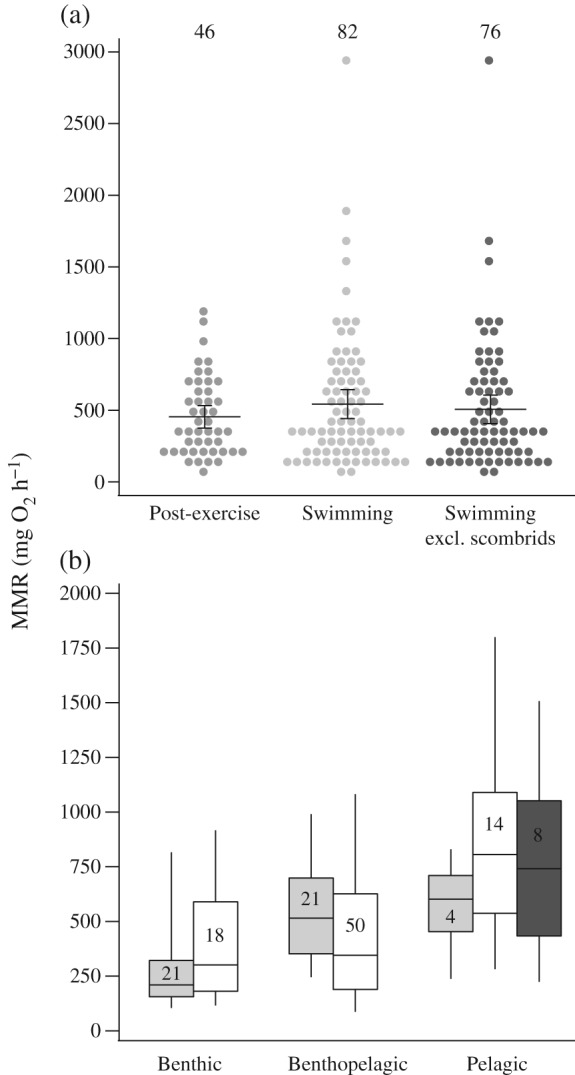
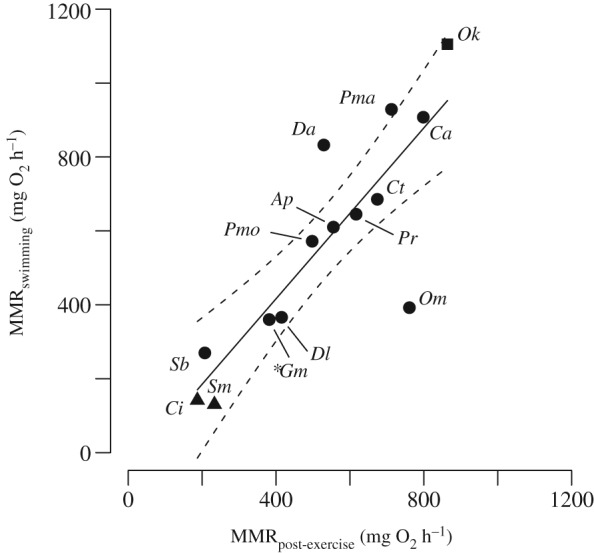
The rate at which active animals can expend energy is limited by their maximum aerobic metabolic rate (MMR). Two methods are commonly used to estimate MMR as oxygen uptake in fishes, namely during prolonged swimming or immediately following brief exhaustive exercise, but it is unclear whether they return different estimates of MMR or whether their effectiveness for estimating MMR varies among species with different lifestyles. A broad comparative analysis of MMR data from 121 fish species revealed little evidence of different results between the two methods, either for fishes in general or for species of benthic, benthopelagic or pelagic lifestyles.
活跃动物消耗能量的速率受其最大有氧代谢率(MMR)的限制。在鱼类中,通常有两种方法来估计MMR,即作为氧气摄取量,一种是在长时间游泳期间,另一种是在短暂的力竭运动后立即进行测量,但尚不清楚这两种方法得出的MMR估计值是否不同,或者它们在估计MMR方面的有效性是否因不同生活方式的物种而异。对121种鱼类的MMR数据进行的广泛比较分析表明,无论是对于一般鱼类,还是对于底栖、底栖浮游或浮游生活方式的物种,这两种方法得出不同结果的证据很少。