Xu Song, Yi Xiao-Ming, Zhang Zheng-Yu, Ge Jing-Ping, Zhou Wen-Quan
Department of Urology, Jinling Hospital, School of Medicine, Nanjing University, Nanjing, Jiangsu 210002, P.R. China.
Mol Med Rep. 2016 Dec;14(6):5025-5032. doi: 10.3892/mmr.2016.5859. Epub 2016 Oct 19.
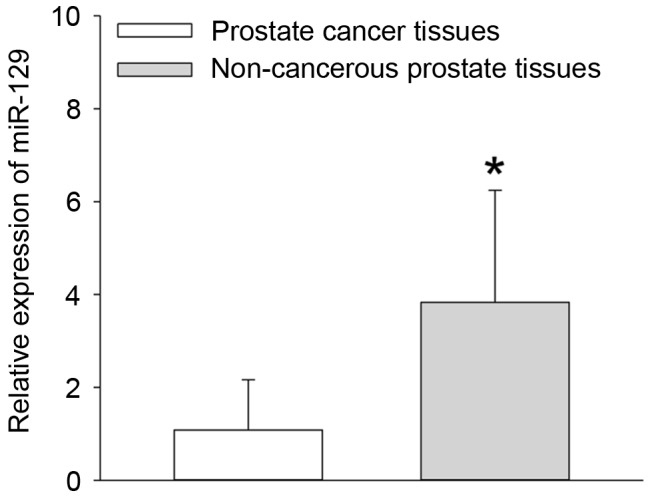
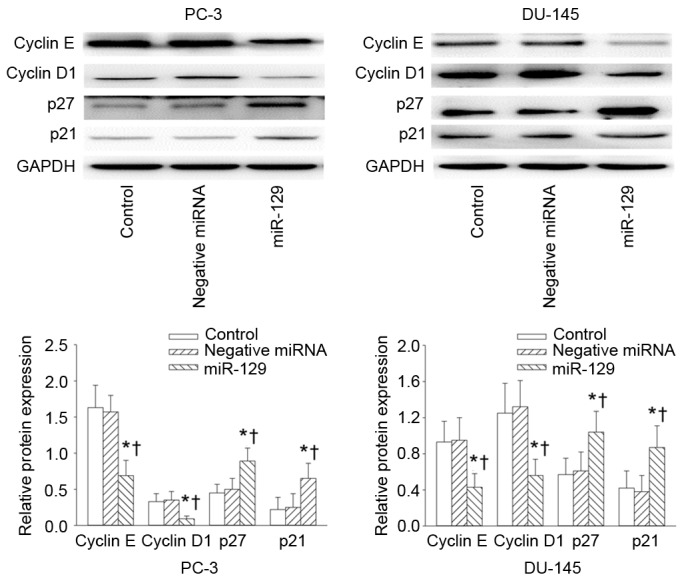
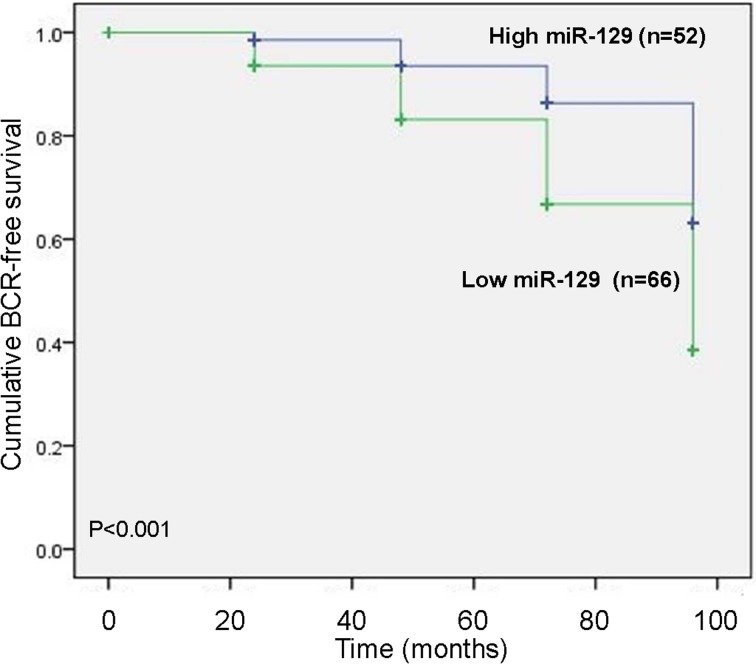
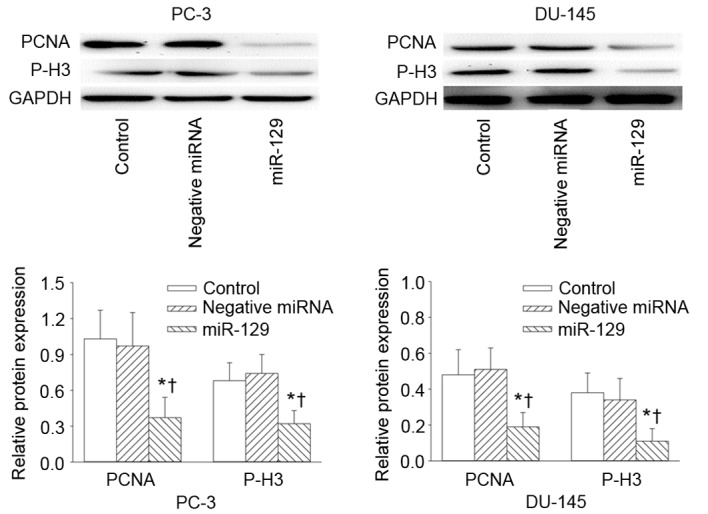
MicroRNAs (miRNAs) are a class of small, well-conserved, non-coding RNAs that are increasingly identified as diagnostic and prognostic biomarkers in a number of cancers. Deregulated miR‑129 is closely associated with tumorigenesis and cancer progression. However, the potential role of miR‑129 in prostate cancer remains largely elusive. The present study investigated the role of miR‑129 as a prognostic biomarker for tumor progression and clinical prognosis in prostate cancer patients. The examined prostate cancer tissues exhibited a significant reduction in miR‑129 expression compared with the normal tissues (P=0.013). The expression levels of miR‑129 were negatively correlated with histological grade (P<0.001), high preoperative prostate‑specific antigen serum levels (P<0.001), pathological stage (P<0.001), high Gleason score (P<0.001), lymph node metastasis (P=0.002), angiolymphatic invasion (P=0.018), and biochemical recurrence (BCR; P=0.001). Use of the Kaplan‑Meier analysis demonstrated that low miR‑129 expression was closely associated with poorer BCR‑free survival. Multivariate survival analysis indicated that miR‑129 expression may be an independent prognostic marker for BCR‑free survival in prostate cancer patients (P<0.001). Overexpression of miR‑129 markedly attenuated prostate cancer cell growth by rescuing cell cycle‑regulated protein expression. The present study suggests that miR‑129 is downregulated in the cancerous tissues of prostate cancer patients, which was associated with poor BCR‑free survival. Thus, it may be considered as a novel independent prognostic biomarker for prostate cancer. In addition, downregulation of miR‑129 may serve a critical role in the proliferation of prostate cancer cells.
微小RNA(miRNA)是一类短小、高度保守的非编码RNA,在多种癌症中越来越多地被鉴定为诊断和预后生物标志物。miR-129失调与肿瘤发生和癌症进展密切相关。然而,miR-129在前列腺癌中的潜在作用仍 largely难以捉摸。本研究调查了miR-129作为前列腺癌患者肿瘤进展和临床预后的预后生物标志物的作用。与正常组织相比,所检测的前列腺癌组织中miR-129表达显著降低(P=0.013)。miR-129的表达水平与组织学分级(P<0.001)、术前前列腺特异性抗原血清水平高(P<0.001)、病理分期(P<0.001)、高Gleason评分(P<0.001)、淋巴结转移(P=0.002)、血管淋巴管浸润(P=0.018)和生化复发(BCR;P=0.001)呈负相关。使用Kaplan-Meier分析表明,低miR-129表达与无BCR生存期较差密切相关。多变量生存分析表明,miR-129表达可能是前列腺癌患者无BCR生存期的独立预后标志物(P<0.001)。miR-129的过表达通过挽救细胞周期调节蛋白表达显著减弱前列腺癌细胞生长。本研究表明,miR-129在前列腺癌患者的癌组织中下调,这与无BCR生存期差有关。因此,它可能被视为前列腺癌的一种新型独立预后生物标志物。此外,miR-129的下调可能在前列腺癌细胞增殖中起关键作用。