Li Long, Zhang Yi, Xu Ming, Rong Ruiming, Wang Jina, Zhu Tongyu
Department of Urology, Zhongshan Hospital, Fudan University, Shanghai, 200032, China.
Shanghai Key Laboratory of Organ Transplantation, Shanghai, 200032, China.
BMC Immunol. 2016 Oct 26;17(1):41. doi: 10.1186/s12865-016-0179-3.
Although histone methyltransferases EZH2 has been proved to have significant regulatory effect on the immune rejection after hematopoietic stem cell transplantation, its role in solid-organ transplantation remains uncovered. In this study, we investigate whether histone methylation regulation can impact renal allograft rejection in rat models.
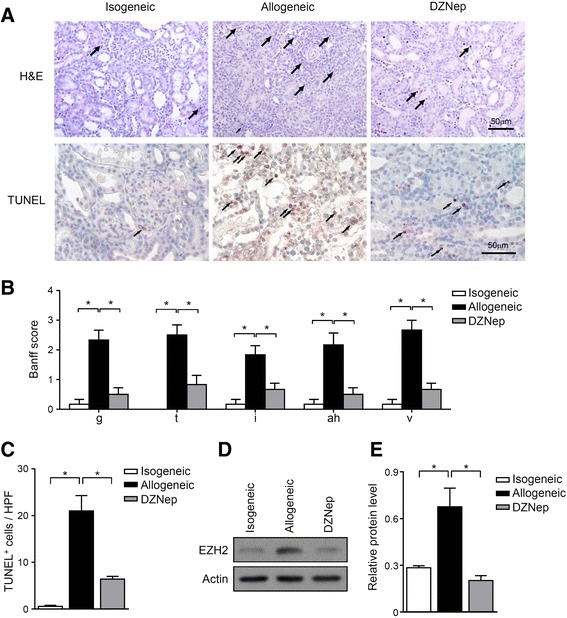
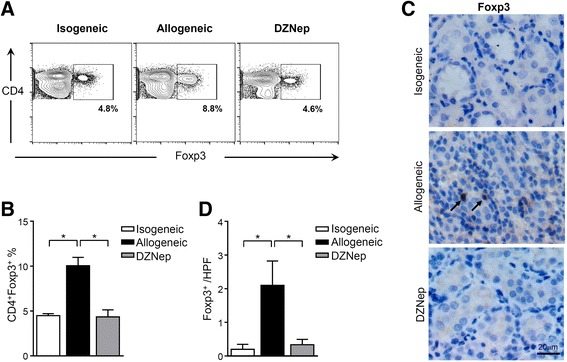
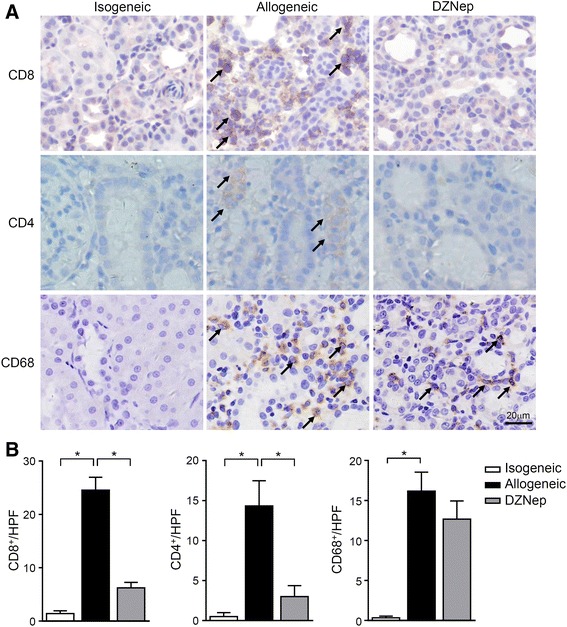
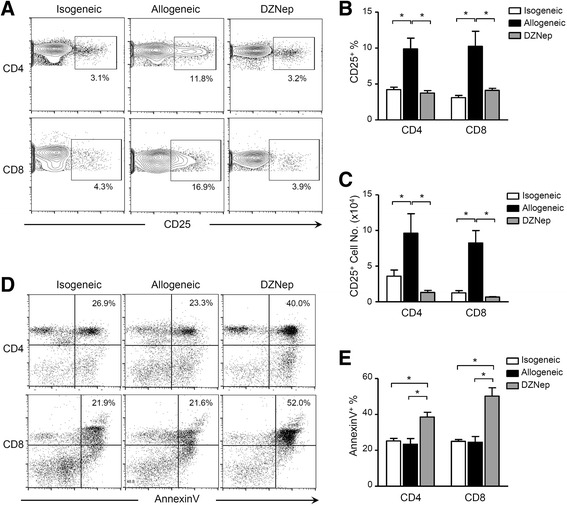
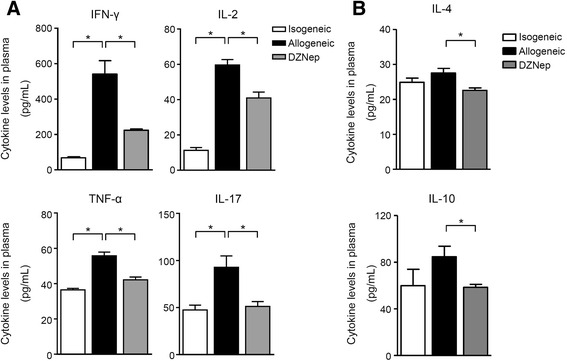
Allogeneic rat renal transplantation model (Wistar to Lewis) was established, and the recipients were administrated with EZH2 inhibitor DZNep after transplantation. Renal allografts and peripheral blood were collected on day 5 after transplantation for histological examination and mechanism investigation. We found that inhibition of EZH2 by DZNep after transplantation significantly ameliorated acute rejection (AR), with decreased histological injury and reduced inflammatory infiltration in renal allografts. Attenuation of AR was due to the prohibited activation of alloreactive T cells, the subsequent impaired production of inflammatory cytokines, and also the elevated apoptosis of alloreactive T cells in both renal allografts and periphery. However, inhibition of EZH2 did not increase the regulatory T cells during the AR.
Disruption of EZH2 by DZNep suppressed the immune responses of alloreactive T cells and ameliorated AR of renal allografts. This suggests a therapeutic potential of targeting histone methyltransferases EZH2 in treating allograft rejection after solid organ transplantation.
尽管已证实组蛋白甲基转移酶EZH2对造血干细胞移植后的免疫排斥反应具有显著调节作用,但其在实体器官移植中的作用仍未明确。在本研究中,我们调查了组蛋白甲基化调节是否会影响大鼠模型中的肾移植排斥反应。
建立了同种异体大鼠肾移植模型(从Wistar大鼠到Lewis大鼠),并在移植后给受体注射EZH2抑制剂DZNep。在移植后第5天收集肾移植组织和外周血用于组织学检查和机制研究。我们发现移植后用DZNep抑制EZH2可显著改善急性排斥反应(AR),肾移植组织中的组织学损伤减轻,炎症浸润减少。AR的减轻归因于同种反应性T细胞的激活被抑制、随后炎症细胞因子的产生受损,以及肾移植组织和外周血中同种反应性T细胞凋亡增加。然而,在AR期间抑制EZH2并没有增加调节性T细胞。
DZNep破坏EZH2可抑制同种反应性T细胞的免疫反应并改善肾移植的AR。这表明靶向组蛋白甲基转移酶EZH2在治疗实体器官移植后同种异体移植排斥反应方面具有治疗潜力。