Müller Stephan A, Scilabra Simone D, Lichtenthaler Stefan F
German Center for Neurodegenerative Diseases (DZNE)Munich, Germany; Neuroproteomics, Klinikum rechts der Isar, Technische Universität MünchenMunich, Germany.
German Center for Neurodegenerative Diseases (DZNE)Munich, Germany; Neuroproteomics, Klinikum rechts der Isar, Technische Universität MünchenMunich, Germany; Institute for Advanced Study, Technische Universität MunichGarching, Germany; Munich Cluster for Systems Neurology (SyNergy)Munich, Germany.
Front Mol Neurosci. 2016 Oct 13;9:96. doi: 10.3389/fnmol.2016.00096. eCollection 2016.
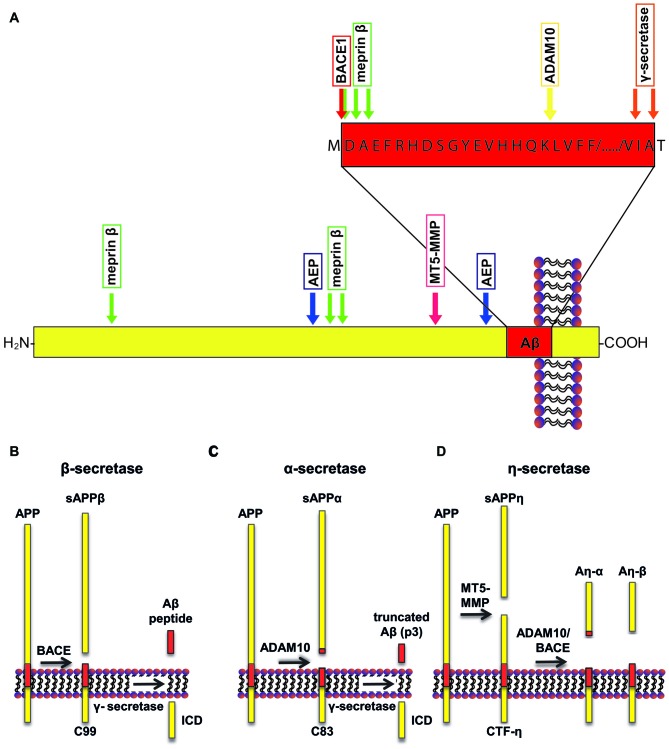
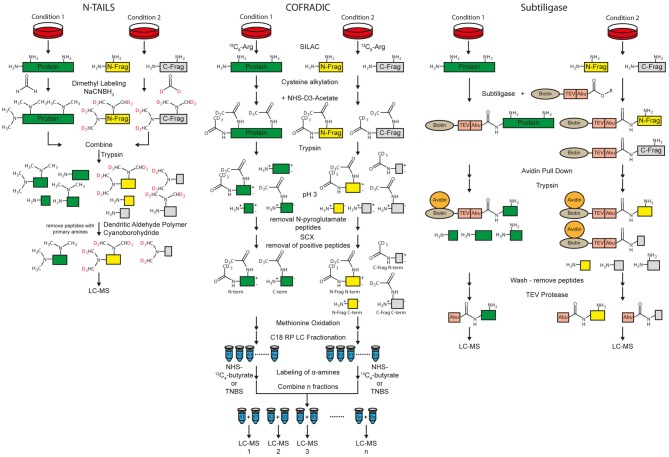
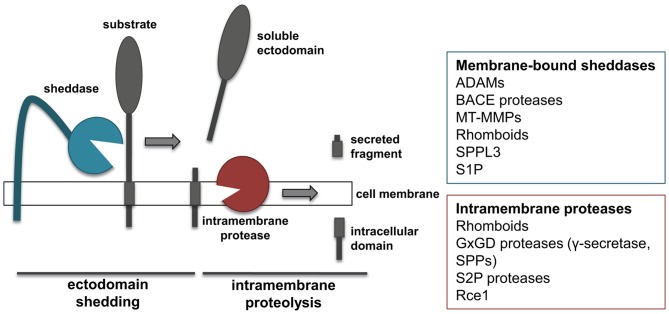
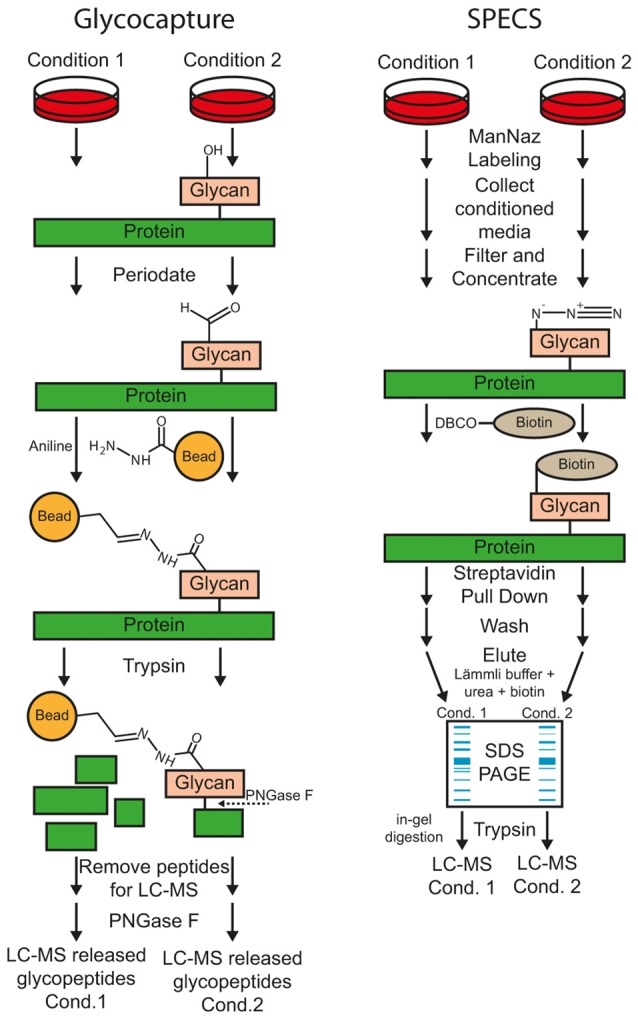
Cell-cell communication in the brain is controlled by multiple mechanisms, including proteolysis. Membrane-bound proteases generate signaling molecules from membrane-bound precursor proteins and control the length and function of cell surface membrane proteins. These proteases belong to different families, including members of the "a disintegrin and metalloprotease" (ADAM), the beta-site amyloid precursor protein cleaving enzymes (BACE), membrane-type matrix metalloproteases (MT-MMP) and rhomboids. Some of these proteases, in particular ADAM10 and BACE1 have been shown to be essential not only for the correct development of the mammalian brain, but also for myelination and maintaining neuronal connections in the adult nervous system. Additionally, these proteases are considered as drug targets for brain diseases, including Alzheimer's disease (AD), schizophrenia and cancer. Despite their biomedical relevance, the molecular functions of these proteases in the brain have not been explored in much detail, as little was known about their substrates. This has changed with the recent development of novel proteomic methods which allow to identify substrates of membrane-bound proteases from cultured cells, primary neurons and other primary brain cells and even from minute amounts of mouse cerebrospinal fluid (CSF). This review summarizes the recent advances and highlights the strengths of the individual proteomic methods. Finally, using the example of the Alzheimer-related proteases BACE1, ADAM10 and γ-secretase, as well as ADAM17 and signal peptide peptidase like 3 (SPPL3), we illustrate how substrate identification with novel methods is instrumental in elucidating broad physiological functions of these proteases in the brain and other organs.
大脑中的细胞间通讯由多种机制控制,包括蛋白水解。膜结合蛋白酶从膜结合前体蛋白产生信号分子,并控制细胞表面膜蛋白的长度和功能。这些蛋白酶属于不同的家族,包括“解整合素和金属蛋白酶”(ADAM)家族成员、β-淀粉样前体蛋白裂解酶(BACE)、膜型基质金属蛋白酶(MT-MMP)和类菱形蛋白酶。其中一些蛋白酶,特别是ADAM10和BACE1,不仅对哺乳动物大脑的正常发育至关重要,而且对成年神经系统的髓鞘形成和维持神经元连接也必不可少。此外,这些蛋白酶被认为是包括阿尔茨海默病(AD)、精神分裂症和癌症在内的脑部疾病的药物靶点。尽管它们具有生物医学相关性,但由于对其底物了解甚少,这些蛋白酶在大脑中的分子功能尚未得到详细研究。随着新型蛋白质组学方法的最新发展,这种情况发生了变化,这些方法能够从培养细胞、原代神经元和其他原代脑细胞,甚至从小鼠脑脊液(CSF)的微量样本中鉴定膜结合蛋白酶的底物。本综述总结了最近的进展,并突出了各种蛋白质组学方法的优势。最后,以与阿尔茨海默病相关的蛋白酶BACE1、ADAM10和γ-分泌酶,以及ADAM17和信号肽肽酶样3(SPPL3)为例,我们说明了如何利用新方法鉴定底物有助于阐明这些蛋白酶在大脑和其他器官中的广泛生理功能。