Berardo Luciana R, Fabio María C, Pautassi Ricardo M
Instituto de Investigación Médica Mercedes y Martín Ferreyra, Consejo Nacional de Investigaciones Científicas y Técnicas, Universidad Nacional de CórdobaCórdoba, Argentina; Facultad de Psicología, Universidad Nacional de CórdobaCórdoba, Argentina.
Front Behav Neurosci. 2016 Oct 13;10:195. doi: 10.3389/fnbeh.2016.00195. eCollection 2016.
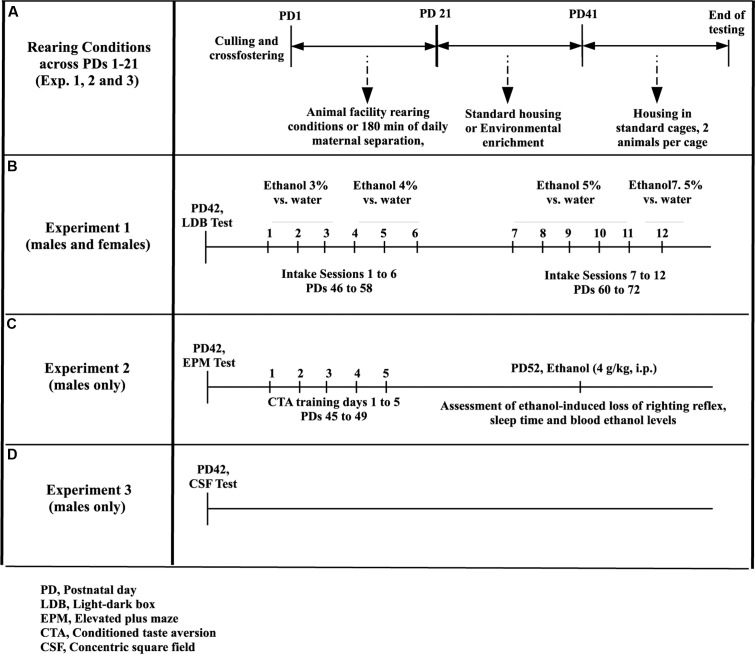
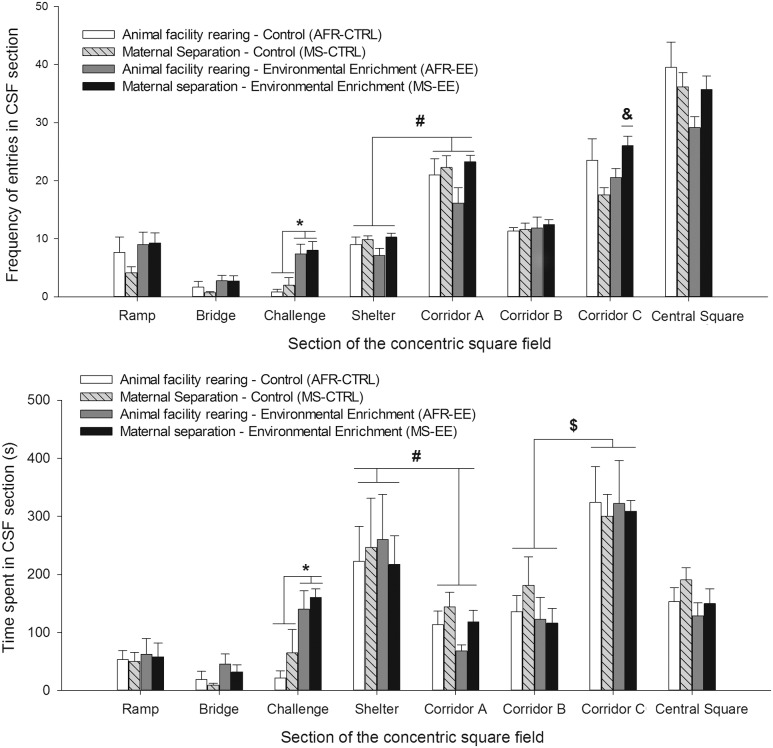
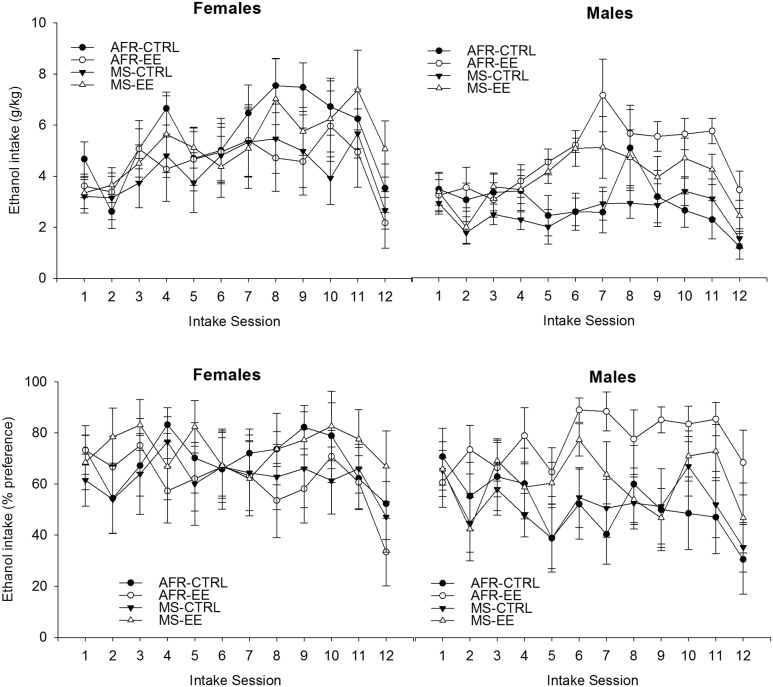
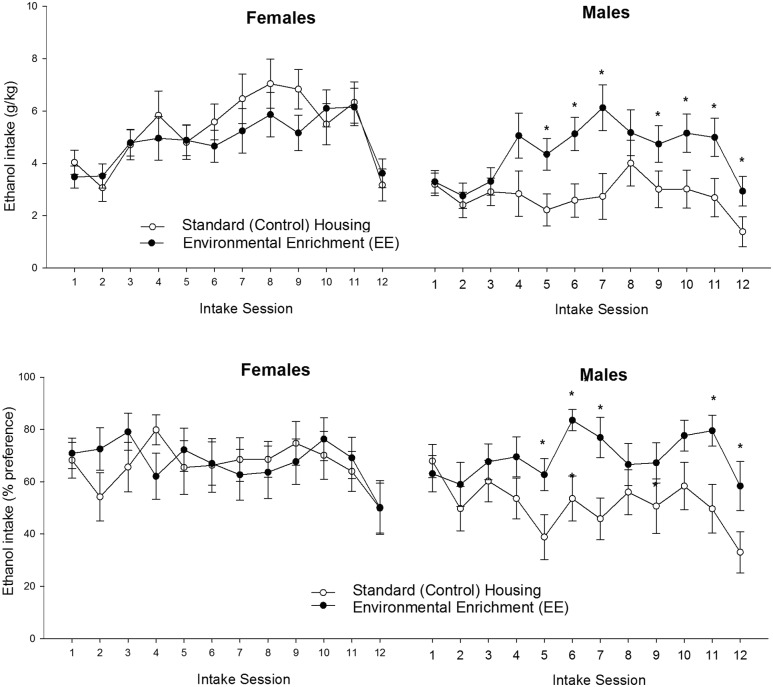
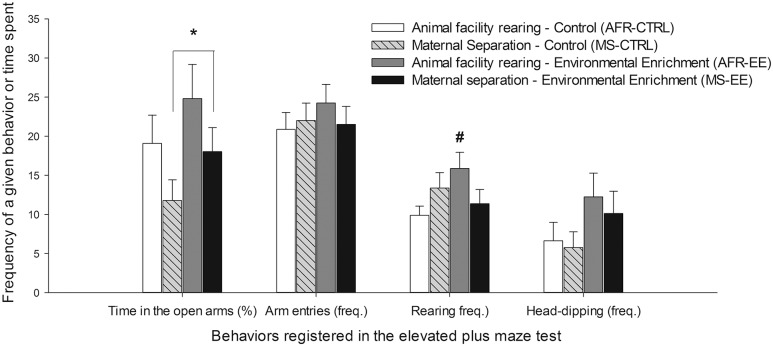
This study analyzed ethanol intake in male and female Wistar rats exposed to maternal separation (MS) during infancy (postnatal days 1-21, PD1-21) and environmental enrichment (EE) during adolescence (PD 21-42). Previous work revealed that MS enhances ethanol consumption during adulthood. It is still unknown if a similar effect is found during adolescence. Several studies, in turn, have revealed that EE reverses stress experiences, and reduces ethanol consumption and reinforcement; although others reported greater ethanol intake after EE. The interactive effects between these treatments upon ethanol's effects and intake have yet to be explored. We assessed chronic ethanol intake and preference (12 two-bottle daily sessions, spread across 30 days, 1st session on PD46) in rats exposed to MS and EE. The main finding was that male - but not female - rats that had been exposed to EE consumed more ethanol than controls given standard housing, an effect that was not affected by MS. Subsequent experiments assessed several factors associated with heightened ethanol consumption in males exposed to MS and EE; namely taste aversive conditioning and hypnotic-sedative consequences of ethanol. We also measured anxiety response in the light-dark box and in the elevated plus maze tests; and exploratory patterns of novel stimuli and behaviors indicative of risk assessment and risk-taking, via a modified version of the concentric square field (CSF) test. Aversive conditioning, hypnosis and sleep time were similar in males exposed or not to EE. EE males, however, exhibited heightened exploration of novel stimuli and greater risk taking behaviors in the CSF test. It is likely that the promoting effect of EE upon ethanol intake was due to these effects upon exploratory and risk-taking behaviors.
本研究分析了在幼年期(出生后第1 - 21天,PD1 - 21)经历母婴分离(MS)且在青春期(PD 21 - 42)处于环境富集(EE)状态的雄性和雌性Wistar大鼠的乙醇摄入量。先前的研究表明,母婴分离会增加成年期的乙醇消耗量。目前尚不清楚在青春期是否会出现类似的效果。反过来,多项研究表明,环境富集可逆转应激经历,并减少乙醇消耗和强化作用;尽管也有其他研究报告称环境富集后乙醇摄入量增加。这些处理对乙醇作用和摄入量的交互作用尚未得到探索。我们评估了经历母婴分离和环境富集的大鼠的慢性乙醇摄入量和偏好(每天12次双瓶实验,持续30天,第1次实验在PD46进行)。主要发现是,暴露于环境富集的雄性大鼠——而非雌性大鼠——比处于标准饲养环境的对照大鼠消耗更多乙醇,这一效应不受母婴分离的影响。后续实验评估了与暴露于母婴分离和环境富集的雄性大鼠乙醇消耗量增加相关的几个因素;即乙醇的味觉厌恶条件反射和催眠 - 镇静后果。我们还在明暗箱和高架十字迷宫测试中测量了焦虑反应;并通过改良版同心方场(CSF)测试测量了新刺激的探索模式以及表明风险评估和冒险行为的行为。暴露或未暴露于环境富集的雄性大鼠的厌恶条件反射、催眠和睡眠时间相似。然而,在CSF测试中,暴露于环境富集的雄性大鼠对新刺激的探索增加,冒险行为也更多。环境富集对乙醇摄入量的促进作用可能归因于其对探索和冒险行为的这些影响。