Watson Alastair, Kronqvist Nina, Spalluto C Mirella, Griffiths Mark, Staples Karl J, Wilkinson Tom, Holmskov Uffe, Sorensen Grith L, Rising Anna, Johansson Jan, Madsen Jens, Clark Howard
Clinical & Experimental Sciences Academic Unit, Southampton General Hospital, University of Southampton, Southampton, United Kingdom.
Division for Neurogeriatrics, Center for Alzheimer Research, Department of NVS, Karolinska Institutet, 141 57 Huddinge, Sweden.
Immunobiology. 2017 Feb;222(2):111-118. doi: 10.1016/j.imbio.2016.10.015. Epub 2016 Oct 18.
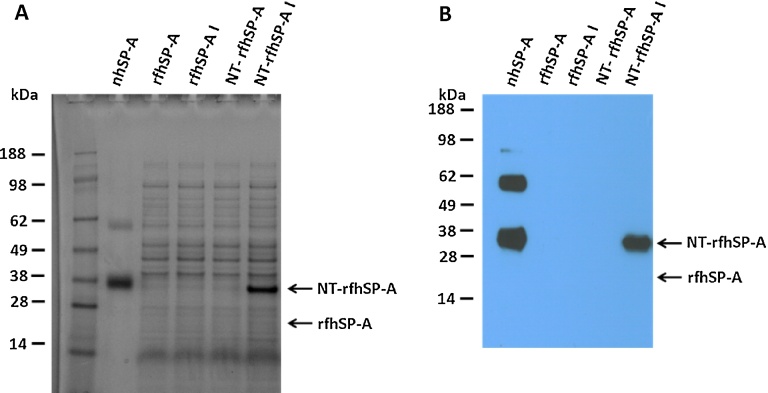
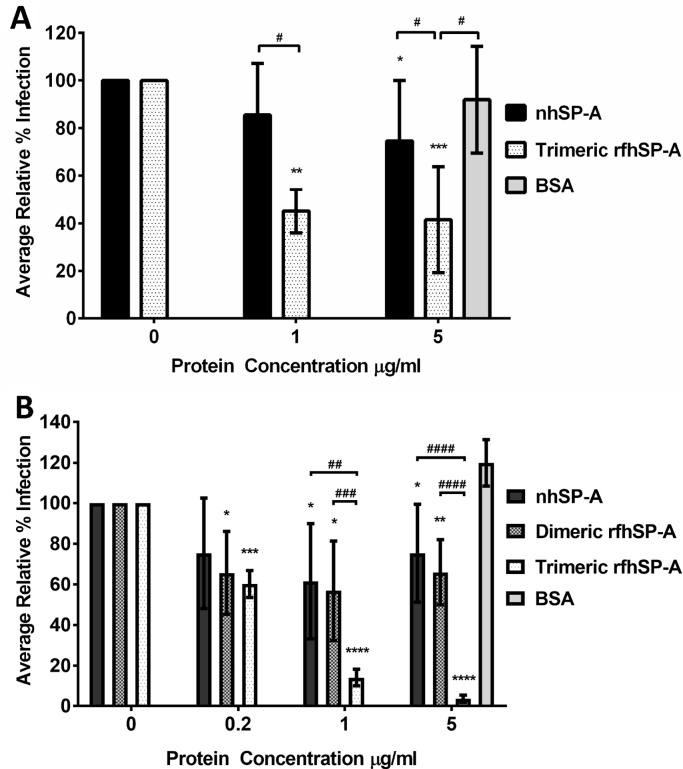
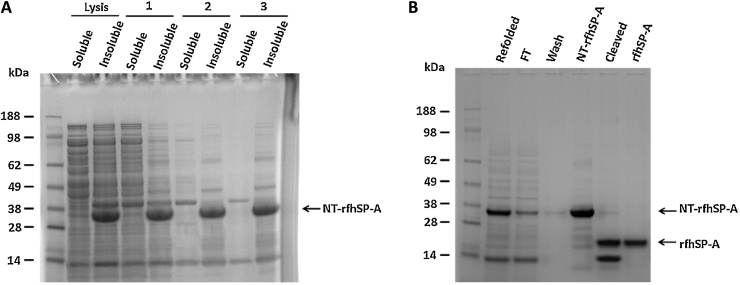
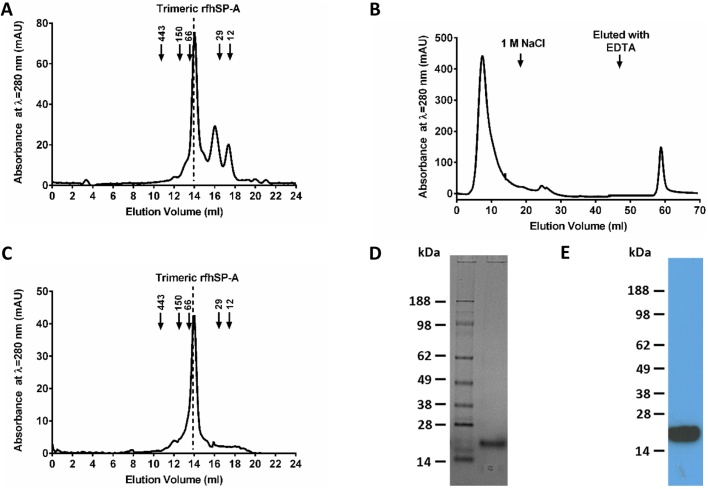
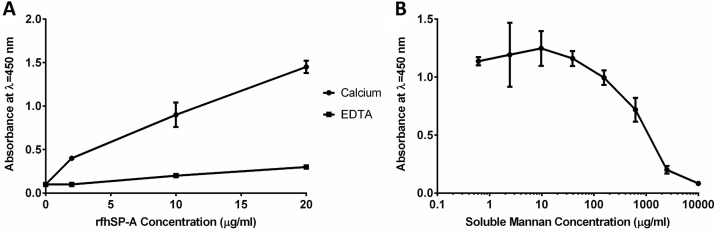
Respiratory syncytial virus (RSV) is the leading cause of bronchiolitis and hospitalisation of infants in developed countries. Surfactant protein A (SP-A) is an important innate immune molecule, localized in pulmonary surfactant. SP-A binds to carbohydrates on the surface of pathogens in a calcium-dependent manner to enable neutralisation, agglutination and clearance of pathogens including RSV. SP-A forms trimeric units and further oligomerises through interactions between its N-terminal domains. Whilst a recombinant trimeric fragment of the closely related molecule (surfactant protein D) has been shown to retain many of the native protein's functions, the importance of the SP-A oligomeric structure in its interaction with RSV has not been determined. The aim of this study was to produce a functional trimeric recombinant fragment of human (rfh)SP-A, which lacks the N-terminal domain (and the capacity to oligomerise) and test its ability to neutralise RSV in an in vitro model of human bronchial epithelial infection. We used a novel expression tag derived from spider silk proteins ('NT') to produce rfhSP-A in Escherichia coli, which we found to be trimeric and to bind to mannan in a calcium-dependent manner. Trimeric rfhSP-A reduced infection levels of human bronchial epithelial (AALEB) cells by RSV by up to a mean (±SD) of 96.4 (±1.9) % at 5μg/ml, which was significantly more effective than dimeric rfhSP-A (34.3 (±20.5) %) (p<0.0001). Comparatively, native human SP-A reduced RSV infection by up to 38.5 (±28.4) %. For the first time we report the development of a functional trimeric rfhSP-A molecule which is highly efficacious in neutralising RSV, despite lacking the N-terminal domain and capacity to oligomerise.
呼吸道合胞病毒(RSV)是发达国家中引起婴儿细支气管炎和住院的主要原因。表面活性蛋白A(SP-A)是一种重要的天然免疫分子,定位于肺表面活性剂中。SP-A以钙依赖的方式与病原体表面的碳水化合物结合,从而实现对包括RSV在内的病原体的中和、凝集和清除。SP-A形成三聚体单元,并通过其N端结构域之间的相互作用进一步寡聚化。虽然已显示密切相关分子(表面活性蛋白D)的重组三聚体片段保留了许多天然蛋白的功能,但SP-A寡聚体结构在其与RSV相互作用中的重要性尚未确定。本研究的目的是制备一种功能性的人源重组(rfh)SP-A三聚体片段,该片段缺乏N端结构域(以及寡聚化能力),并在人支气管上皮感染的体外模型中测试其中和RSV的能力。我们使用了一种源自蜘蛛丝蛋白的新型表达标签(“NT”)在大肠杆菌中生产rfhSP-A,我们发现其为三聚体,并以钙依赖的方式与甘露聚糖结合。三聚体rfhSP-A在5μg/ml时可将RSV对人支气管上皮(AALEB)细胞的感染水平平均(±标准差)降低多达96.4(±1.9)%,这比二聚体rfhSP-A(34.3(±20.5)%)显著更有效(p<0.0001)。相比之下,天然人SP-A最多可将RSV感染降低38.5(±28.4)%。我们首次报道了一种功能性三聚体rfhSP-A分子的开发,该分子在中和RSV方面非常有效,尽管缺乏N端结构域和寡聚化能力。