Ishola Oluwaseun Ayodeji, Ting Seng Yeat, Tabana Yasser M, Ahmed Mowaffaq Adam, Yunus Muhammad Amir, Mohamed Rafeezul, Lung Than Leslie Thian, Sandai Doblin
Infectomics Cluster, Advanced Medical and Dental Institute, Universiti Sains Malaysia, Malaysia.
Regenerative Medicine Cluster, Advanced Medical and Dental Institute, Universiti Sains Malaysia, Malaysia.
Jundishapur J Microbiol. 2016 Aug 30;9(9):e38031. doi: 10.5812/jjm.38031. eCollection 2016 Sep.
A major characteristic of biofilm cells that differentiates them from free-floating cells is their high tolerance to antifungal drugs. This high resistance is attributed to particular biofilm properties, including the accumulation of extrapolymeric substances, morphogenetic switching, and metabolic flexibility.
This study evaluated the roles of metabolic processes (in particular the glyoxylate cycle) on biofilm formation, antifungal drug resistance, morphology, and cell wall components.
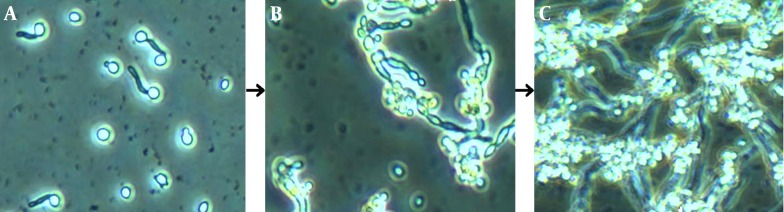
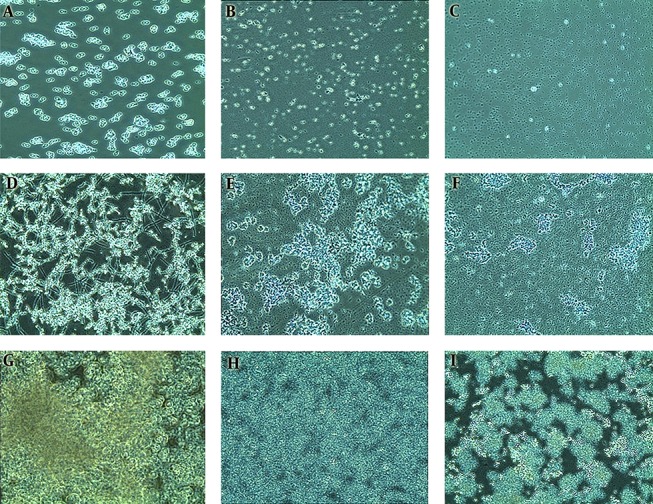
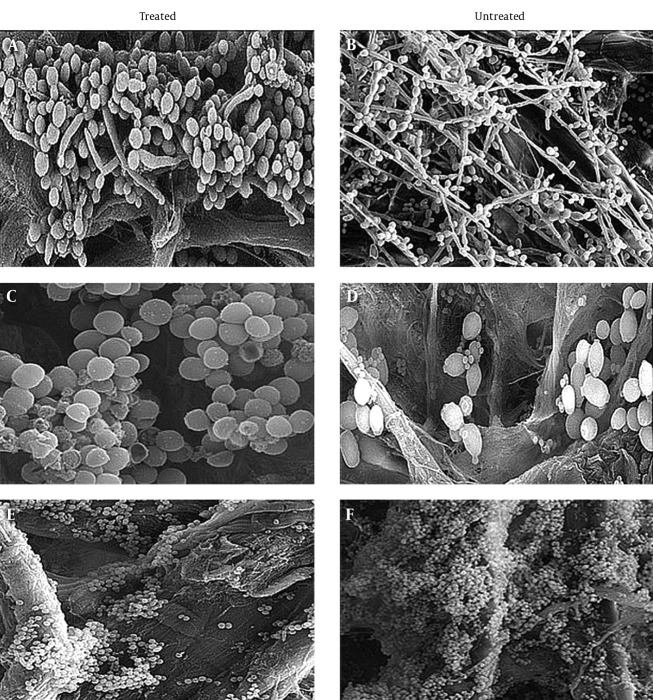
Growth, adhesion, biofilm formation, and cell wall carbohydrate composition were quantified for isogenic ICL1/ICL1, ICL1/, and / strains. The morphology and topography of these strains were compared by light microscopy and scanning electron microscopy. (glucan synthase), (14-α-demethylase), and (efflux pump) mRNA levels were quantified using qRT-PCR.
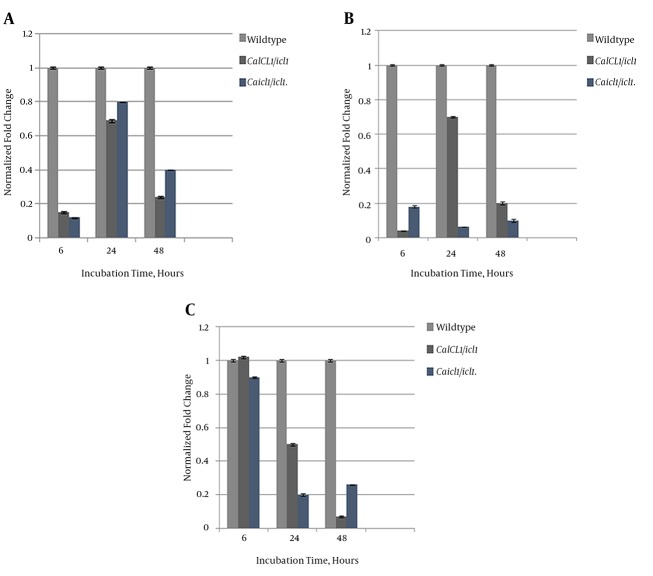
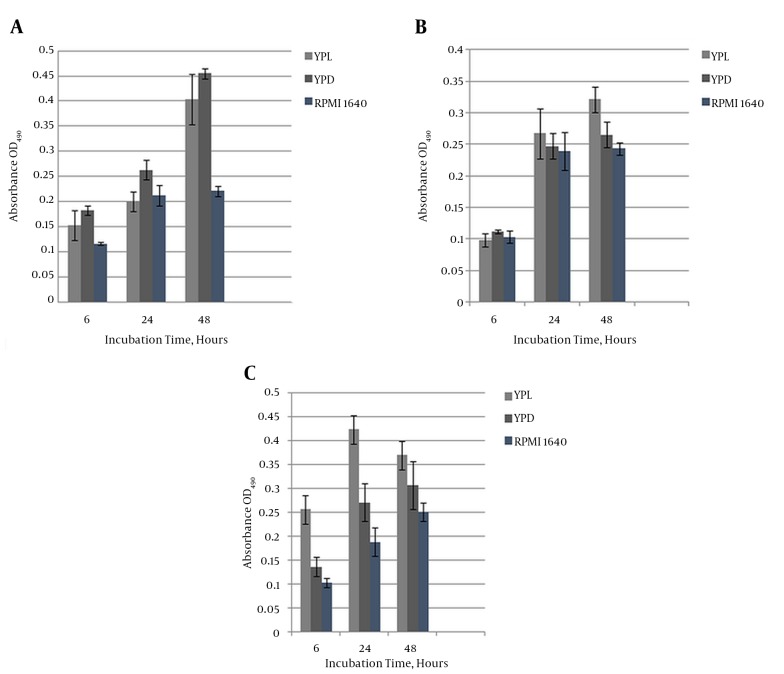
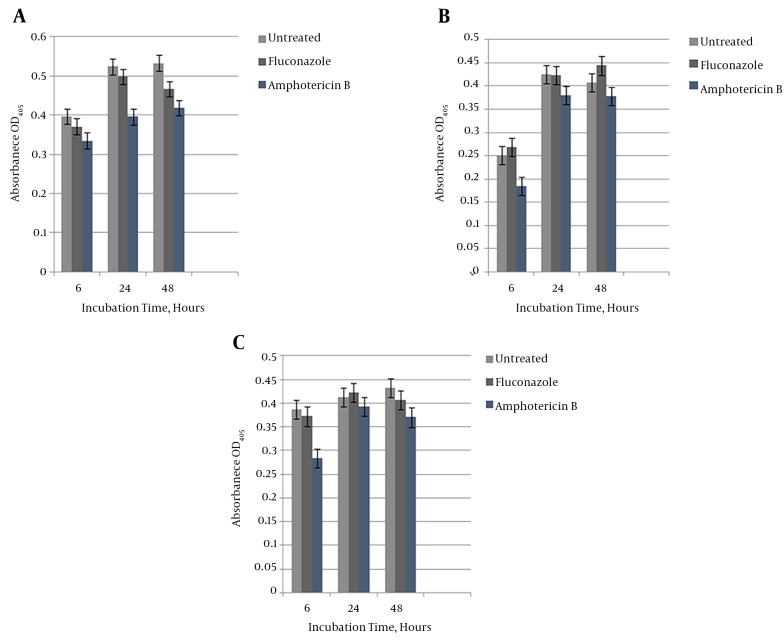
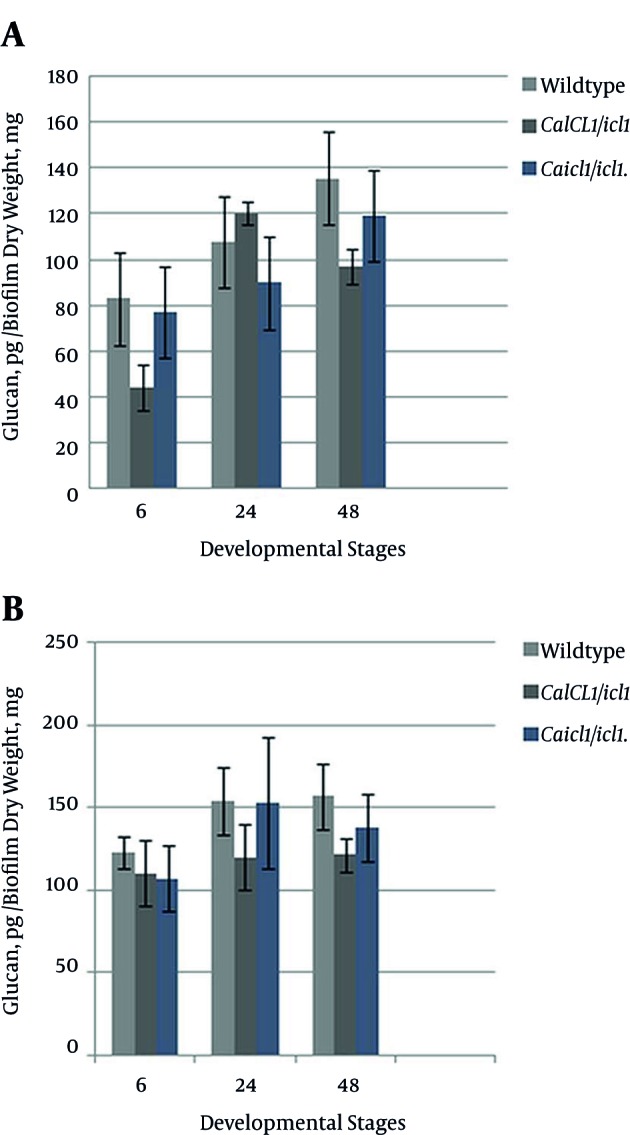
The ICL1/icl1 and / strains formed similar biofilms and exhibited analogous drug-tolerance levels to the control ICL1/ICL1 strains. Furthermore, the drug sequestration ability of β-1, 3-glucan, a major carbohydrate component of the extracellular matrix, was not impaired. However, the inactivation of ICL1 did impair morphogenesis. ICL1 deletion also had a considerable effect on the expression of the , , and genes. and were upregulated in ICL1/ and / cells throughout the biofilm developmental stages, and was upregulated at the early phase. However, their expression was downregulated compared to the control ICL1/ICL1 strain.
We conclude that the glyoxylate cycle is not a specific determinant of biofilm drug resistance.
生物膜细胞与浮游细胞的一个主要区别特征是它们对抗真菌药物具有高耐受性。这种高抗性归因于生物膜的特定特性,包括胞外聚合物的积累、形态发生转换和代谢灵活性。
本研究评估代谢过程(特别是乙醛酸循环)在生物膜形成、抗真菌药物抗性、形态和细胞壁成分方面的作用。
对同基因的ICL1/ICL1、ICL1/–和–/–菌株的生长、黏附、生物膜形成和细胞壁碳水化合物组成进行了定量分析。通过光学显微镜和扫描电子显微镜比较了这些菌株的形态和表面形貌。使用qRT-PCR对葡聚糖合酶(FKS1)、14-α-脱甲基酶(ERG11)和流出泵(CDR1)的mRNA水平进行了定量分析。
ICL1/icl1和–/–菌株形成了相似的生物膜,并且与对照ICL1/ICL1菌株表现出类似的耐药水平。此外,细胞外基质的主要碳水化合物成分β-1,3-葡聚糖的药物隔离能力没有受损。然而,ICL1的失活确实损害了形态发生。ICL1的缺失对FKS1、ERG11和CDR1基因的表达也有相当大的影响。在整个生物膜发育阶段,FKS1和ERG11在ICL1/–和–/–细胞中上调,而CDR1在早期上调。然而,与对照ICL1/ICL1菌株相比,它们的表达下调。
我们得出结论,乙醛酸循环不是生物膜耐药性的特定决定因素。