Smith Sarah J, Radford Robert J, Subramanian Rohit H, Barnett Brandon R, Figueroa Joshua S, Tezcan F Akif
Department of Chemistry and Biochemistry, University of California, San Diego, 9500 Gilman Dr., La Mia, USA.
Chem Sci. 2016 Aug 1;7(8):5453-5461. doi: 10.1039/C6SC00826G. Epub 2016 May 18.
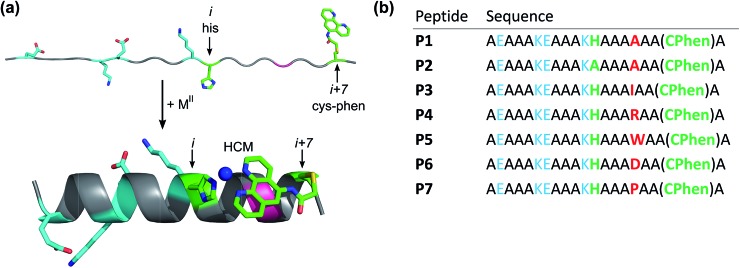
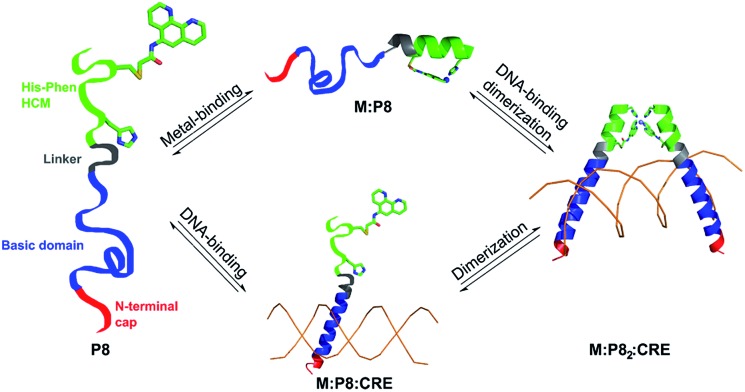
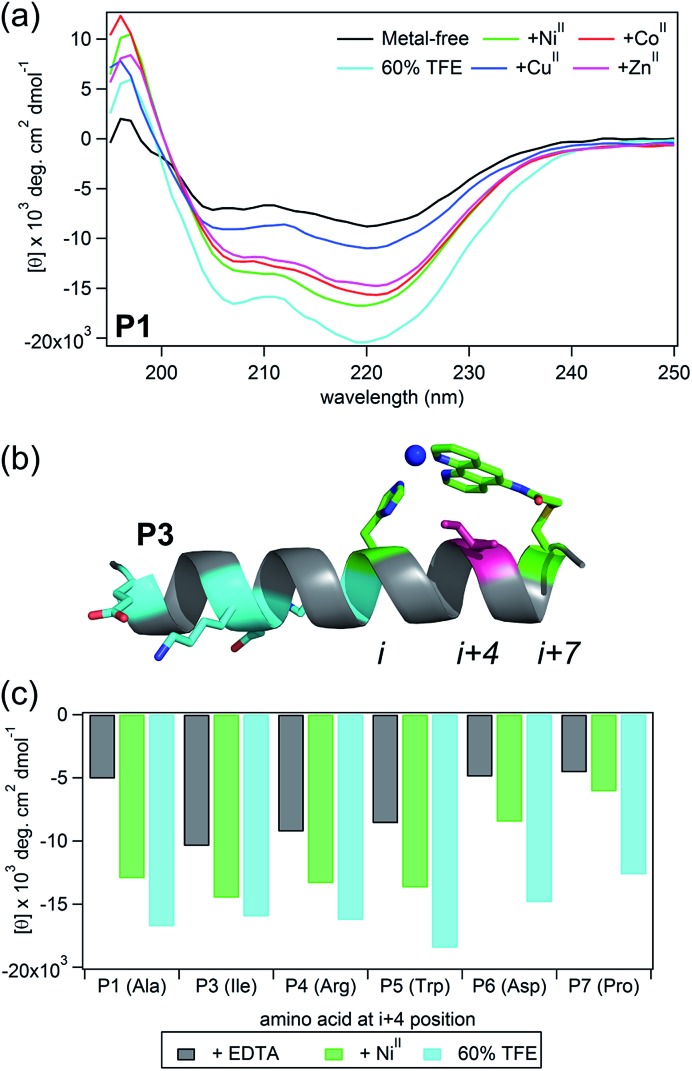
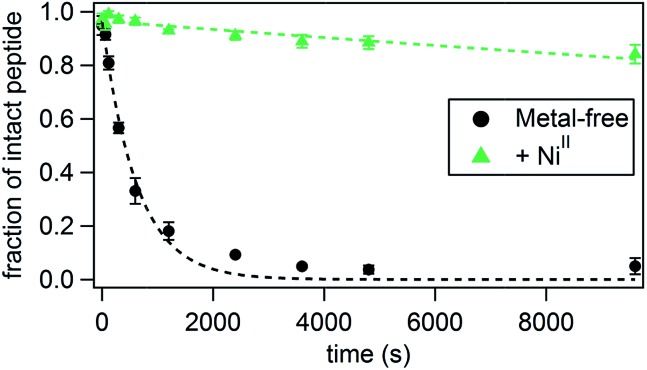
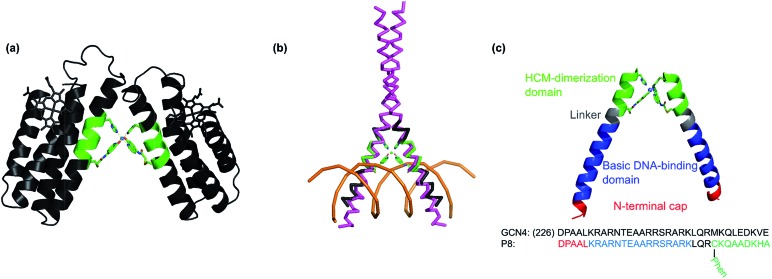
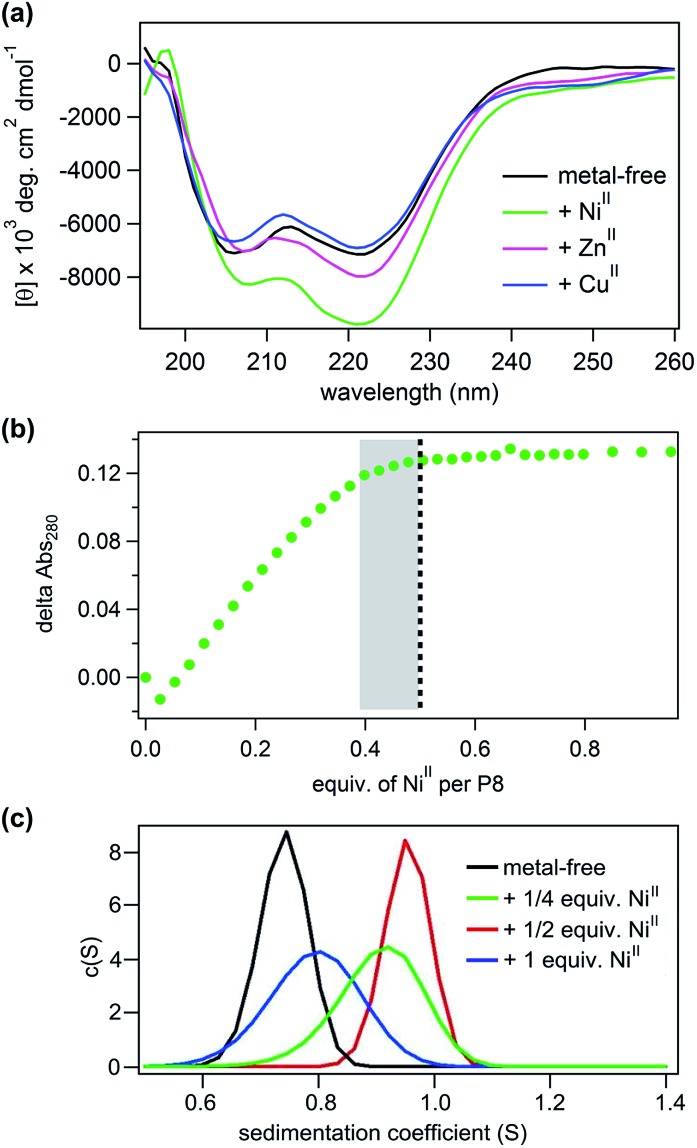
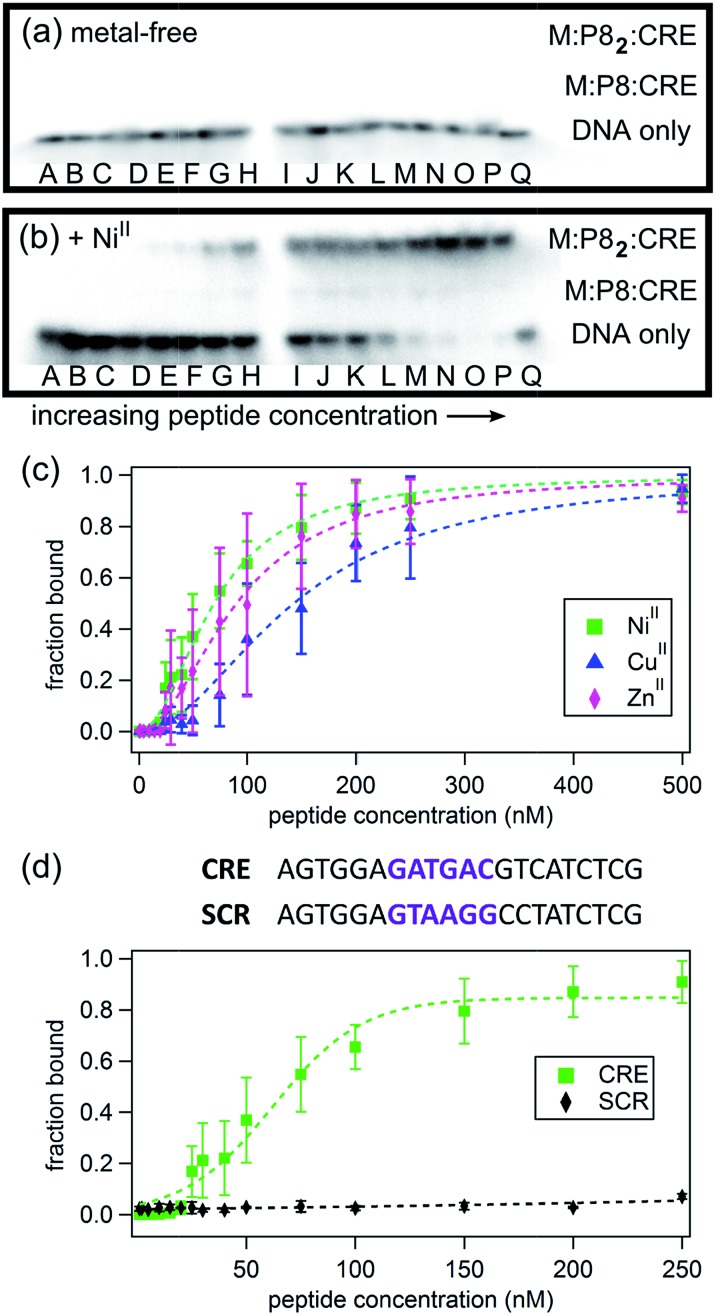
Given the prevalent role of α-helical motifs on protein surfaces in mediating protein-protein and protein-DNA interactions, there have been significant efforts to develop strategies to induce α-helicity in short, unstructured peptides to interrogate such interactions. Toward this goal, we have recently introduced hybrid metal coordination motifs (HCMs). HCMs combine a natural metal-binding amino acid side chain with a synthetic chelating group that are appropriately positioned in a peptide sequence to stabilize an α-helical conformation upon metal coordination. Here, we present a series of short peptides modified with HCMs consisting of a His and a phenanthroline group at and positions that can induce α-helicity in a metal-tunable fashion as well as direct the formation of discrete dimeric architectures for recognition of biological targets. We show that the induction of α-helicity can be further modulated by secondary sphere interactions between amino acids at the 4 position and the HCM. A frequently cited drawback of the use of peptides as therapeutics is their propensity to be quickly digested by proteases; here, we observe an enhancement of up to ∼100-fold in the half-lifes of the metal-bound HCM-peptides in the presence of trypsin. Finally, we show that an HCM-bearing peptide sequence, which contains the DNA-recognition domain of a bZIP protein but is devoid of the obligate dimerization domain, can dimerize with the proper geometry and in an α-helical conformation to bind a cognate DNA sequence with high affinities (K≥ 65 nM), again in a metal-tunable manner.
鉴于α-螺旋基序在蛋白质表面介导蛋白质-蛋白质和蛋白质-DNA相互作用中普遍存在的作用,人们付出了巨大努力来开发策略,以诱导短的无结构肽形成α-螺旋,从而研究此类相互作用。为了实现这一目标,我们最近引入了杂化金属配位基序(HCMs)。HCMs将天然金属结合氨基酸侧链与合成螯合基团相结合,这些基团在肽序列中适当定位,以便在金属配位时稳定α-螺旋构象。在此,我们展示了一系列用HCMs修饰的短肽,这些短肽在特定位置由一个组氨酸和一个菲咯啉基团组成,它们能够以金属可调的方式诱导α-螺旋形成,并指导形成离散的二聚体结构以识别生物靶点。我们表明,α-螺旋的诱导可以通过第4位氨基酸与HCM之间的二级球相互作用进一步调节。使用肽作为治疗剂时一个经常被提及的缺点是它们容易被蛋白酶快速消化;在这里,我们观察到在胰蛋白酶存在的情况下,金属结合的HCM肽的半衰期提高了约100倍。最后,我们表明,一个带有HCM的肽序列,它包含一个bZIP蛋白的DNA识别结构域,但没有必需的二聚化结构域,能够以适当的几何形状和α-螺旋构象二聚化,以高亲和力(K≥65 nM)结合同源DNA序列,同样是以金属可调的方式。