Cai Ming, He Jingquan, Xiong Jian, Tay Li Wei Rachel, Wang Ziqing, Rog Colin, Wang Jingshu, Xie Yizhao, Wang Guobin, Banno Yoshiko, Li Feng, Zhu Michael, Du Guangwei
Department of Gastrointestinal Surgery, Union Hospital, Tongji Medical College, Huazhong University of Science and Technology, Wuhan 430022, Hubei Province, China.
Department of Integrative Biology and Pharmacology, University of Texas Health Science Center at Houston, Houston, TX 77030, USA.
Cell Death Dis. 2016 Nov 3;7(11):e2448. doi: 10.1038/cddis.2016.355.
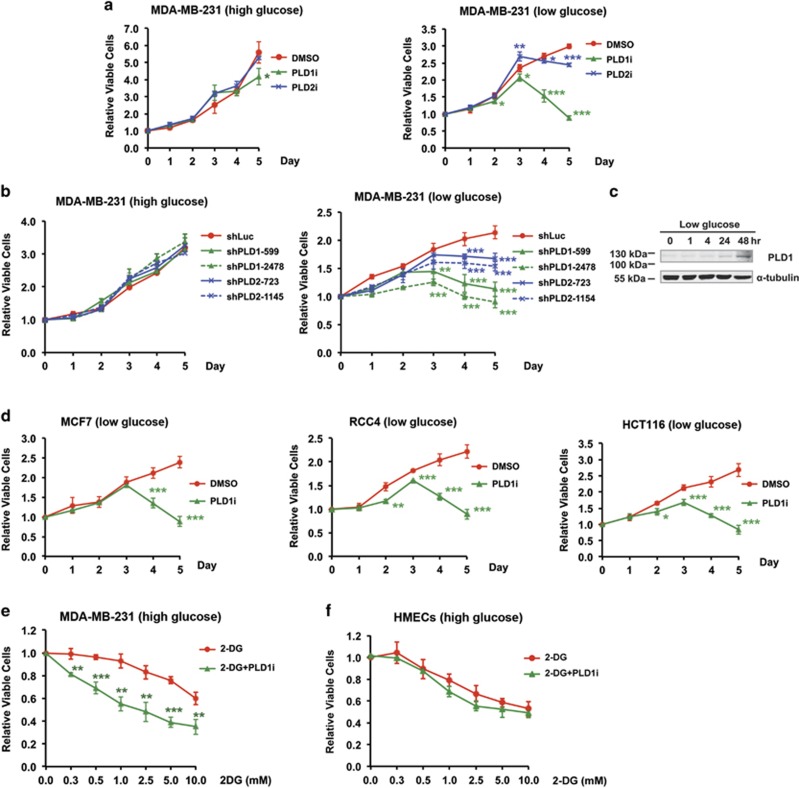
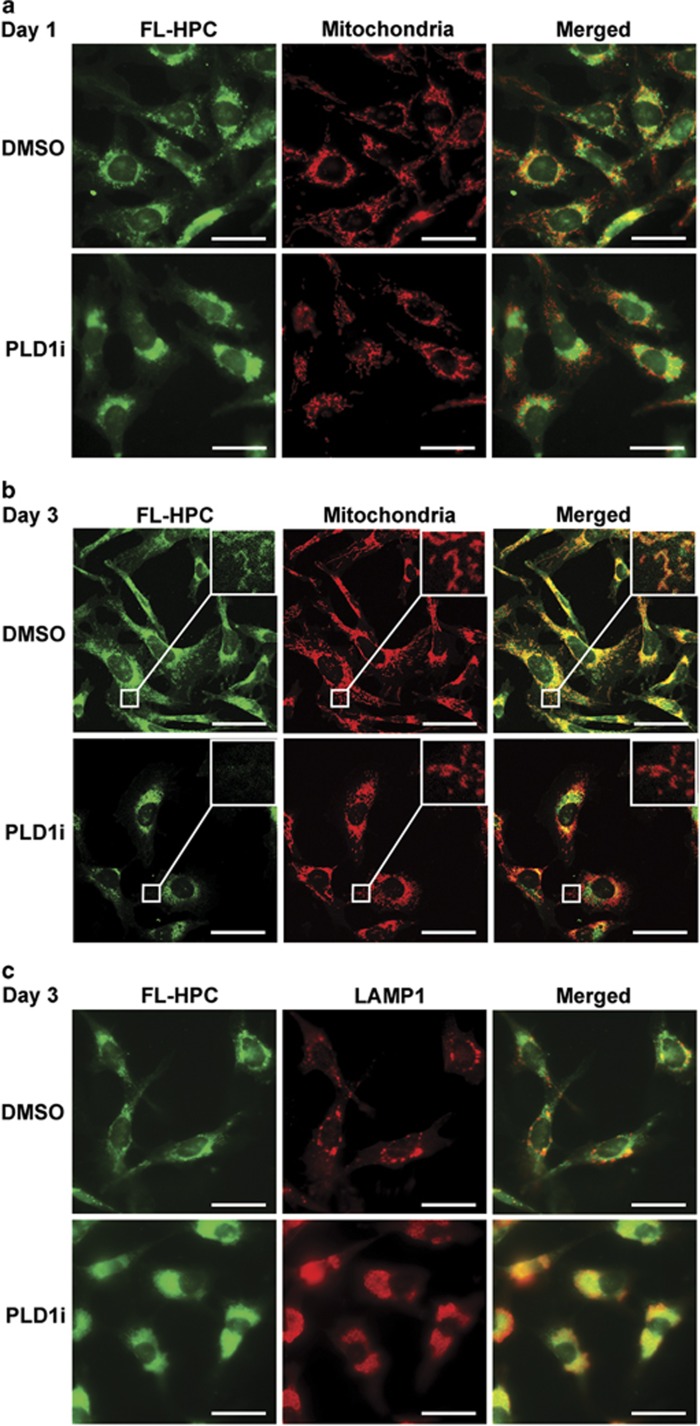
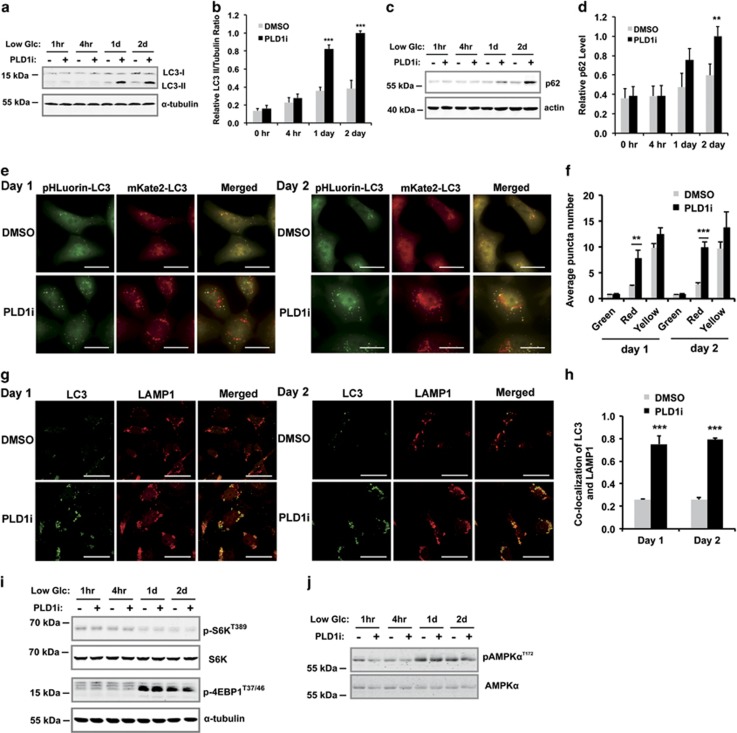
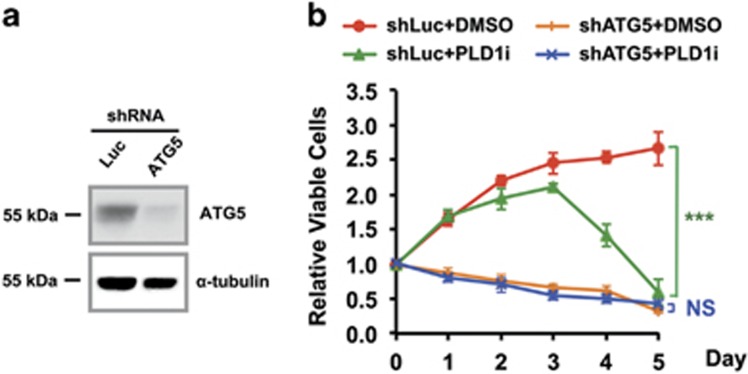
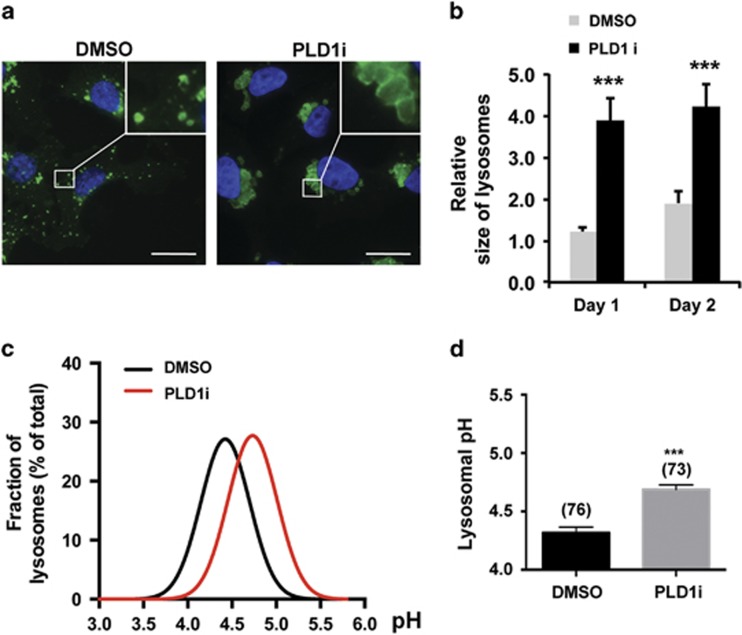
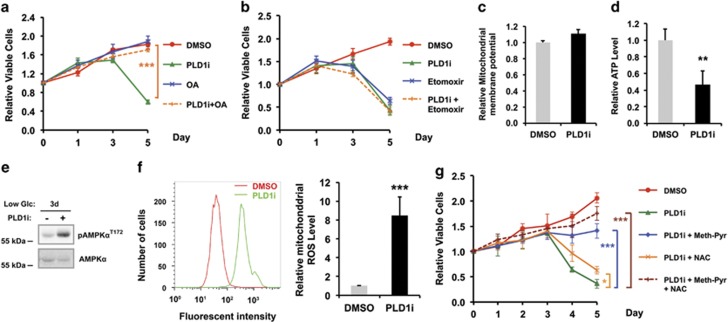
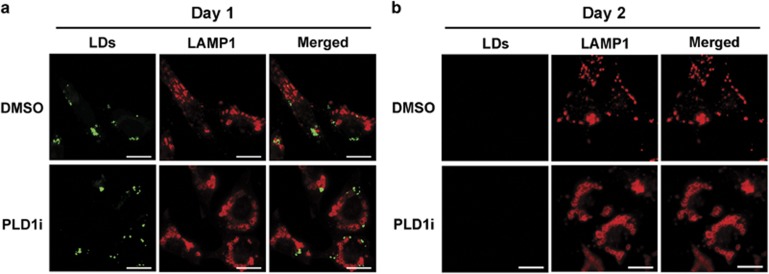
Cancer cells utilize flexible metabolic programs to maintain viability and proliferation under stress conditions including nutrient deprivation. Here we report that phospholipase D1 (PLD1) participates in the regulation of metabolic plasticity in cancer cells. PLD1 activity is required for cancer cell survival during prolonged glucose deprivation. Blocking PLD1 sensitizes cancer cells to glycolysis inhibition by 2-deoxy-D-glucose (2-DG) and results in decreased autophagic flux, enlarged lysosomes, and increased lysosomal pH. Mechanistically, PLD1-regulated autophagy hydrolyzes bulk membrane phospholipids to supply fatty acids (FAs) for oxidation in mitochondria. In low glucose cultures, the blockade of fatty acid oxidation (FAO) by PLD1 inhibition suppresses adenosine triphosphate (ATP) production and increases reactive oxygen species (ROS), leading to cancer cell death. In summary, our findings reveal a novel role of PLD1 in sustaining cancer cell survival during metabolic stress, and suggest PLD1 as a potential target for anticancer metabolism therapy.
癌细胞利用灵活的代谢程序在包括营养剥夺在内的应激条件下维持生存和增殖。在此,我们报告磷脂酶D1(PLD1)参与癌细胞代谢可塑性的调控。在长期葡萄糖剥夺期间,癌细胞存活需要PLD1活性。阻断PLD1会使癌细胞对2-脱氧-D-葡萄糖(2-DG)介导的糖酵解抑制敏感,并导致自噬通量降低、溶酶体增大和溶酶体pH值升高。从机制上讲,PLD1调控的自噬水解大量膜磷脂以提供脂肪酸(FAs)用于线粒体氧化。在低糖培养中,通过抑制PLD1阻断脂肪酸氧化(FAO)会抑制三磷酸腺苷(ATP)生成并增加活性氧(ROS),导致癌细胞死亡。总之,我们的研究结果揭示了PLD1在代谢应激期间维持癌细胞存活中的新作用,并表明PLD1作为抗癌代谢治疗的潜在靶点。