Liu Zhaohua, Ji Zhibin, Wang Guizhi, Chao Tianle, Hou Lei, Wang Jianmin
Shandong Provincial Key Laboratory of Animal Biotechnology and Disease Control and Prevention, College of Animal Science and Technology, Shandong Agricultural University, Taian, Shandong, 271018, China.
BMC Genomics. 2016 Nov 3;17(1):863. doi: 10.1186/s12864-016-3212-2.
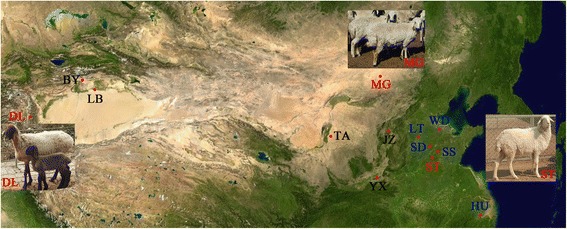
Throughout a long period of adaptation and selection, sheep have thrived in a diverse range of ecological environments. Mongolian sheep is the common ancestor of the Chinese short fat-tailed sheep. Migration to different ecoregions leads to changes in selection pressures and results in microevolution. Mongolian sheep and its subspecies differ in a number of important traits, especially reproductive traits. Genome-wide intraspecific variation is required to dissect the genetic basis of these traits.
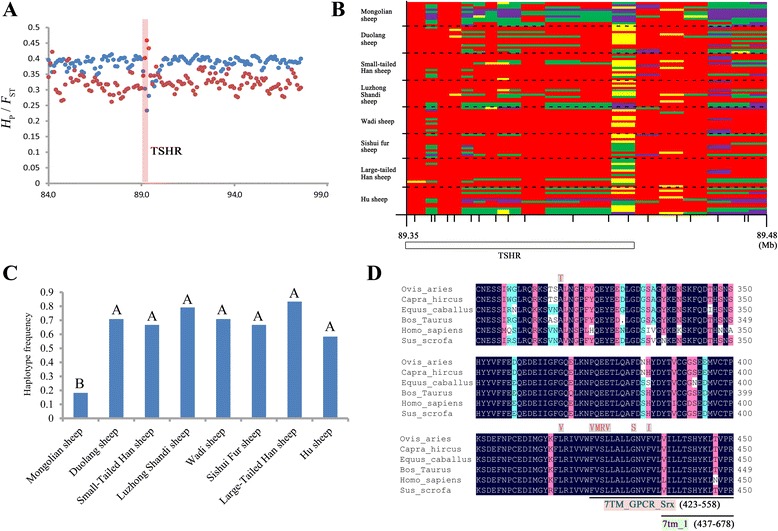
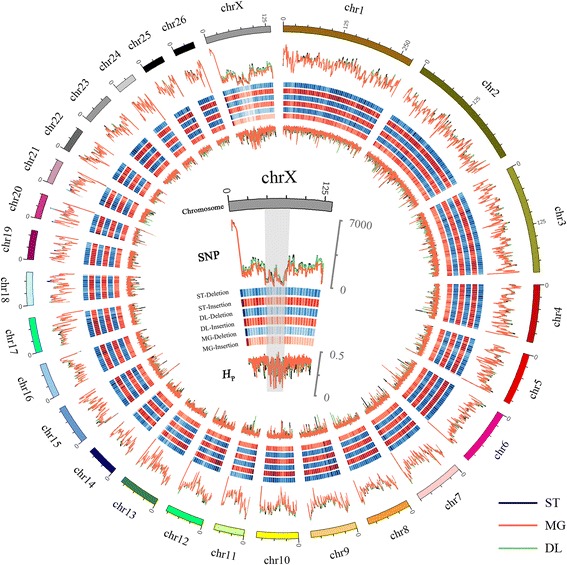
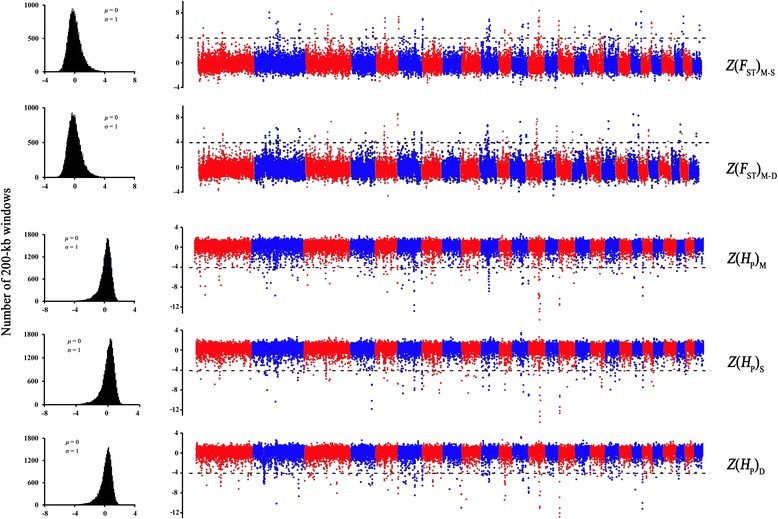
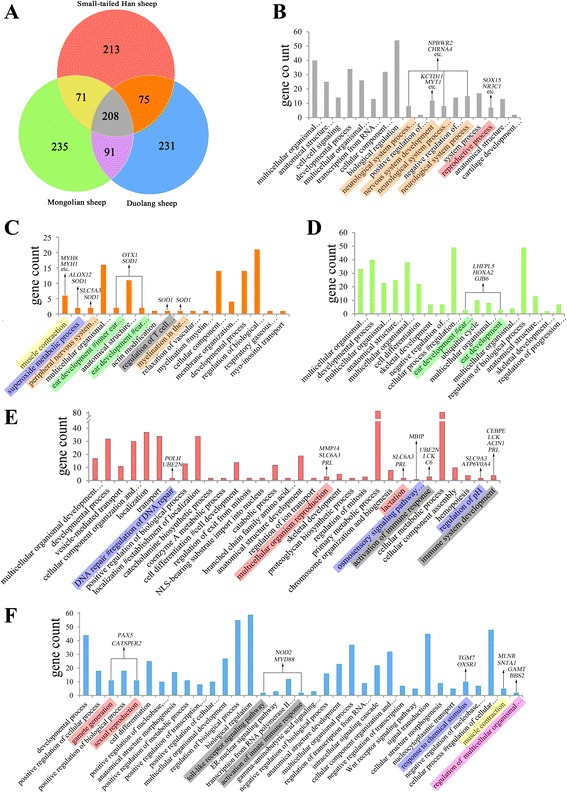
This research resequenced 3 short fat-tailed sheep breeds with a 43.2-fold coverage of the sheep genome. We report more than 17 million single nucleotide polymorphisms and 2.9 million indels and identify 143 genomic regions with reduced pooled heterozygosity or increased genetic distance to each other breed that represent likely targets for selection during the migration. These regions harbor genes related to developmental processes, cellular processes, multicellular organismal processes, biological regulation, metabolic processes, reproduction, localization, growth and various components of the stress responses. Furthermore, we examined the haplotype diversity of 3 genomic regions involved in reproduction and found significant differences in TSHR and PRL gene regions among 8 sheep breeds.
Our results provide useful genomic information for identifying genes or causal mutations associated with important economic traits in sheep and for understanding the genetic basis of adaptation to different ecological environments.
在漫长的适应和选择过程中,绵羊在多种生态环境中繁衍生息。蒙古羊是中国短脂尾羊的共同祖先。迁移到不同的生态区域会导致选择压力的变化,并引发微进化。蒙古羊及其亚种在许多重要性状上存在差异,尤其是繁殖性状。需要全基因组种内变异来剖析这些性状的遗传基础。
本研究对3个短脂尾羊品种进行了重测序,测序深度达到绵羊基因组的43.2倍。我们报告了超过1700万个单核苷酸多态性和290万个插入缺失,并鉴定出143个基因组区域,这些区域的混合杂合性降低或与其他品种的遗传距离增加,代表了迁移过程中可能的选择目标。这些区域包含与发育过程、细胞过程、多细胞生物过程、生物调控、代谢过程、繁殖、定位、生长以及应激反应的各种组成部分相关的基因。此外,我们研究了3个与繁殖相关的基因组区域的单倍型多样性,发现8个绵羊品种在促甲状腺激素受体(TSHR)和催乳素(PRL)基因区域存在显著差异。
我们的结果为鉴定与绵羊重要经济性状相关的基因或因果突变以及理解适应不同生态环境的遗传基础提供了有用的基因组信息。