Eghbalsaied Shahin, Ghaedi Kamran, Shahmoradi Somayeh, Pirestani Akbar, Amini Hamidreza, Saiedi Talat, Nicol Linda, McNeilly Alan
Department of Animal Science, Agricultural Faculty, Khorasgan Branch, Islamic Azad University, Isfahan, Iran.
Biology Department, School of Sciences, University of Isfahan, Isfahan, Iran ; Departments of Cell and Molecular Biology, Cell Science Research Center, Royan Institute for Animal Biotechnology, ACECR, Isfahan, Iran.
Int J Fertil Steril. 2012 Jan;5(4):225-30. Epub 2012 Mar 20.
Multiple births occur frequently in some Iranian sheep breeds, while infertility scarcely occurs. Mutation detection in major fecundity genes has been explored in most of Iranian sheep flocks over the last decade. However, previously reported single nucleotide polymorphisms (SNPs) for bone morphogenetic protein receptor-(BMPR)-1B and growth differentiation factor ) GDF9( known to affect fertility have not been detected. This study was conducted to assess whether any significant mutations in GDF9 were extracted from slaughtered ewe ovaries of Iranian Afshari sheep breed.
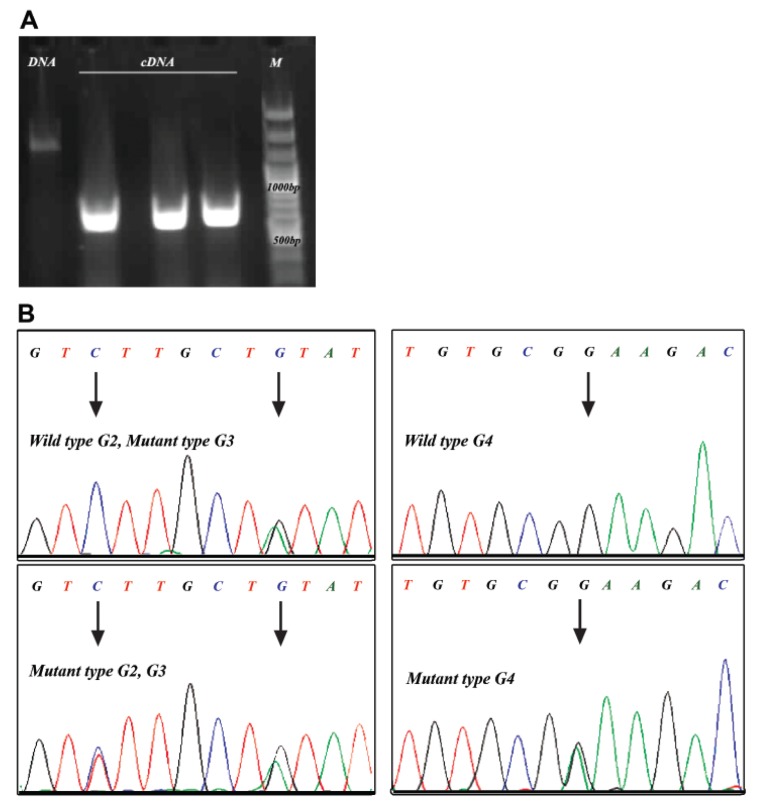
Ovaries defined as poor, fair, and excellent quality based on external visual appearance of follicles were used for histology and RNA extraction processes. High quality RNAs underwent reverse transcriptase-polymerase chain reaction (RT-PCR) from GDF9 mRNA, and the products sequenced.
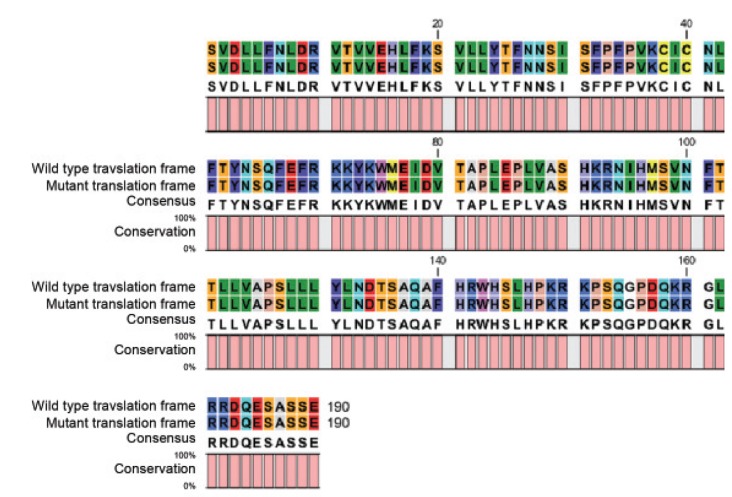
No streak ovaries, which are considered indicators of infertility due to homozygocity for some mutations in GDF9 and BMP15, were found. Sequencing results from GDF9 cDNA showed that G2 (C471T), G3 (G477A), and G4 (G721A) mutations were observed from 1, 4, and 1 out of 12 ewes, respectively. Though all 3 mutations were previously reported, this is the first report on their presence in Iranian breeds. The first and second mutations do not alter the amino acids, while G4 is a non-conservative mutation leading to E241K in the prohormone.
As the G4 mutation was observed only in ovaries defined superficially as top quality, it could be considered as one of reasons for higher ovulation rate in some sheep. Furthermore since multiple mutations were observed in some cases, it might be possible that combinations of minor mutations in GDF9 and BMP15 interact to affect fecundity in some Iranian sheep breeds.
在一些伊朗绵羊品种中,多胎现象频繁出现,而不育情况几乎不发生。在过去十年里,大多数伊朗绵羊群体都对主要繁殖力基因进行了突变检测。然而,之前报道的已知影响繁殖力的骨形态发生蛋白受体-(BMPR)-1B和生长分化因子(GDF9)的单核苷酸多态性(SNP)尚未被检测到。本研究旨在评估从伊朗阿夫沙里绵羊品种屠宰母羊卵巢中提取的GDF9基因是否存在任何显著突变。
根据卵泡的外部视觉外观将卵巢分为质量差、中等和优质,用于组织学和RNA提取过程。高质量的RNA进行GDF9 mRNA的逆转录-聚合酶链反应(RT-PCR),并对产物进行测序。
未发现条纹状卵巢,条纹状卵巢被认为是由于GDF9和BMP15某些突变的纯合性导致不育的指标。GDF9 cDNA的测序结果显示,分别在12只母羊中的1只、4只和1只中观察到G2(C471T)、G3(G477A)和G4(G721A)突变。尽管所有这3种突变之前都有报道,但这是它们在伊朗品种中存在的首次报告。第一和第二个突变不改变氨基酸,而G4是一个非保守突变,导致激素原中的E241K。
由于仅在表面定义为顶级质量的卵巢中观察到G4突变,它可能被视为一些绵羊排卵率较高的原因之一。此外,由于在某些情况下观察到多个突变,GDF9和BMP15中的微小突变组合可能相互作用,影响一些伊朗绵羊品种的繁殖力。