Fodjo Barriere A Y, Atemnkeng Njika, Esemu Livo, Yuosembom Emile K, Quakyi Isabella A, Tchinda Viviane H M, Smith Joseph, Salanti Ali, Bigoga Jude, Taylor Diane W, Leke Rose G F, Babakhanyan Anna
Department of Biochemistry, Faculty of Medicine and Biomedical Research, Biotechnology Centre, University of Yaoundé 1, Yaounde, Cameroon.
School of Public Health, College of Health Sciences, University of Ghana, Legon, Ghana.
Malar J. 2016 Nov 4;15(1):532. doi: 10.1186/s12936-016-1585-y.
Antigenic variation of Plasmodium falciparum erythrocyte membrane protein 1 is a key parasite mechanism for immune evasion and parasite survival. It is assumed that the number of parasites expressing the same var gene must reach high enough numbers before the host can produce detectable levels of antibodies (Ab) to the variant. VAR2CSA is a protein coded for by one of 60 var genes that is expressed on the surface of infected erythrocytes (IE) and mediates IE binding to the placenta. The idea that Ab to VAR2CSA are pregnancy-associated was challenged when VAR2CSA-specific Ab were reported in children and men. However, the frequency and conditions under which Ab to VAR2CSA are produced outside pregnancy is unclear. This study sought to determine frequency, specificity and level of Ab to VAR2CSA produced in children and whether children with hyperparasitaemia and severe malaria are more likely to produce Ab to VAR2CSA compared to healthy children.
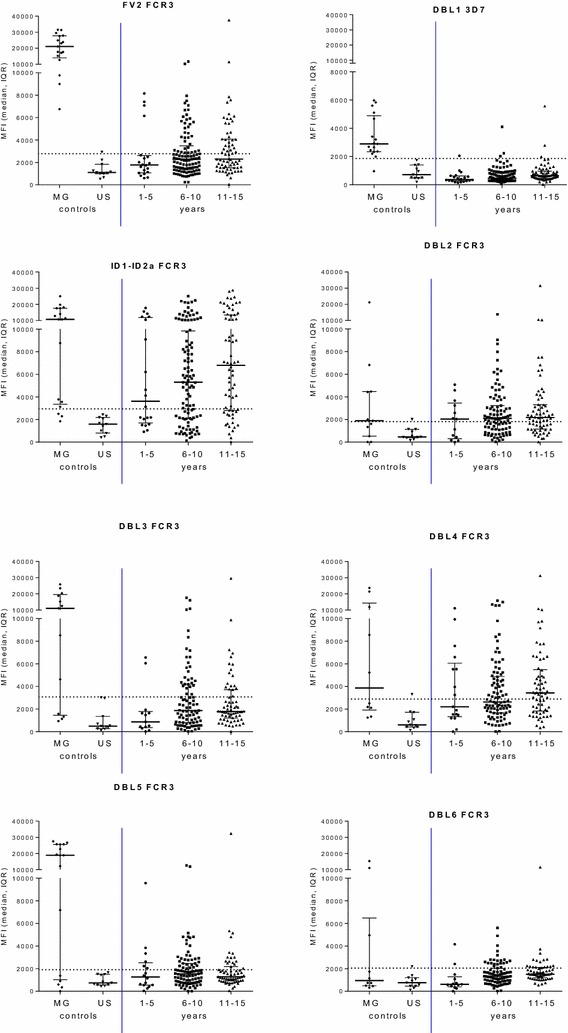
Antibody responses to a panel of recombinant proteins consisting of multiple VAR2CSA Duffy-binding-like domains (DBL) and full-length VAR2CSA (FV2) were characterized in 193 1-15 year old children from rural Cameroonian villages and 160 children with severe malaria from the city.
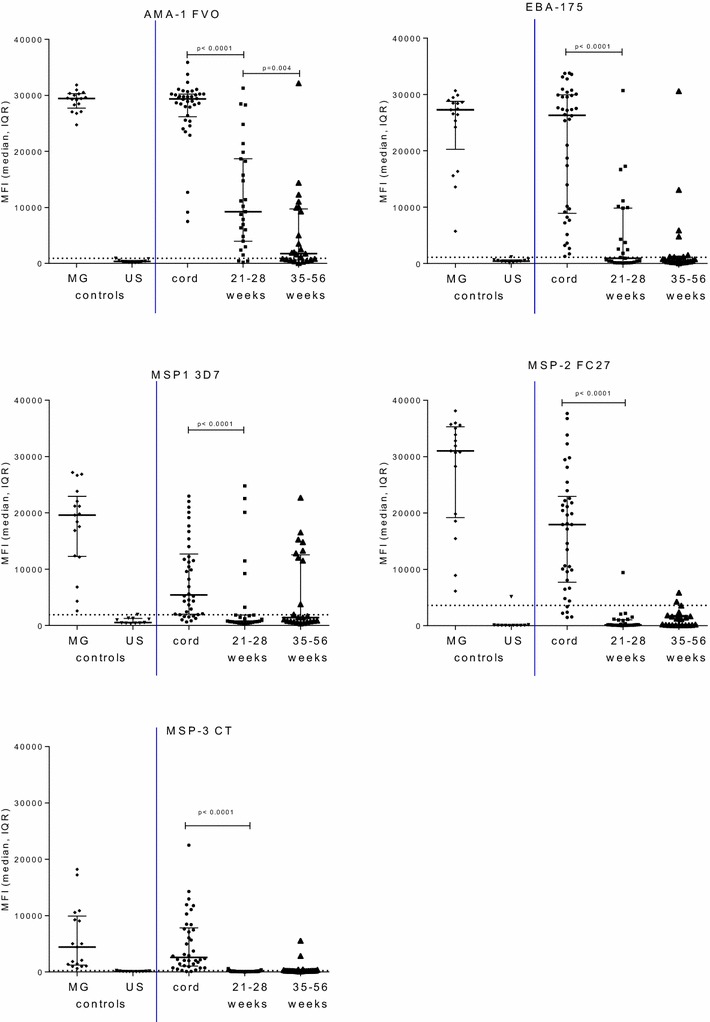
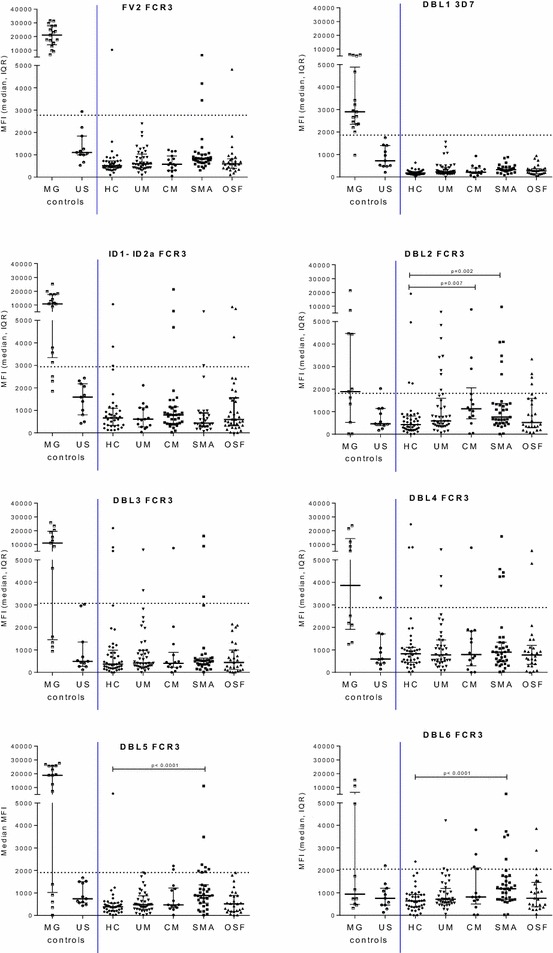
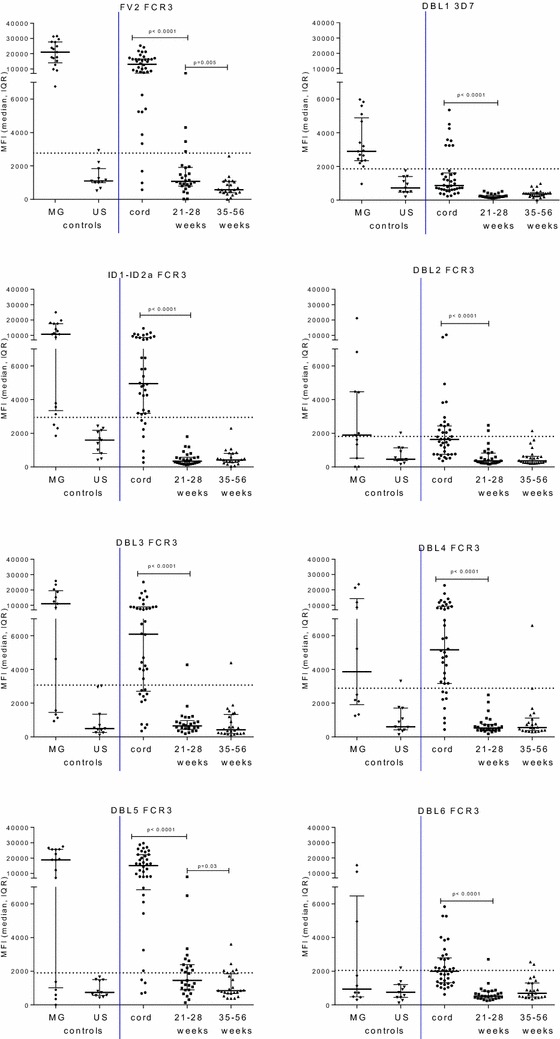
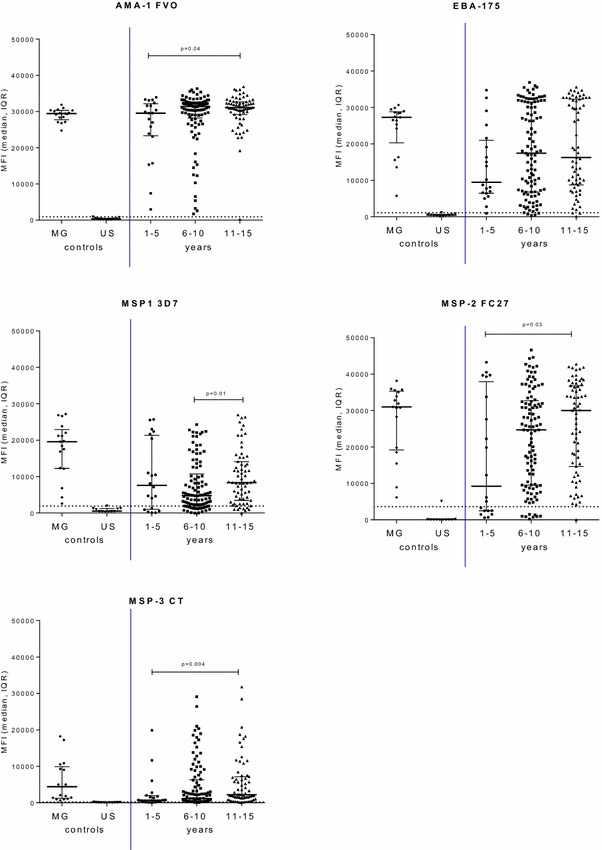
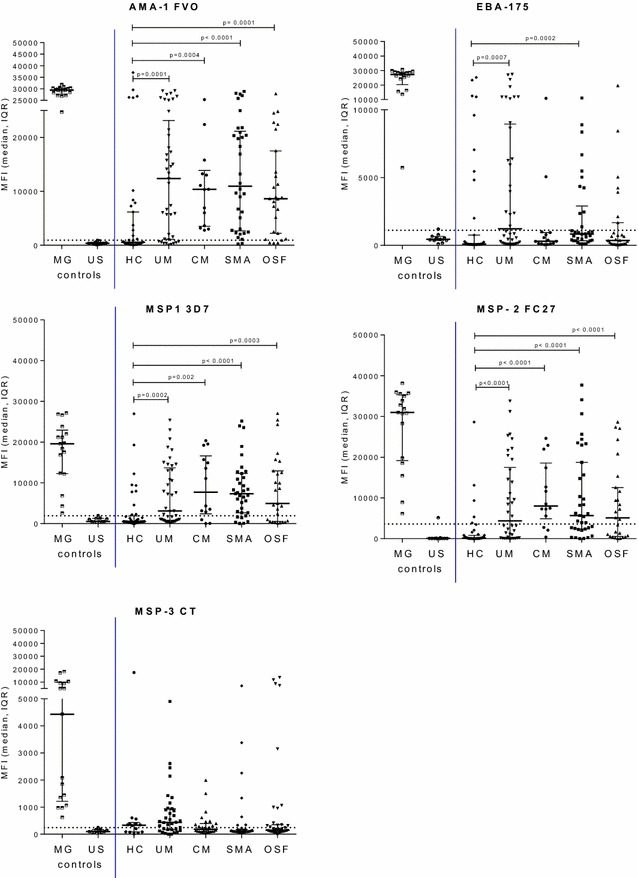
Low Ab levels to VAR2CSA were detected in children; however, Ab levels to FV2 in teenagers were rare. Children preferentially recognized DBL2 (56-70%) and DBL4 (50-60%), while multigravidae produced high levels of IgG to DBL3, DBL5 and FV2. Sixty-seven percent of teenage girls (n = 16/24) recognized ID1-ID2a region of VAR2CSA. Children with severe forms of malaria had significantly higher IgG to merozoite antigens (all p < 0.05), but not to VAR2CSA (all p > 0.05) when compared to the healthy children.
The study suggests that children, including teenage girls acquire Ab to VAR2CSA domains and FV2, but Ab levels are much lower than those needed to protect women from placental infections and repertoire of Ab responses to DBL domains is different from those in pregnant women. Interestingly, children with severe malaria did not have higher Ab levels to VAR2CSA compared to healthy children.
恶性疟原虫红细胞膜蛋白1的抗原变异是寄生虫免疫逃逸和生存的关键机制。据推测,表达相同var基因的寄生虫数量必须达到足够高的水平,宿主才能产生可检测水平的针对该变体的抗体(Ab)。VAR2CSA是由60个var基因之一编码的蛋白质,在感染红细胞(IE)表面表达,并介导IE与胎盘的结合。当在儿童和男性中报道了VAR2CSA特异性抗体时,关于针对VAR2CSA的抗体与妊娠相关的观点受到了挑战。然而,在非妊娠状态下产生针对VAR2CSA抗体的频率和条件尚不清楚。本研究旨在确定儿童产生针对VAR2CSA抗体的频率、特异性和水平,以及与健康儿童相比,高寄生虫血症和重症疟疾儿童是否更有可能产生针对VAR2CSA的抗体。
对来自喀麦隆农村村庄的193名1至15岁儿童和来自城市的160名重症疟疾儿童,检测其对一组由多个VAR2CSA达菲结合样结构域(DBL)和全长VAR2CSA(FV2)组成的重组蛋白的抗体反应。
在儿童中检测到针对VAR2CSA的低水平抗体;然而,青少年中针对FV2的抗体水平很少见。儿童优先识别DBL2(56 - 70%)和DBL4(50 - 60%),而经产妇对DBL3、DBL5和FV2产生高水平的IgG。67%的青少年女孩(n = 16/24)识别VAR2CSA的ID1 - ID2a区域。与健康儿童相比,患有严重疟疾的儿童对裂殖子抗原的IgG水平显著更高(所有p < 0.05),但对VAR2CSA的IgG水平则不然(所有p > 0.05)。
该研究表明,包括青少年女孩在内的儿童会获得针对VAR2CSA结构域和FV2的抗体,但抗体水平远低于保护女性免受胎盘感染所需的水平,并且针对DBL结构域的抗体反应谱与孕妇不同。有趣的是,与健康儿童相比,患有严重疟疾的儿童针对VAR2CSA的抗体水平并没有更高。