The State Key Laboratory of Medical Genetics, School of Life Sciences, Central South University, Changsha, Hunan 410078, China.
Mental Health Institute, the Second Xiangya Hospital, Central South University, Changsha, Hunan 410011, China.
Nat Commun. 2016 Nov 8;7:13316. doi: 10.1038/ncomms13316.
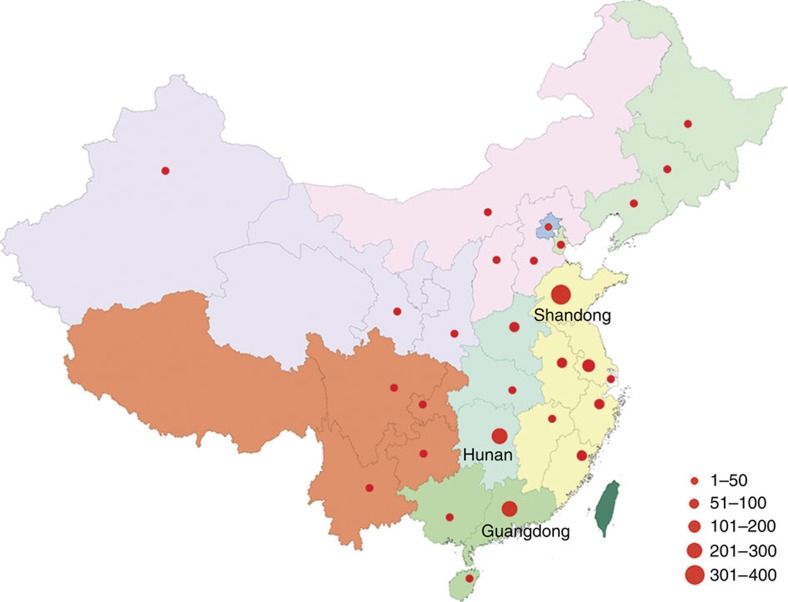
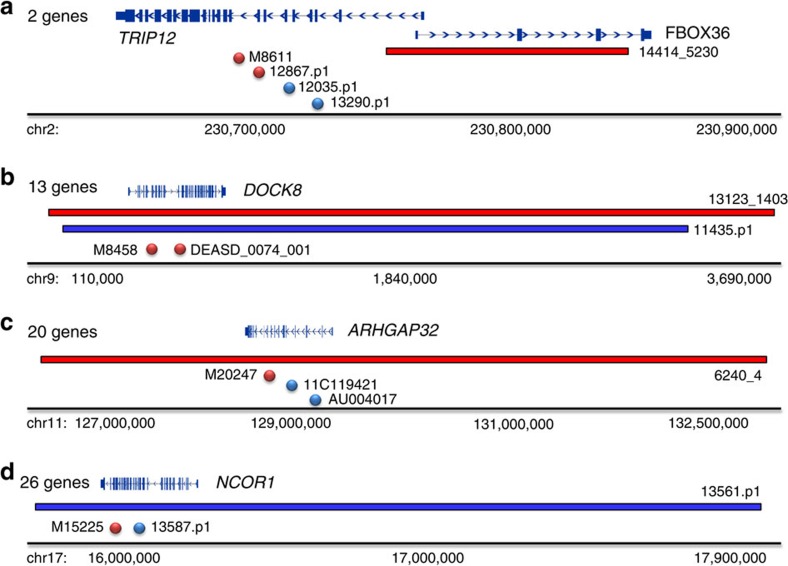
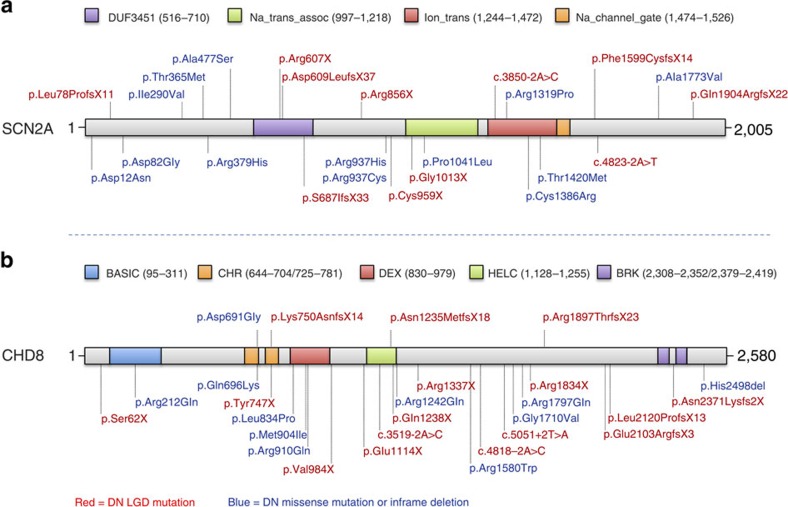
Recurrent de novo (DN) and likely gene-disruptive (LGD) mutations contribute significantly to autism spectrum disorders (ASDs) but have been primarily investigated in European cohorts. Here, we sequence 189 risk genes in 1,543 Chinese ASD probands (1,045 from trios). We report an 11-fold increase in the odds of DN LGD mutations compared with expectation under an exome-wide neutral model of mutation. In aggregate, ∼4% of ASD patients carry a DN mutation in one of just 29 autism risk genes. The most prevalent gene for recurrent DN mutations is SCN2A (1.1% of patients) followed by CHD8, DSCAM, MECP2, POGZ, WDFY3 and ASH1L. We identify novel DN LGD recurrences (GIGYF2, MYT1L, CUL3, DOCK8 and ZNF292) and DN mutations in previous ASD candidates (ARHGAP32, NCOR1, PHIP, STXBP1, CDKL5 and SHANK1). Phenotypic follow-up confirms potential subtypes and highlights how large global cohorts might be leveraged to prove the pathogenic significance of individually rare mutations.
新生的(DN)和可能的基因破坏性(LGD)突变在自闭症谱系障碍(ASD)中起着重要作用,但主要在欧洲队列中进行了研究。在这里,我们对 1543 名中国 ASD 先证者(1045 名来自三联体)的 189 个风险基因进行了测序。与外显子中性突变模型的预期相比,我们报告了 DN LGD 突变的几率增加了 11 倍。总体而言,只有 29 个自闭症风险基因中的一个基因发生 DN 突变,约有 4%的 ASD 患者携带这种突变。最常见的具有反复发生的 DN 突变的基因是 SCN2A(占患者的 1.1%),其次是 CHD8、DSCAM、MECP2、POGZ、WDFY3 和 ASH1L。我们发现了新的 DN LGD 重复(GIGYF2、MYT1L、CUL3、DOCK8 和 ZNF292)和先前 ASD 候选基因中的 DN 突变(ARHGAP32、NCOR1、PHIP、STXBP1、CDKL5 和 SHANK1)。表型随访证实了潜在的亚型,并强调了如何利用大型全球队列来证明个体罕见突变的致病性意义。