Yu Xin-Min, Wu Yi-Chen, Liu Xiang, Huang Xian-Cong, Hou Xiu-Xiu, Wang Jiu-Li, Cheng Xiang-Liu, Mao Wei-Min, Ling Zhi-Qiang
Zhejiang Cancer Research Institute, Zhejiang Province Cancer Hospital, Zhejiang Cancer Center, Hangzhou 310022, China.
Department of Thoracic Tumor Chemotherapy, Zhejiang Province Cancer Hospital, Zhejiang Cancer Center, Hangzhou 310022, China.
Int J Mol Sci. 2016 Nov 5;17(11):1845. doi: 10.3390/ijms17111845.
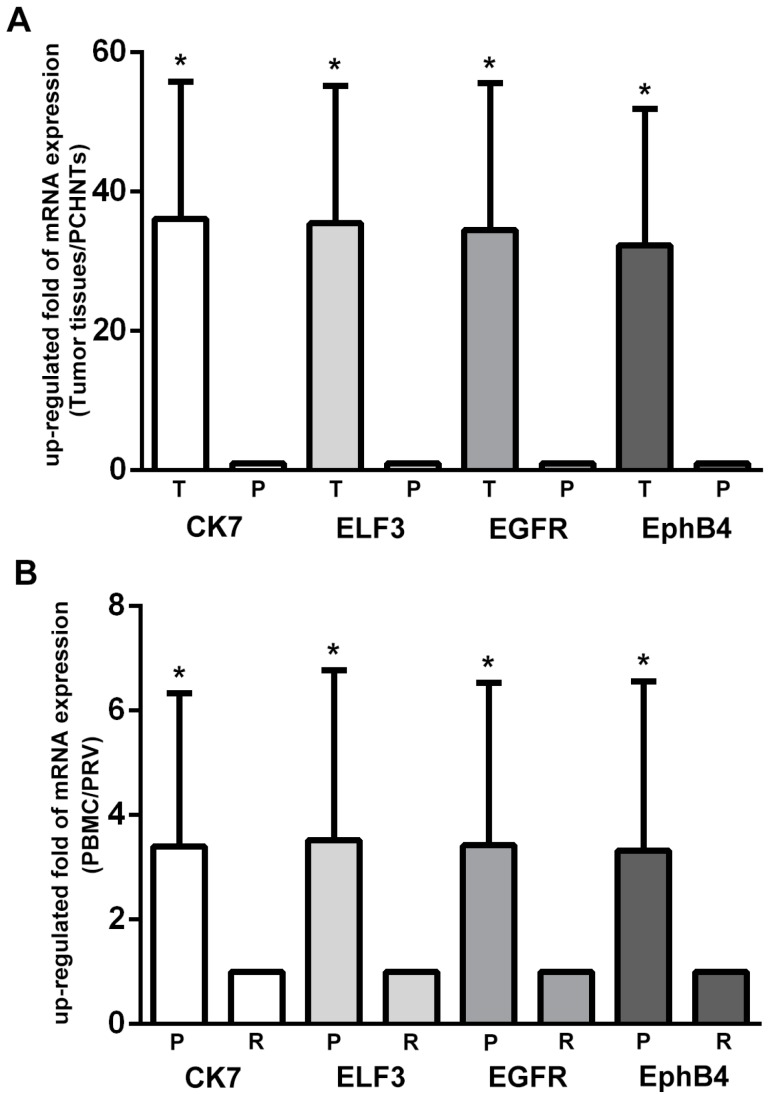
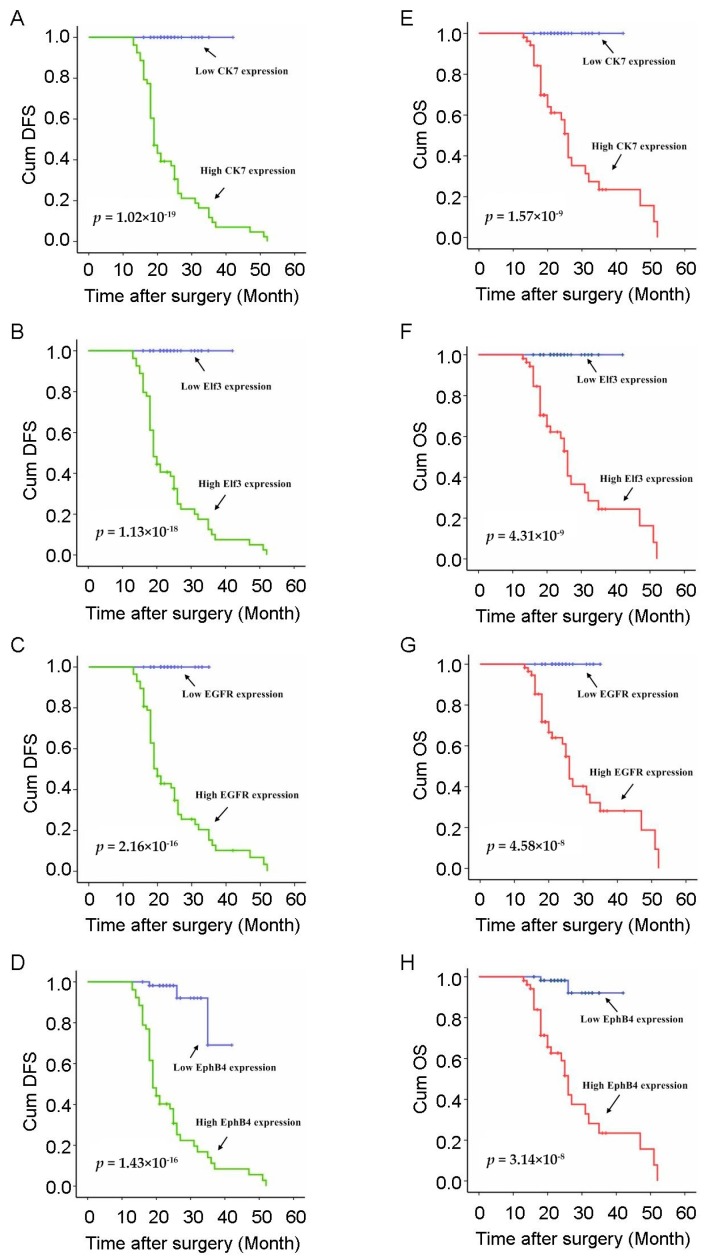
Circulating tumor cells (CTCs) have been implicated in tumor progression and prognosis. Techniques detecting CTCs in the peripheral blood of patients with non-small cell lung carcinoma (NSCLC) may help to identify individuals likely to benefit from early systemic treatment. However, the detection of CTCs with a single marker is challenging, owing to low specificity and sensitivity and due to the heterogeneity and rareness of CTCs. Herein, the probability of cell-free RNA content in the peripheral blood as a potential biomarker for detecting CTCs in cancer patients was investigated. An immunomagnetic enrichment of real-time reverse-transcription PCR (RT-PCR) technology for analysis of CTCs in NSCLC patients was also developed. The mRNA levels of four candidate genes, cytokeratin 7 (), E74-like factor 3 (), epidermal growth factor receptor (), and erythropoietin-producing hepatocellular carcinoma receptor B4 () that were significantly elevated in tumor tissues and peripheral blood mononuclear cells (PBMCs) were determined. The expression of and in tumor tissues and in PBMCs was associated with lymph node metastasis (all < 0.05). The expression of in PBMCs was correlated with age and in PBMCs correlated with histopathological type, respectively (all < 0.05). The expression of all four genes in tumor tissues and PBMCs was significantly correlated with the clinical stage (all < 0.01). Survival analysis showed that the patients with enhanced expression of , , , and mRNA in PBMCs had poorer disease-free survival (DFS) and overall survival (OS) than those without (all < 0.0001). The present study showed that this alteration of cell-free RNA content in peripheral blood might have clinical ramifications in the diagnosis and treatment of NSCLC patients.
循环肿瘤细胞(CTCs)与肿瘤进展和预后有关。检测非小细胞肺癌(NSCLC)患者外周血中CTCs的技术可能有助于识别可能从早期全身治疗中获益的个体。然而,由于CTCs的低特异性和敏感性以及其异质性和稀有性,用单一标志物检测CTCs具有挑战性。在此,研究了外周血中无细胞RNA含量作为癌症患者检测CTCs潜在生物标志物的可能性。还开发了一种用于分析NSCLC患者CTCs的免疫磁珠富集实时逆转录PCR(RT-PCR)技术。测定了肿瘤组织和外周血单个核细胞(PBMCs)中显著上调的四个候选基因细胞角蛋白7()、E74样因子3()、表皮生长因子受体()和促红细胞生成素产生肝细胞癌受体B4()的mRNA水平。肿瘤组织中 和 的表达以及PBMCs中 的表达与淋巴结转移相关(均P<0.05)。PBMCs中 的表达分别与年龄相关,PBMCs中 的表达与组织病理学类型相关(均P<0.05)。肿瘤组织和PBMCs中所有四个基因的表达均与临床分期显著相关(均P<0.01)。生存分析表明,PBMCs中 、 、 和 mRNA表达增强的患者无病生存期(DFS)和总生存期(OS)比未增强的患者差(均P<0.0001)。本研究表明,外周血中无细胞RNA含量的这种改变可能对NSCLC患者的诊断和治疗具有临床意义。