Schumacher Frances-Rose, Schubert Steffen, Hannus Michael, Sönnichsen Birte, Ittrich Carina, Kreideweiss Stefan, Kurz Thimo, Rippmann Jörg F
MRC Protein Phosphorylation and Ubiquitylation Unit, The Sir James Black Center, University of Dundee, Dow Street, Dundee, DD1 5EH, United Kingdom.
Cenix BioScience GmbH, 01307, Dresden, Germany.
PLoS One. 2016 Nov 10;11(11):e0166352. doi: 10.1371/journal.pone.0166352. eCollection 2016.
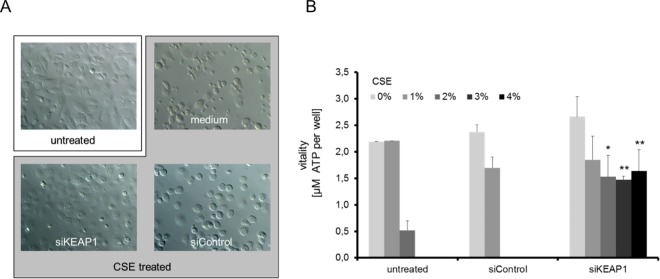
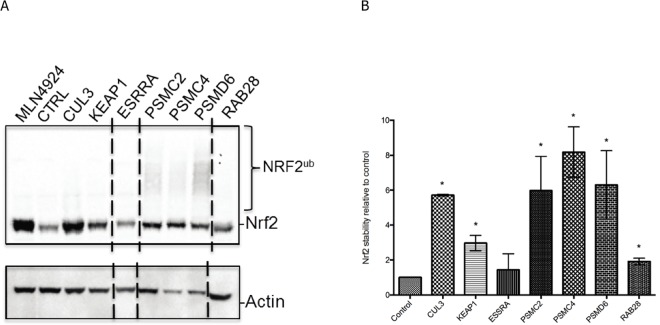
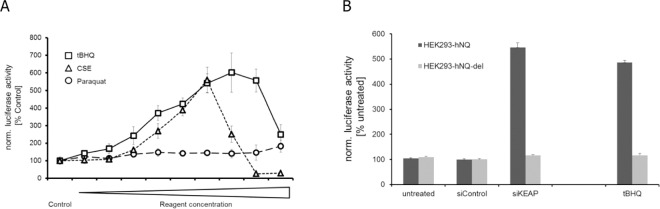
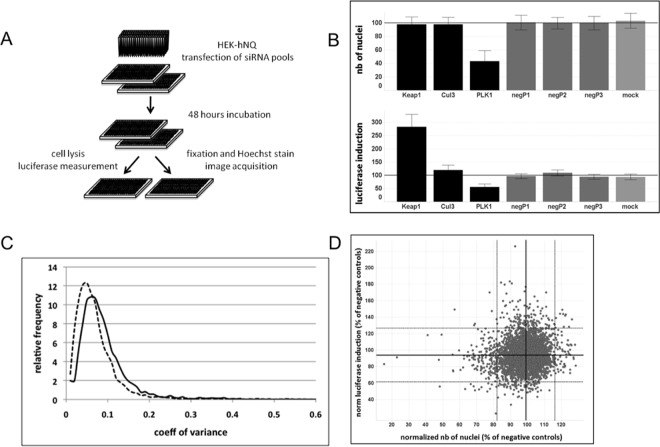
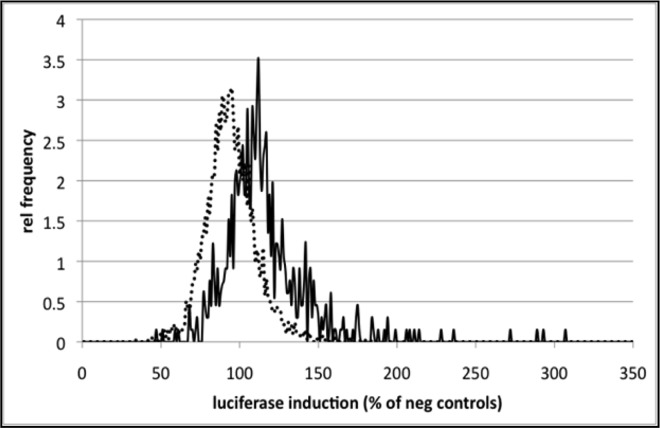
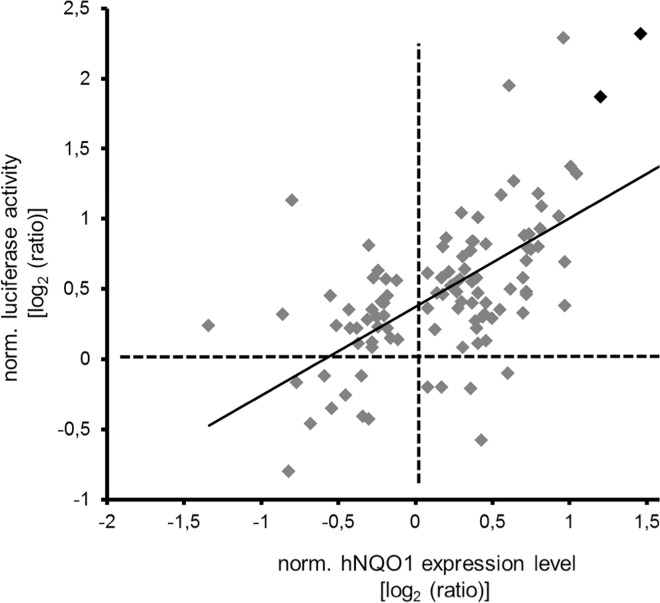
Chronic Obstructive Pulmonary Disease (COPD) is a highly prevalent condition characterized by inflammation and progressive obstruction of the airways. At present, there is no treatment that suppresses the chronic inflammation of the disease, and COPD patients often succumb to the condition. Excessive oxidative stress caused by smoke inhalation is a major driving force of the disease. The transcription factor NRF2 is a critical player in the battle against oxidative stress and its function is impaired in COPD. Increasing NRF2 activity may therefore be a viable therapeutic option for COPD treatment. We show that down regulation of KEAP1, a NRF2 inhibitor, protects primary human lung epithelial cells from cigarette-smoke-extract (CSE) induced cell death in an established in vitro model of radical stress. To identify new potential drug targets with a similar effect, we performed a siRNA screen of the 'druggable' genome using a NRF2 transcriptional reporter cell line. This screen identified multiple genes that when down regulated increased NRF2 transcriptional activity and provided a survival benefit in the in vitro model. Our results suggest that inhibiting components of the ubiquitin-proteasome system will have the strongest effects on NRF2 transcriptional activity by increasing NRF2 levels. We also find that down regulation of the small GTPase Rab28 or the Estrogen Receptor ESRRA provide a survival benefit. Rab28 knockdown increased NRF2 protein levels, indicating that Rab28 may regulate NRF2 proteolysis. Conversely ESRRA down regulation increased NRF2 transcriptional activity without affecting NRF2 levels, suggesting a proteasome-independent mechanism.
慢性阻塞性肺疾病(COPD)是一种高度流行的疾病,其特征为气道炎症和进行性阻塞。目前,尚无能够抑制该疾病慢性炎症的治疗方法,COPD患者常因此病而死亡。吸入烟雾引起的过度氧化应激是该疾病的主要驱动因素。转录因子NRF2是对抗氧化应激的关键因子,其功能在COPD中受损。因此,增加NRF2活性可能是治疗COPD的可行选择。我们发现,NRF2抑制剂KEAP1的下调可在已建立的自由基应激体外模型中保护原代人肺上皮细胞免受香烟烟雾提取物(CSE)诱导的细胞死亡。为了鉴定具有类似作用的新潜在药物靶点,我们使用NRF2转录报告细胞系对“可药物化”基因组进行了siRNA筛选。该筛选鉴定出多个基因,这些基因下调时可增加NRF2转录活性,并在体外模型中提供生存益处。我们的结果表明,抑制泛素-蛋白酶体系统的成分将通过增加NRF2水平对NRF2转录活性产生最强的影响。我们还发现,小GTPase Rab28或雌激素受体ESRRA的下调可提供生存益处。Rab28敲低增加了NRF2蛋白水平,表明Rab28可能调节NRF2的蛋白水解。相反,ESRRA下调增加了NRF2转录活性,而不影响NRF2水平,提示一种不依赖蛋白酶体的机制。