de León-Bautista Mercedes Piedad, Cardenas-Aguayo Maria Del Carmen, Casique-Aguirre Diana, Almaraz-Salinas Manuel, Parraguirre-Martinez Sara, Olivo-Diaz Angelica, Thompson-Bonilla María Del Rocío, Vargas Miguel
Departamento de Biomedicina Molecular, Centro de Investigación y de Estudios Avanzados del Instituto Politécnico Nacional, Avenida Instituto Politécnico Nacional 2508, col. San Pedro Zacatenco, C.P. 07360, Mexico City, Mexico.
Departamento de Fisiología, Facultad de Medicina, Universidad Nacional Autónoma de México, Avenida Universidad 3000, Col. Copilco Universidad, Delegación Coyoacán, C.P. 04510, Mexico City, Mexico.
PLoS One. 2016 Nov 10;11(11):e0166370. doi: 10.1371/journal.pone.0166370. eCollection 2016.
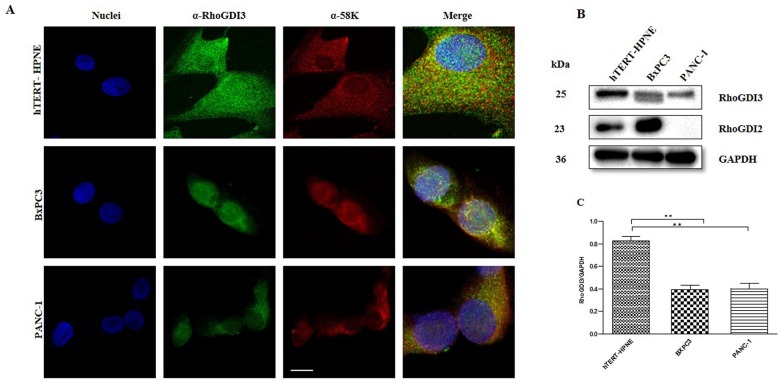
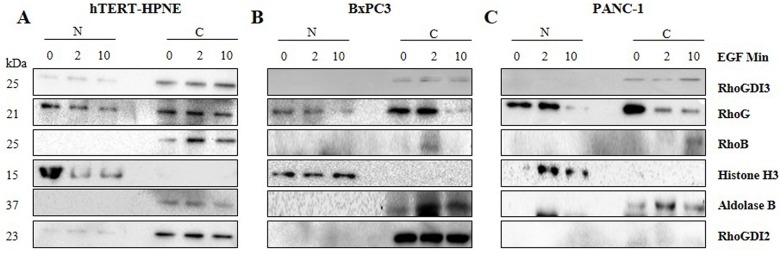
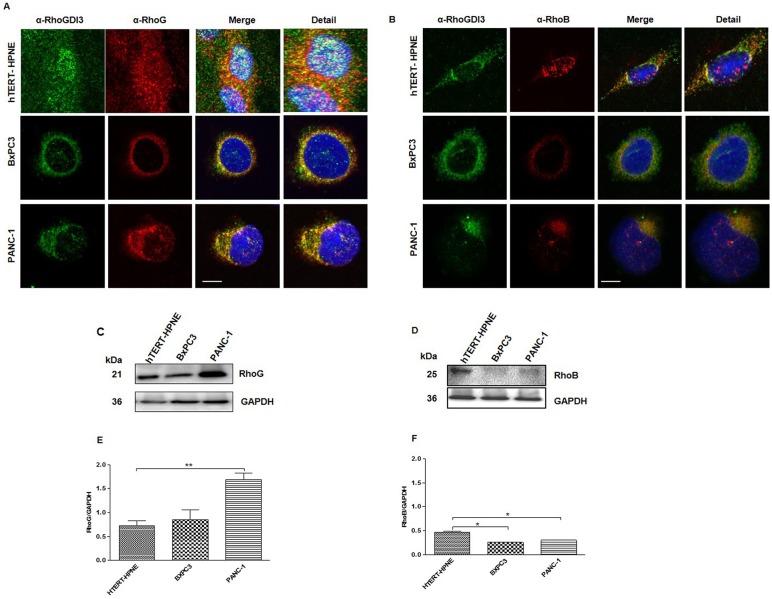
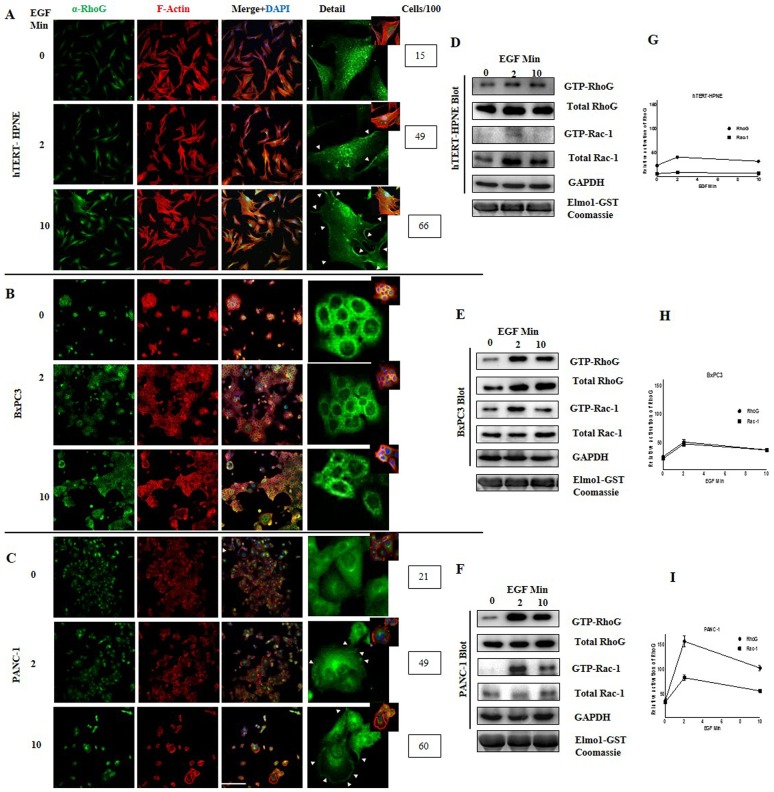
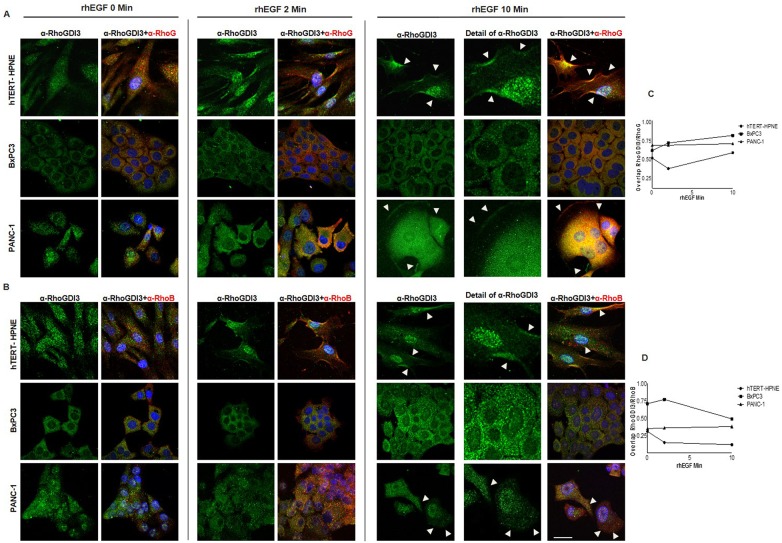
RhoGDI proteins have been implicated in several human cancers; changes in their expression levels have shown pro- or anti-tumorigenic effects. Pancreatic Ductal Adenocarcinoma (PDAC) is a complex pathology, with poor prognosis, and most patients die shortly after diagnosis. Efforts have been focused on understanding the role of RhoGDI's in PDAC, specially, RhoGDI1 and RhoGDI2. However, the role of RhoGDI3 has not been studied in relation to cancer or to PDAC. Here, we characterized the expression and functionality of RhoGDI3 and its target GTPases, RhoG and RhoB in pancreatic cell lines from both normal pancreatic tissue and tissue in late stages of PDAC, and compared them to human biopsies. Through immunofluorescences, pulldown assays and subcellular fractionation, we found a reduction in RhoGDI3 expression in the late stages of PDAC, and this reduction correlates with tumor progression and aggressiveness. Despite the reduction in the expression of RhoGDI3 in PDAC, we found that RhoB was underexpressed while RhoG was overexpressed, suggesting that cancerous cells preserve their capacity to activate this pathway, thus these cells may be more eager to response to the stimuli needed to proliferate and become invasive unlike normal cells. Surprisingly, we found nuclear localization of RhoGDI3 in non-cancerous pancreatic cell line and normal pancreatic tissue biopsies, which could open the possibility of novel nuclear functions for this protein, impacting gene expression regulation and cellular homeostasis.
RhoGDI蛋白与多种人类癌症有关;其表达水平的变化已显示出促肿瘤或抗肿瘤作用。胰腺导管腺癌(PDAC)是一种复杂的病理状况,预后较差,大多数患者在确诊后不久死亡。研究重点一直是了解RhoGDI在PDAC中的作用,特别是RhoGDI1和RhoGDI2。然而,尚未研究RhoGDI3与癌症或PDAC相关的作用。在此,我们对正常胰腺组织和PDAC晚期组织的胰腺细胞系中RhoGDI3及其靶标GTP酶RhoG和RhoB的表达及功能进行了表征,并将它们与人类活检样本进行了比较。通过免疫荧光、下拉分析和亚细胞分级分离,我们发现PDAC晚期RhoGDI3表达降低,且这种降低与肿瘤进展和侵袭性相关。尽管PDAC中RhoGDI3表达降低,但我们发现RhoB表达不足而RhoG表达过度,这表明癌细胞保留了激活该途径的能力,因此这些细胞可能比正常细胞更渴望对增殖和侵袭所需的刺激做出反应。令人惊讶的是,我们在非癌性胰腺细胞系和正常胰腺组织活检样本中发现了RhoGDI3的核定位,这可能为该蛋白的新核功能开辟可能性,影响基因表达调控和细胞内稳态。