Jousset Florian, Maguy Ange, Rohr Stephan, Kucera Jan P
Department of Physiology, University of Bern Bern, Switzerland.
Front Physiol. 2016 Oct 27;7:496. doi: 10.3389/fphys.2016.00496. eCollection 2016.
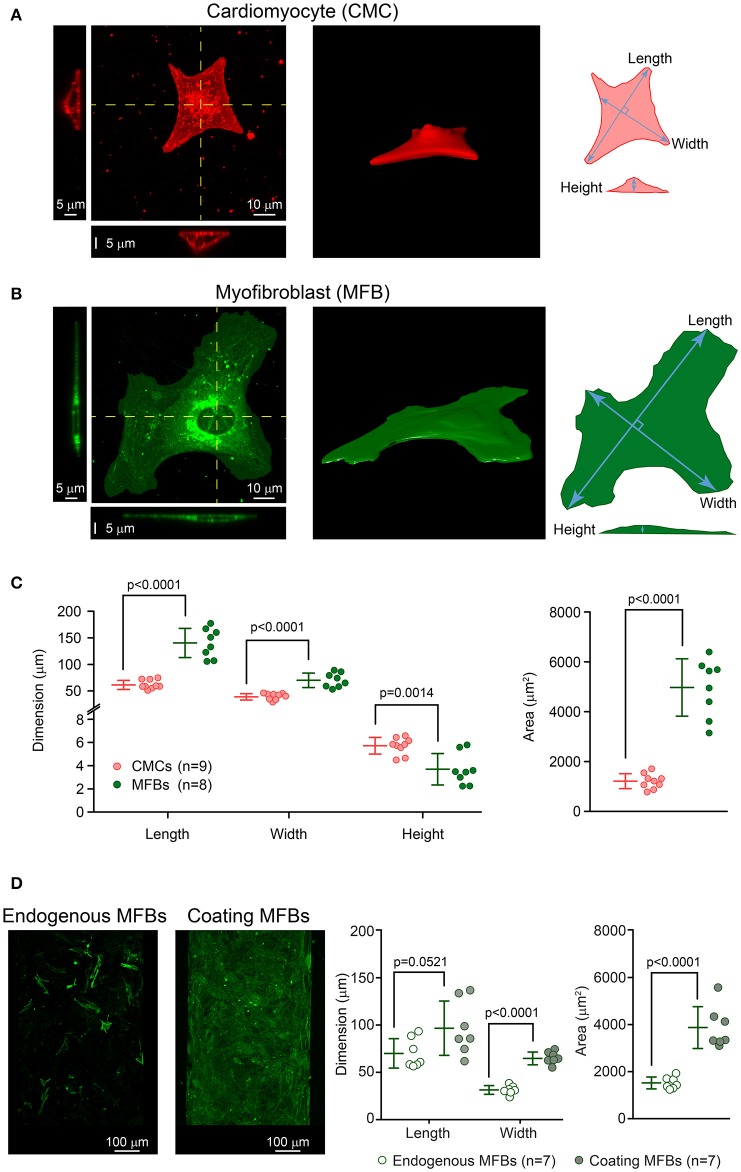
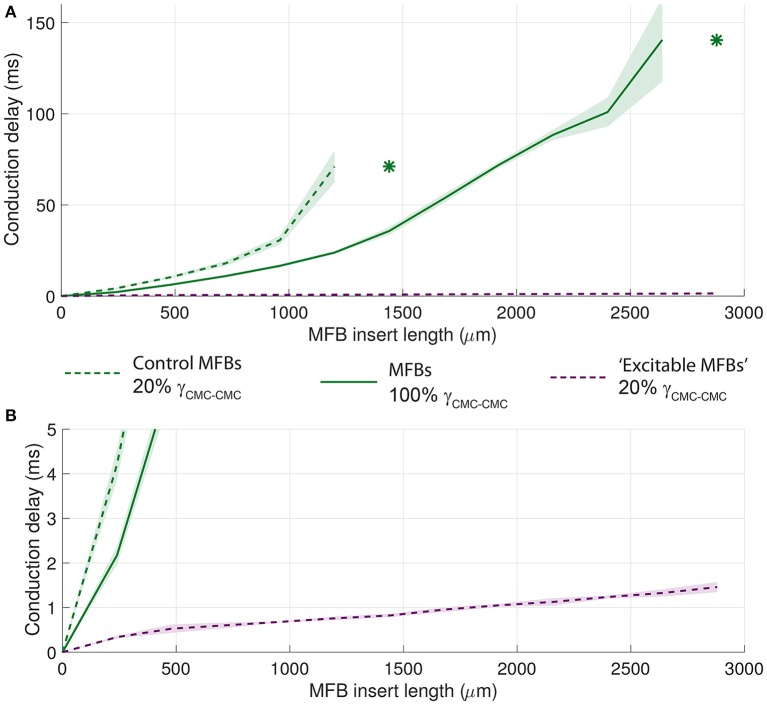
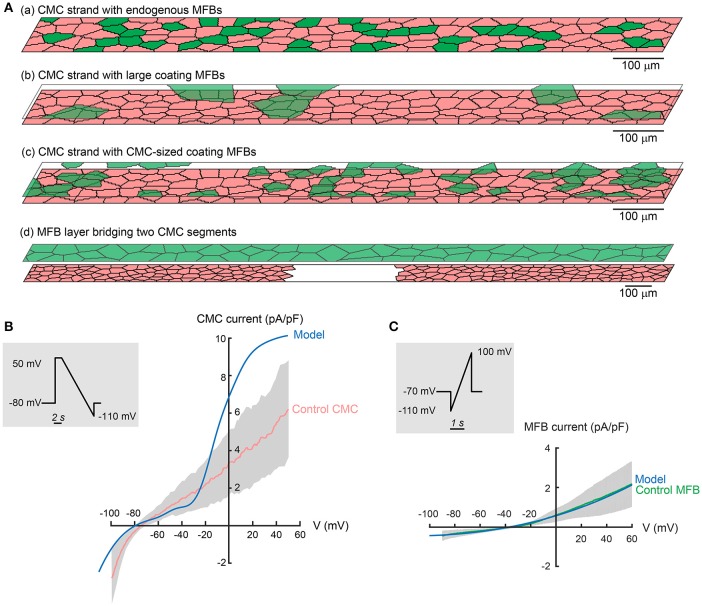
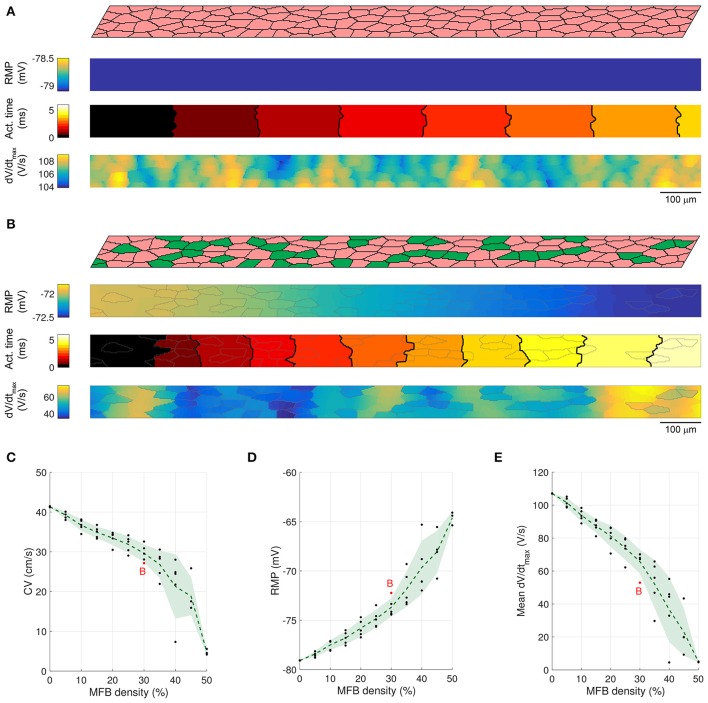
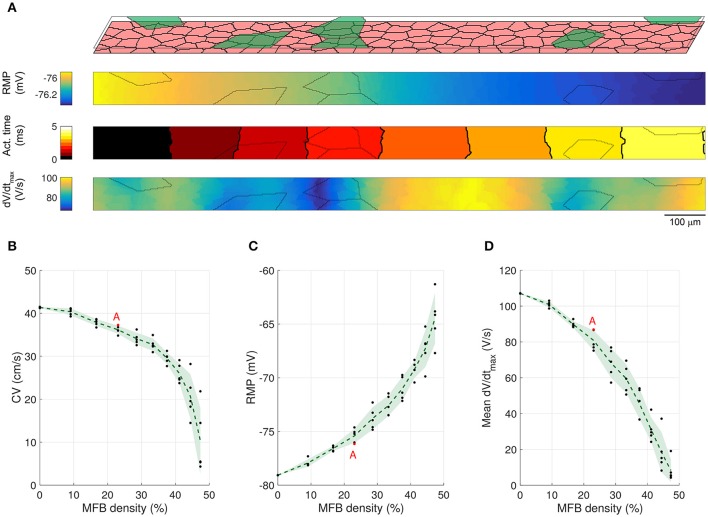
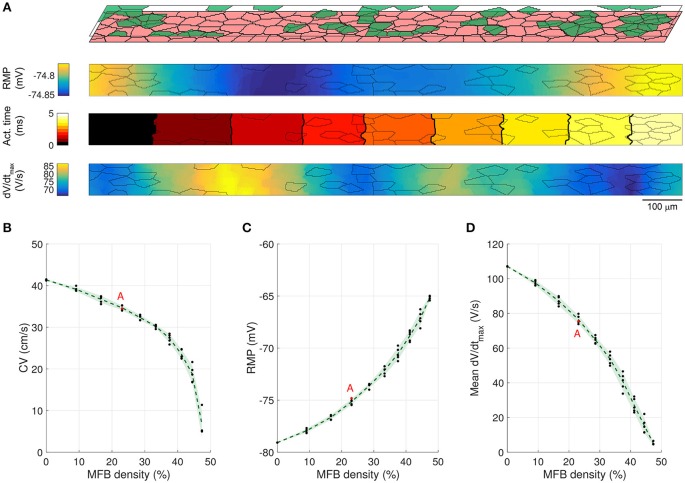
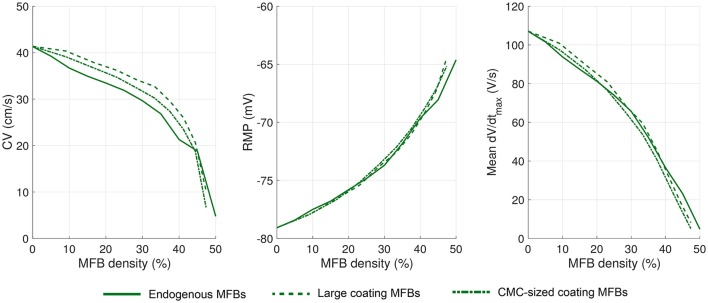
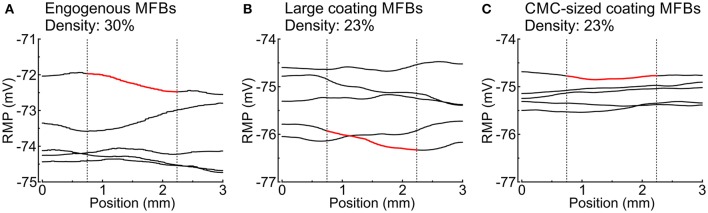
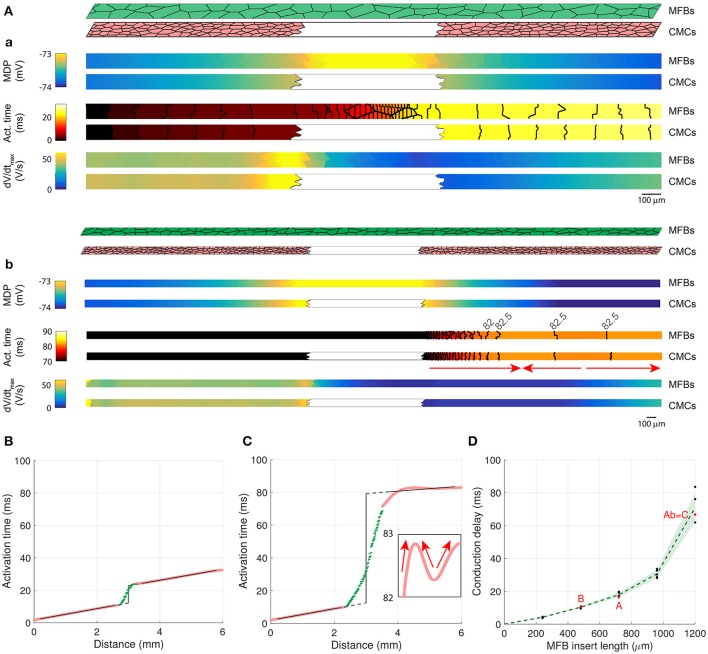
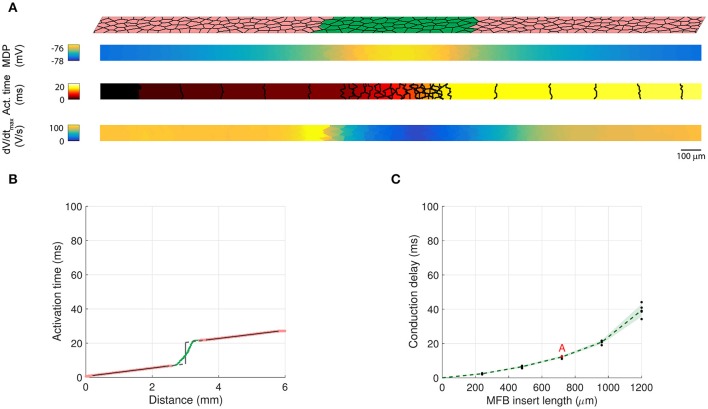
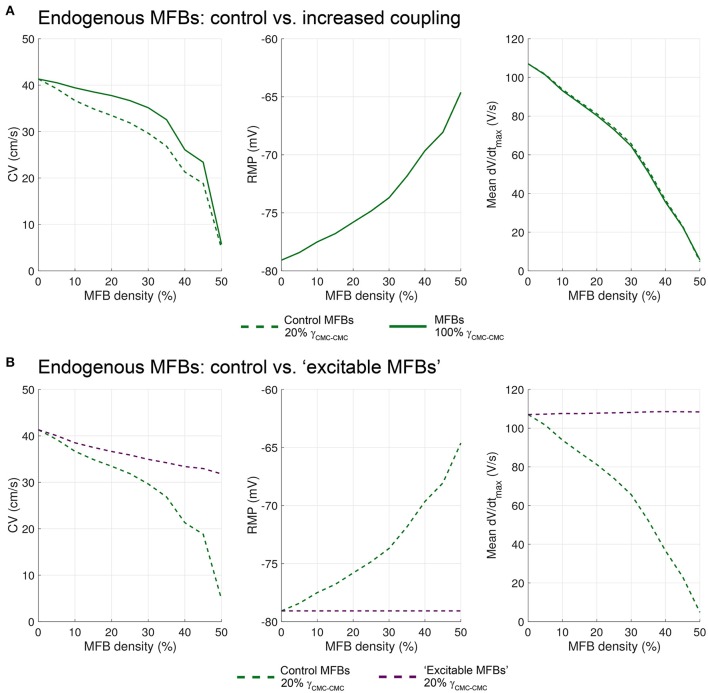
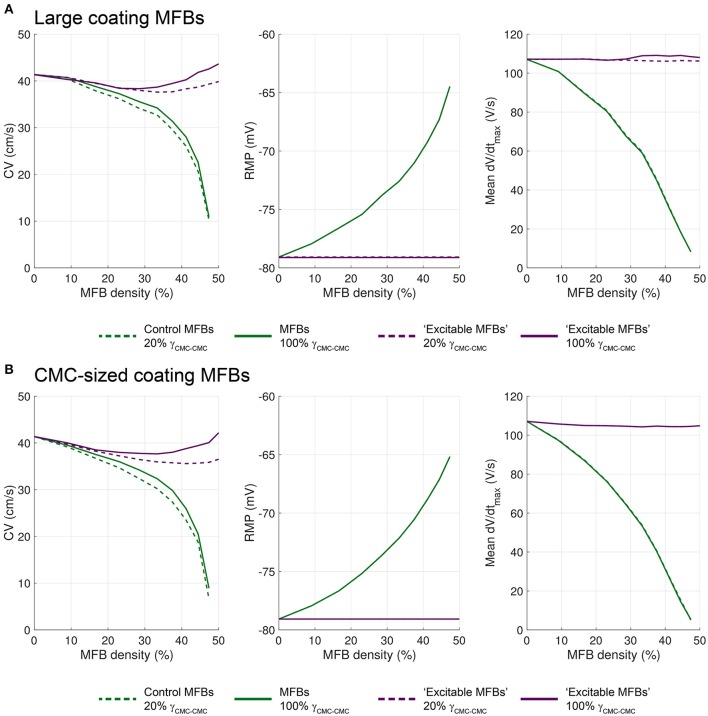
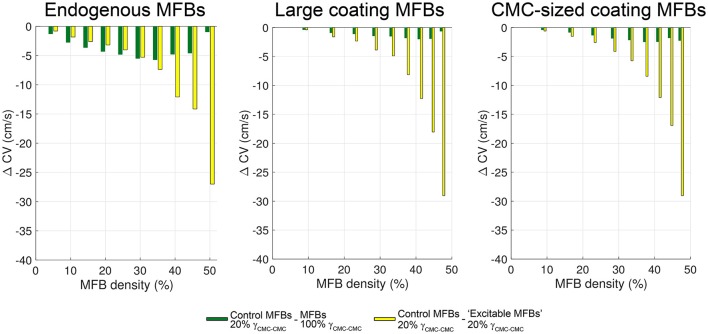
Fibrotic myocardial remodeling is typically accompanied by the appearance of myofibroblasts (MFBs). , MFBs were shown to slow conduction and precipitate ectopic activity following gap junctional coupling to cardiomyocytes (CMCs). To gain further mechanistic insights into this arrhythmogenic MFB-CMC crosstalk, we performed numerical simulations in cell-based high-resolution two-dimensional tissue models that replicated experimental conditions. Cell dimensions were determined using confocal microscopy of single and co-cultured neonatal rat ventricular CMCs and MFBs. Conduction was investigated as a function of MFB density in three distinct cellular tissue architectures: CMC strands with endogenous MFBs, CMC strands with coating MFBs of two different sizes, and CMC strands with MFB inserts. Simulations were performed to identify individual contributions of heterocellular gap junctional coupling and of the specific electrical phenotype of MFBs. With increasing MFB density, both endogenous and coating MFBs slowed conduction. At MFB densities of 5-30%, conduction slowing was most pronounced in strands with endogenous MFBs due to the MFB-dependent increase in axial resistance. At MFB densities >40%, very slow conduction and spontaneous activity was primarily due to MFB-induced CMC depolarization. Coating MFBs caused non-uniformities of resting membrane potential, which were more prominent with large than with small MFBs. In simulations of MFB inserts connecting two CMC strands, conduction delays increased with increasing insert lengths and block appeared for inserts >1.2 mm. Thus, electrophysiological properties of engineered CMC-MFB co-cultures depend on MFB density, MFB size and their specific positioning in respect to CMCs. These factors may influence conduction characteristics in the heterocellular myocardium.
纤维化心肌重塑通常伴随着肌成纤维细胞(MFBs)的出现。研究表明,MFBs与心肌细胞(CMCs)形成间隙连接偶联后会减慢传导并引发异位活动。为了进一步深入了解这种致心律失常的MFB-CMC串扰机制,我们在基于细胞的高分辨率二维组织模型中进行了数值模拟,该模型复制了实验条件。使用共聚焦显微镜对新生大鼠单个和共培养的心室CMCs和MFBs进行细胞尺寸测定。在三种不同的细胞组织结构中研究了传导与MFB密度的关系:具有内源性MFBs的CMC束、具有两种不同大小包被MFBs的CMC束以及具有MFB插入物的CMC束。进行模拟以确定异细胞间隙连接偶联和MFBs特定电表型的个体贡献。随着MFB密度的增加,内源性和包被MFBs均减慢传导。在MFB密度为5%-30%时,由于轴向电阻的MFB依赖性增加,具有内源性MFBs的束中传导减慢最为明显。在MFB密度>40%时,非常缓慢的传导和自发活动主要是由于MFB诱导的CMC去极化。包被MFBs导致静息膜电位不均匀,大MFBs比小MFBs更明显。在连接两条CMC束的MFB插入物模拟中,传导延迟随着插入物长度的增加而增加,对于长度>1.2 mm的插入物出现传导阻滞。因此,工程化CMC-MFB共培养物的电生理特性取决于MFB密度、MFB大小及其相对于CMCs的特定定位。这些因素可能会影响异细胞心肌中的传导特性。