Alencar Allan K, Montes Guilherme C, Montagnoli Tadeu, Silva Ananssa M, Martinez Sabrina T, Fraga Aline G, Wang Hao, Groban Leanne, Sudo Roberto T, Zapata-Sudo Gisele
Programa de Pesquisa em Desenvolvimento de Fármacos, Instituto de Ciências Biomédicas, Universidade Federal do Rio de Janeiro, Rio de Janeiro, RJ, Brazil.
Instituto de Química, Universidade Federal do Rio de Janeiro, Rio de Janeiro, RJ, Brazil.
Eur J Pharm Sci. 2017 Jan 15;97:208-217. doi: 10.1016/j.ejps.2016.11.009. Epub 2016 Nov 9.
Pulmonary hypertension (PH) is characterized by pulmonary vascular remodeling that leads to pulmonary congestion, uncompensated right-ventricle (RV) failure, and premature death. Preclinical studies have demonstrated that the G protein-coupled estrogen receptor (GPER) is cardioprotective in male rats and that its activation elicits vascular relaxation in rats of either sex.
To study the effects of GPER on the cardiopulmonary system by the administration of its selective agonist G1 in male rats with monocrotaline (MCT)-induced PH.
Rats received a single intraperitoneal injection of MCT (60mg/kg) for PH induction. Experimental groups were as follows: control, MCT+vehicle, and MCT+G1 (400μg/kg/daysubcutaneous). Animals (n=5pergroup) were treated with vehicle or G1 for 14days after disease onset.
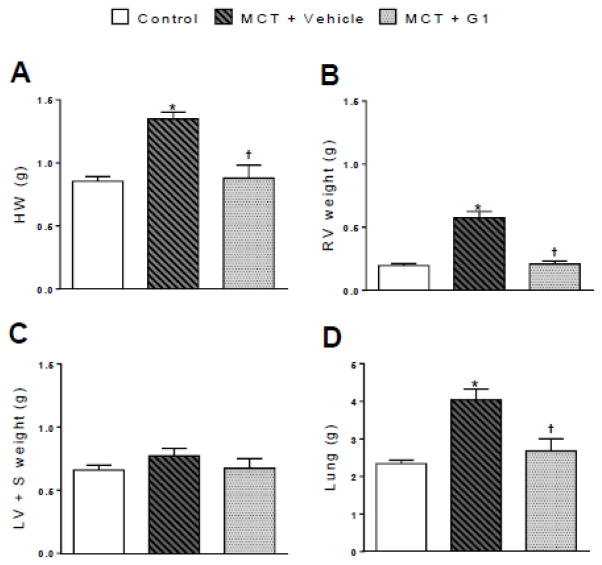
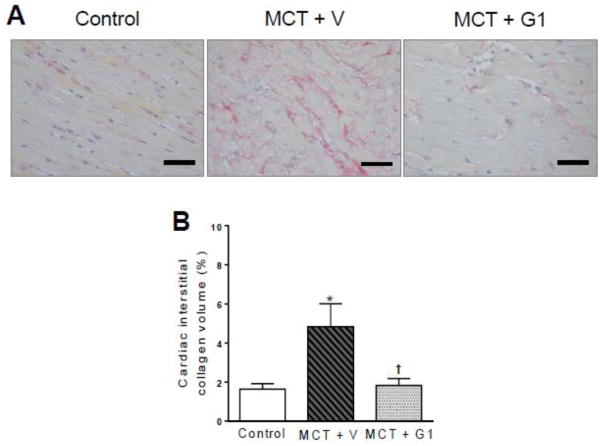
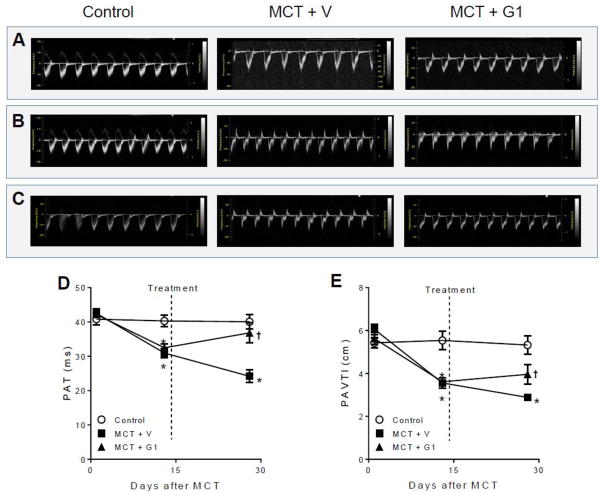
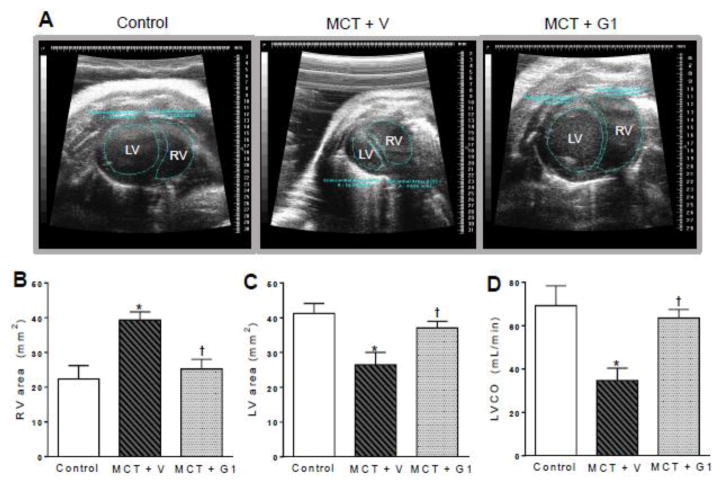
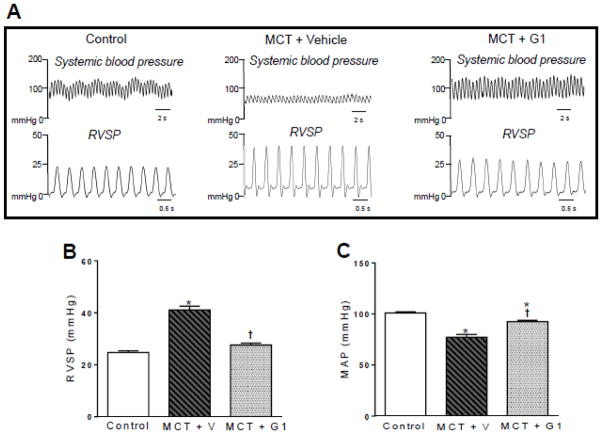
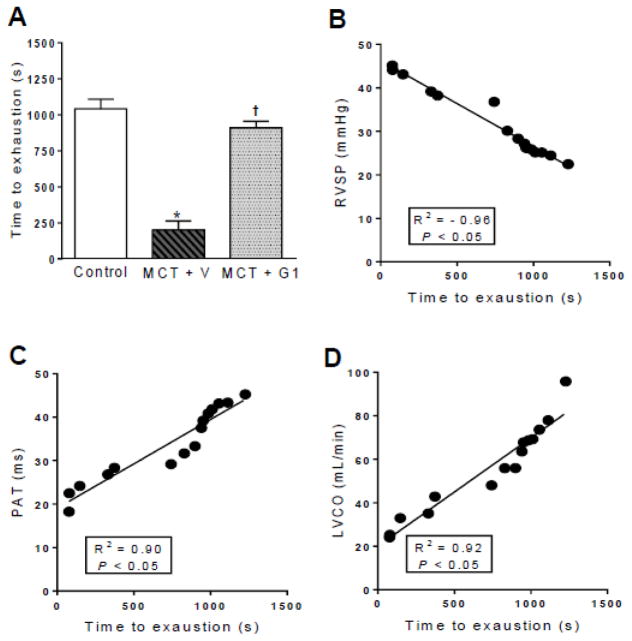
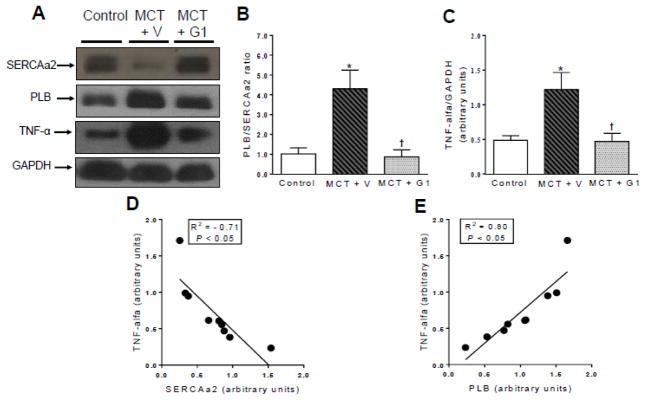
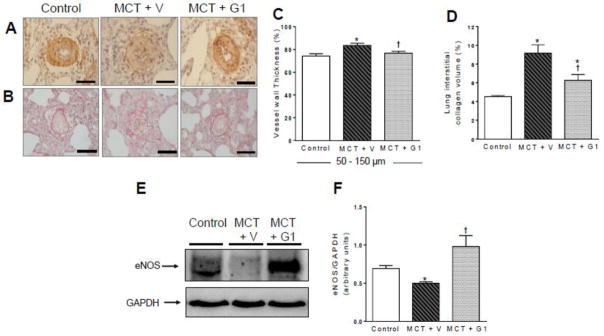
Activation of GPER attenuated exercise intolerance and reduced RV overload in PH rats. Rats with PH exhibited echocardiographic alterations, such as reduced pulmonary flow, RV hypertrophy, and left-ventricle dysfunction, by the end of protocol. G1 treatment reversed these PH-related abnormalities of cardiopulmonary function and structure, in part by promoting pulmonary endothelial nitric oxide synthesis, Ca handling regulation and reduction of inflammation in cardiomyocytes, and a decrease of collagen deposition by acting in pulmonary and cardiac fibroblasts.
G1 was effective to reverse PH-induced RV dysfunction and exercise intolerance in male rats, a finding that have important implications for ongoing clinical evaluation of new cardioprotective and vasodilator drugs for the treatment of the disease.
肺动脉高压(PH)的特征是肺血管重塑,导致肺充血、右心室(RV)失代偿性衰竭和过早死亡。临床前研究表明,G蛋白偶联雌激素受体(GPER)在雄性大鼠中具有心脏保护作用,其激活可引起两性大鼠的血管舒张。
通过在注射野百合碱(MCT)诱导的PH雄性大鼠中给予其选择性激动剂G1,研究GPER对心肺系统的影响。
大鼠单次腹腔注射MCT(60mg/kg)以诱导PH。实验组如下:对照组、MCT+赋形剂组和MCT+G1组(400μg/kg/天皮下注射)。疾病发作后,动物(每组n=5)用赋形剂或G1治疗14天。
激活GPER可减轻PH大鼠的运动不耐受并减轻RV过载。到实验结束时,PH大鼠表现出超声心动图改变,如肺血流量减少、RV肥大和左心室功能障碍。G1治疗逆转了这些与PH相关的心肺功能和结构异常,部分原因是通过促进肺内皮一氧化氮合成、调节Ca处理以及减少心肌细胞炎症,并通过作用于肺和心脏成纤维细胞减少胶原蛋白沉积。
G1可有效逆转PH诱导的雄性大鼠RV功能障碍和运动不耐受,这一发现对正在进行的用于治疗该疾病的新型心脏保护和血管扩张药物的临床评估具有重要意义。