Ha Jung-Hong, Kwak Sang Won, Kim Sung-Kyo, Kim Hyeon-Cheol
Department of Conservative Dentistry, School of Dentistry, Kyungpook National University, Daegu, Korea.
Department of Conservative Dentistry, School of Dentistry, Dental Research Institute, Pusan National University, Yangsan, Korea.
Restor Dent Endod. 2016 Nov;41(4):304-309. doi: 10.5395/rde.2016.41.4.304. Epub 2016 Nov 8.
The purpose of this study was to compare the maximum screw-in forces generated during the movement of various Nickel-Titanium (NiTi) file systems.
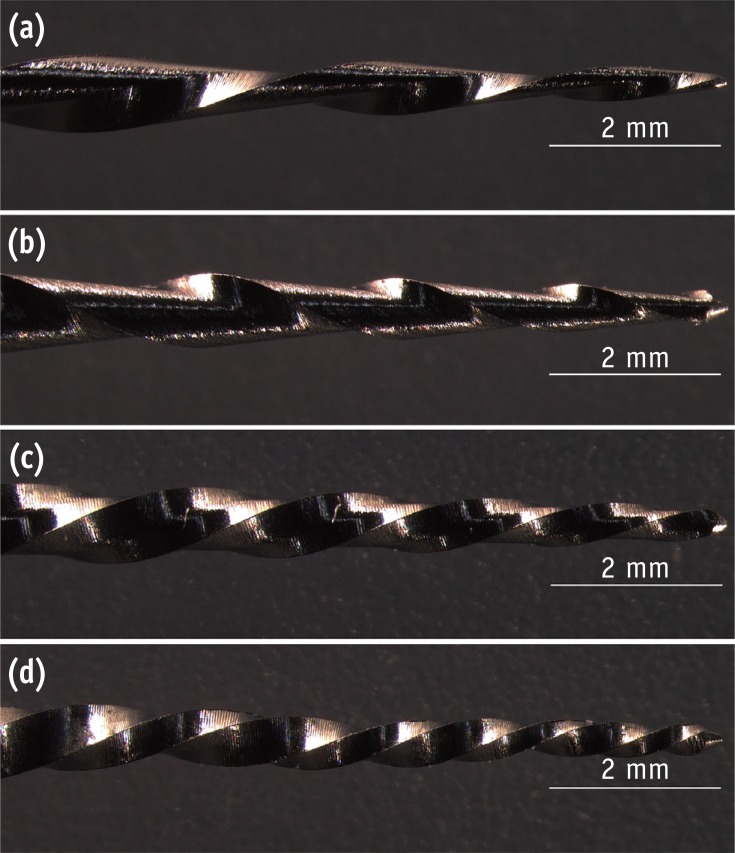
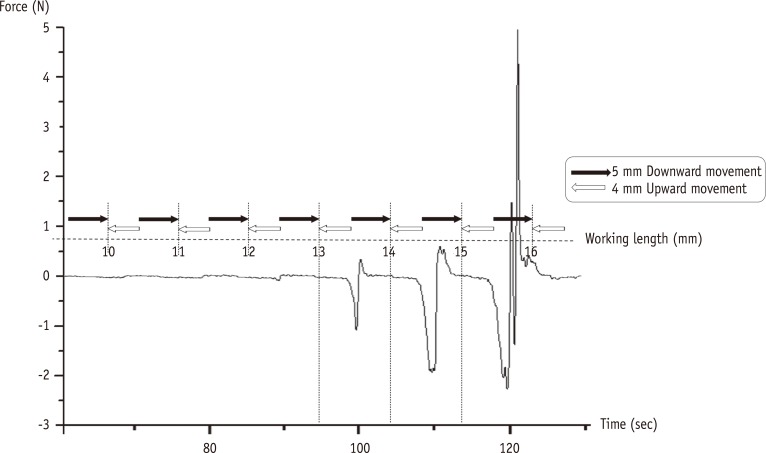
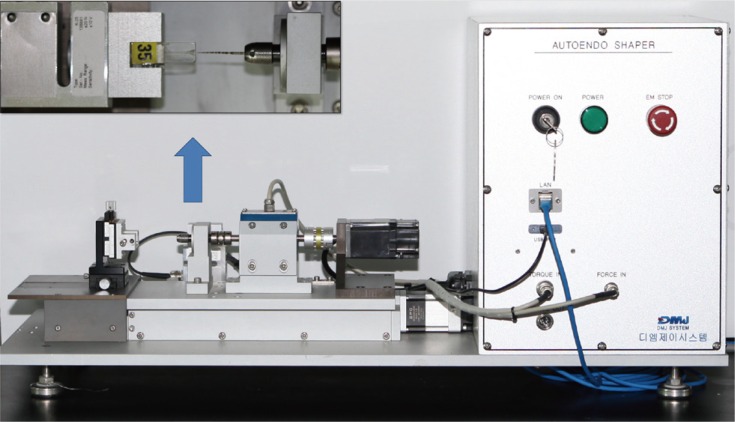
Forty simulated canals in resin blocks were randomly divided into 4 groups for the following instruments: Mtwo size 25/0.07 (MTW, VDW GmbH), Reciproc R25 (RPR, VDW GmbH), ProTaper Universal F2 (PTU, Dentsply Maillefer), and ProTaper Next X2 (PTN, Dentsply Maillefer, = 10). All the artificial canals were prepared to obtain a standardized lumen by using ProTaper Universal F1. Screw-in forces were measured using a custom-made experimental device (AEndoS-, DMJ system) during instrumentation with each NiTi file system using the designated movement. The rotation speed was set at 350 rpm with an automatic 4 mm pecking motion at a speed of 1 mm/sec. The pecking depth was increased by 1 mm for each pecking motion until the file reach the working length. Forces were recorded during file movement, and the maximum force was extracted from the data. Maximum screw-in forces were analyzed by one-way ANOVA and Tukey's comparison at a significance level of 95%.
Reciproc and ProTaper Universal files generated the highest maximum screw-in forces among all the instruments while M-two and ProTaper Next showed the lowest ( < 0.05).
Geometrical differences rather than shaping motion and alloys may affect the screw-in force during canal instrumentation. To reduce screw-in forces, the use of NiTi files with smaller cross-sectional area for higher flexibility is recommended.
本研究旨在比较各种镍钛(NiTi)锉系统在操作过程中产生的最大旋入力。
在树脂块中制备40个模拟根管,随机分为4组,分别使用以下器械:Mtwo 25/0.07型号(MTW,VDW GmbH公司)、Reciproc R25型号(RPR,VDW GmbH公司)、ProTaper Universal F2型号(PTU,登士柏迈弗公司)和ProTaper Next X2型号(PTN,登士柏迈弗公司,每组10个)。使用ProTaper Universal F1将所有人工根管预备成标准化管腔。在使用每种NiTi锉系统按指定运动进行根管预备时,使用定制实验装置(AEndoS-,DMJ系统)测量旋入力。转速设定为350转/分钟,自动进行4毫米的啄击运动,速度为1毫米/秒。每次啄击运动时啄击深度增加1毫米,直至锉达到工作长度。在锉运动过程中记录力,并从数据中提取最大力。采用单因素方差分析和Tukey比较法对最大旋入力进行分析,显著性水平为95%。
在所有器械中,Reciproc和ProTaper Universal锉产生的最大旋入力最高,而M-two和ProTaper Next产生的最大旋入力最低(P<0.05)。
根管预备过程中的旋入力可能受几何形状差异影响,而非成形运动和合金成分。为降低旋入力,建议使用横截面积较小、柔韧性较高的NiTi锉。