Ransom R C, Hunter D J, Hyman S, Singh G, Ransom S C, Shen E Z, Perez K C, Gillette M, Li J, Liu B, Brunski J B, Helms J A
Hagey Laboratory for Pediatric Regenerative Medicine, Division of Plastic and Reconstructive Surgery, Department of Surgery, Stanford University School of Medicine, Stanford, CA 94305-5148, USA.
Institute for Stem Cell Biology and Regenerative Medicine, Stanford University School of Medicine, Stanford, CA 94305, USA.
Sci Rep. 2016 Nov 17;6:36524. doi: 10.1038/srep36524.
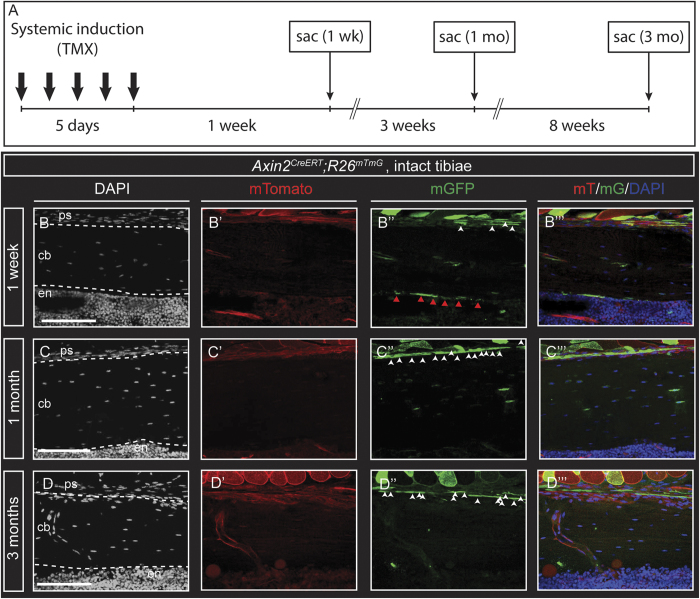
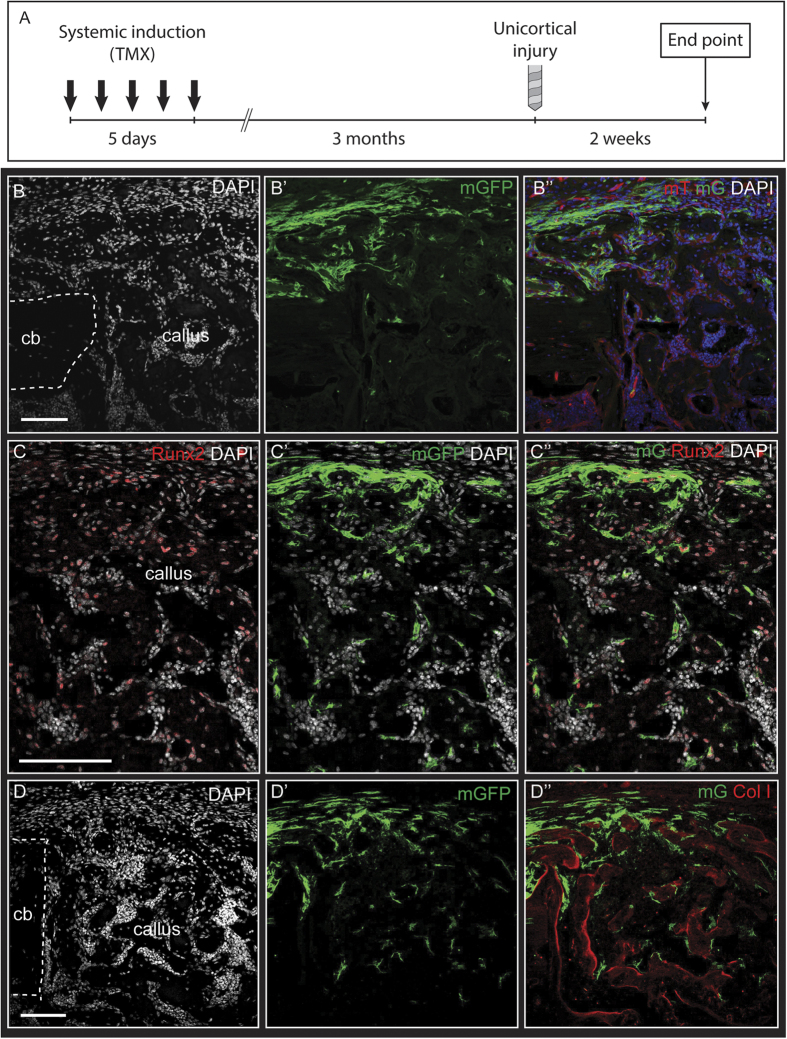
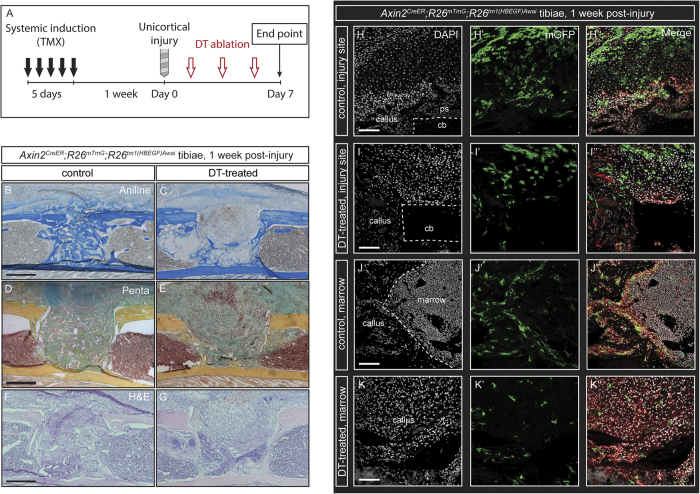
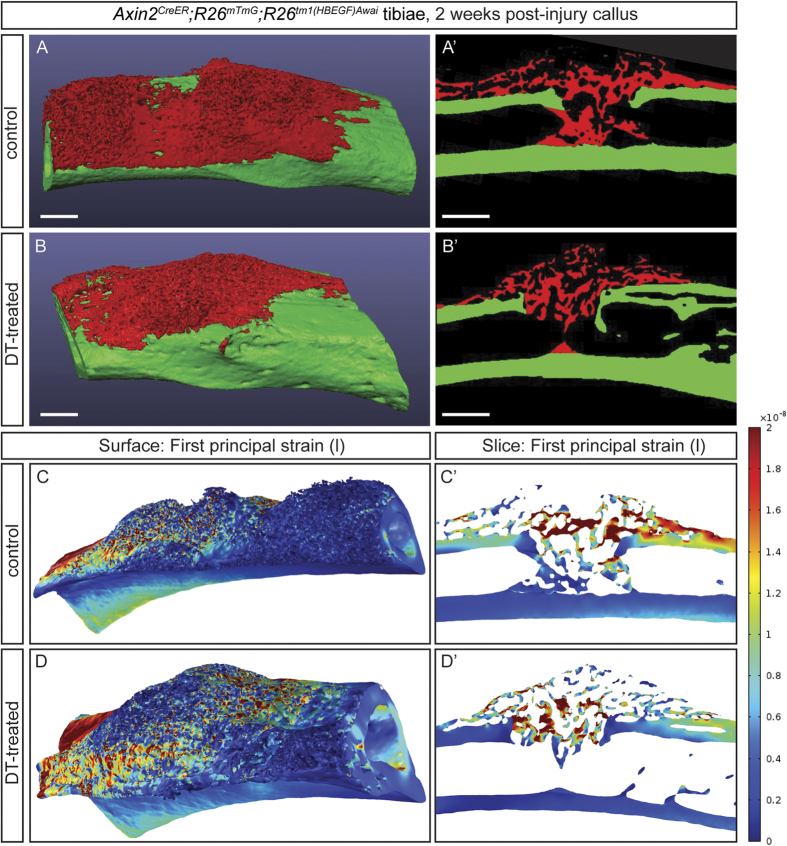
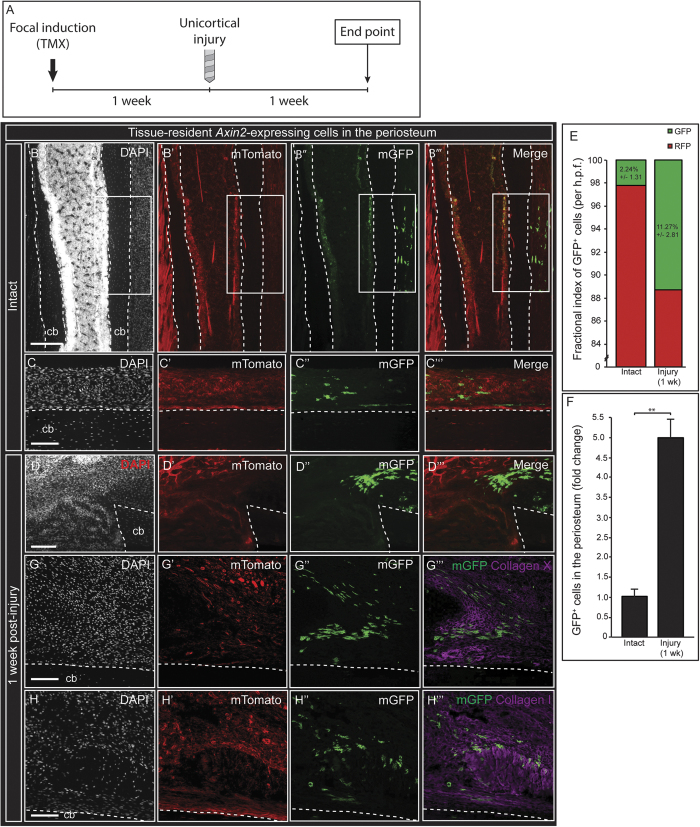
The mammalian skeleton performs a diverse range of vital functions, requiring mechanisms of regeneration that restore functional skeletal cell populations after injury. We hypothesized that the Wnt pathway specifies distinct functional subsets of skeletal cell types, and that lineage tracing of Wnt-responding cells (WRCs) using the Axin2 gene in mice identifies a population of long-lived skeletal cells on the periosteum of long bone. Ablation of these WRCs disrupts healing after injury, and three-dimensional finite element modeling of the regenerate delineates their essential role in functional bone regeneration. These progenitor cells in the periosteum are activated upon injury and give rise to both cartilage and bone. Indeed, our findings suggest that WRCs may serve as a therapeutic target in the setting of impaired skeletal regeneration.
哺乳动物的骨骼执行多种重要功能,需要再生机制在损伤后恢复功能性骨骼细胞群体。我们推测,Wnt信号通路指定了骨骼细胞类型的不同功能亚群,并且利用小鼠中的Axin2基因对Wnt反应性细胞(WRCs)进行谱系追踪可识别出长骨骨膜上一群长寿的骨骼细胞。这些WRCs的消融会破坏损伤后的愈合,并且对再生组织进行的三维有限元建模描绘了它们在功能性骨再生中的重要作用。骨膜中的这些祖细胞在损伤时被激活,并产生软骨和骨。事实上,我们的研究结果表明,WRCs可能是骨骼再生受损情况下的一个治疗靶点。