Chen Yan, Zhang Qicheng, Ding Chuanjin, Zhang Xiaobo, Qiu Xiaoxia, Zhang Zhenxin
Department of Otorhinolaryngology Head and Neck Surgery, Affiliated Hospital of Nantong University, Nantong, Jiangsu 226000, P.R. China.
Int J Oncol. 2017 Jan;50(1):31-40. doi: 10.3892/ijo.2016.3778. Epub 2016 Nov 23.
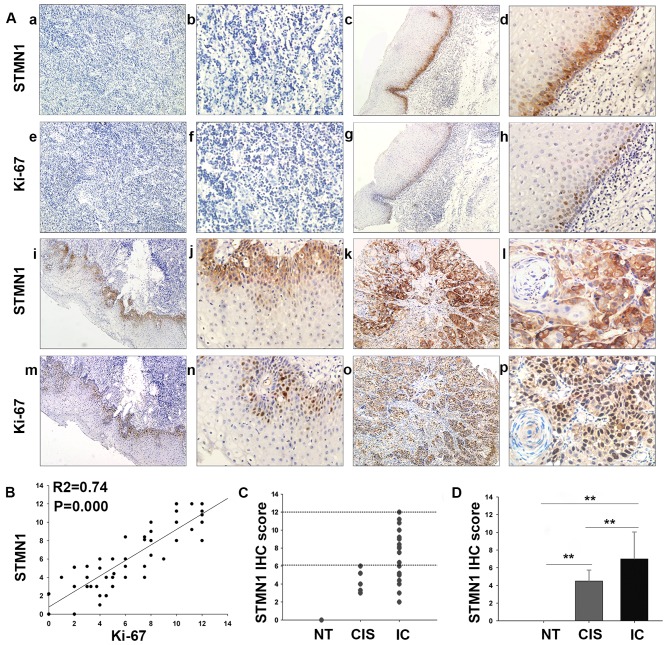
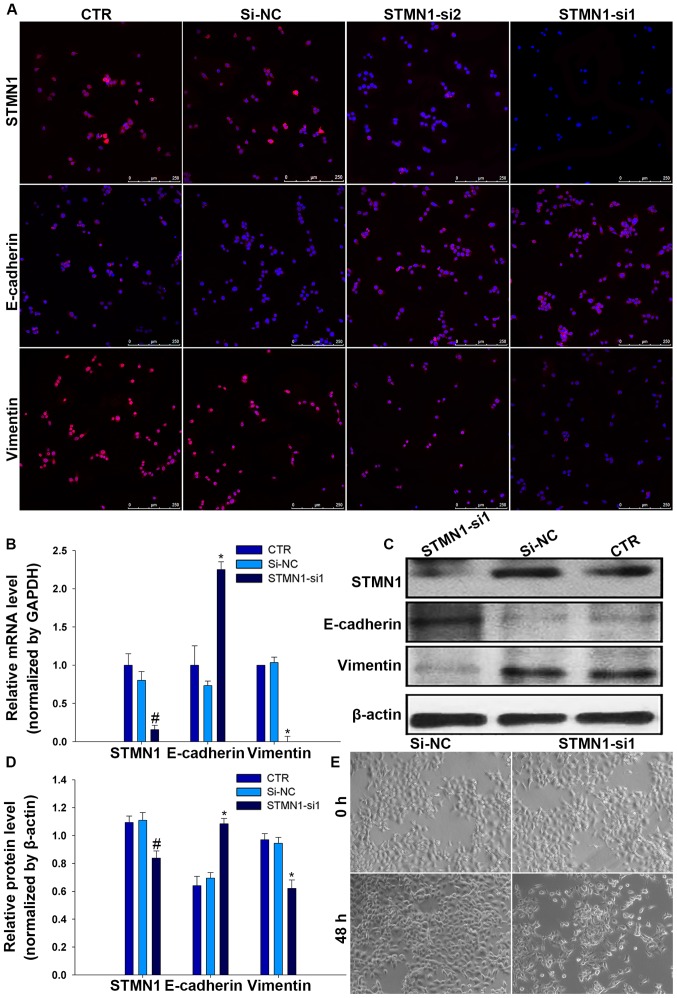
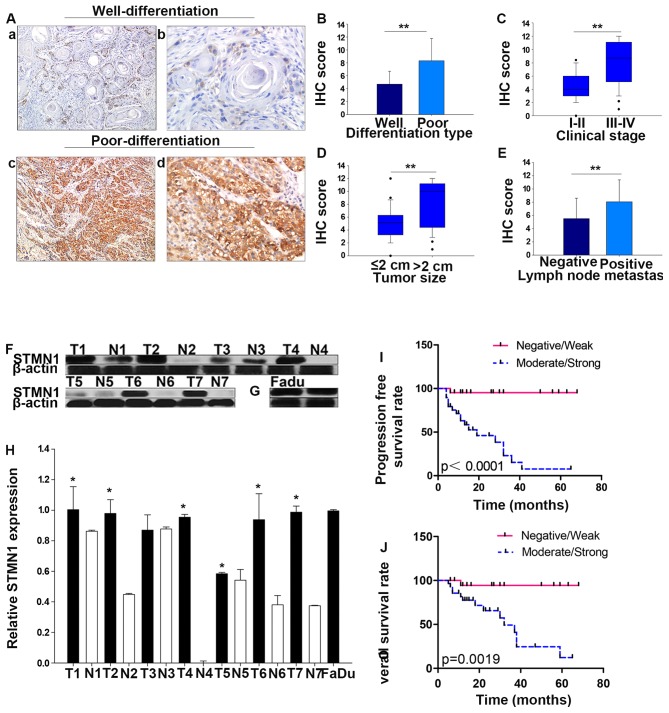
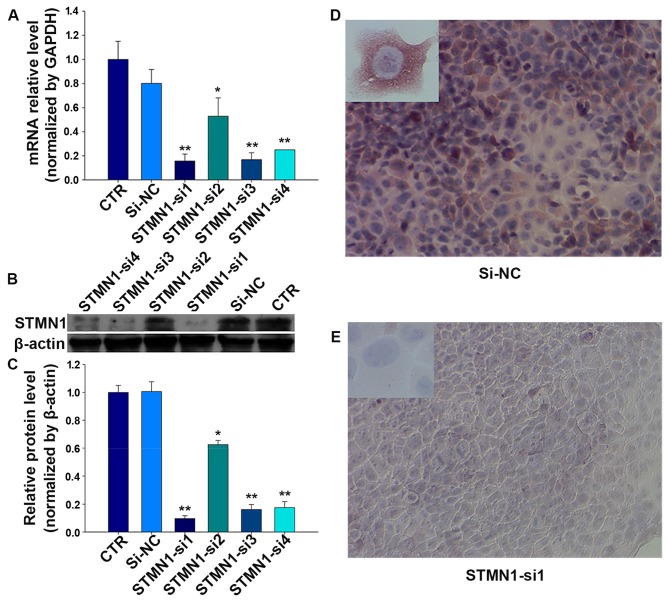
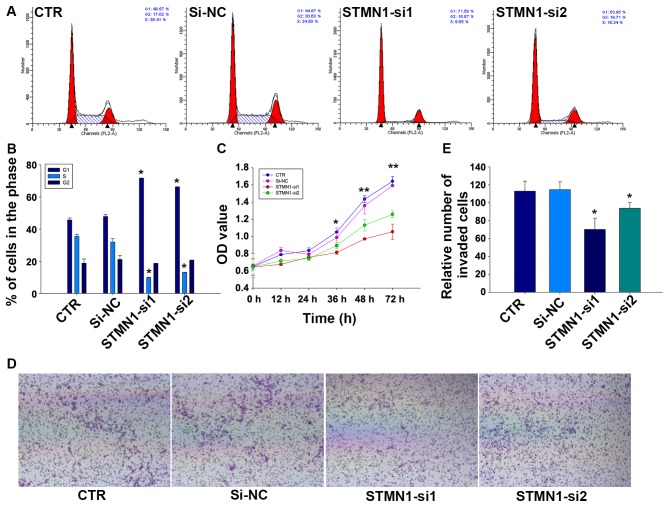
Stathmin1, a microtubule-destabilizing phosphoprotein, is considered to play a crucial role in regulating cellular microtubule dynamics and controlling mitosis. Previous studies have showed that STMN1 is highly expressed in many human malignancies and is related to development, invasion and metastasis of tumors. However, its expression pattern, clinical performance and functional roles in hypopharyngeal squamous cell carcinoma (HSCC) have not been addressed. In this study, we found that STMN1 was significantly elevated in HSCC and its expression level was correlated with poor differentiation (P<0.001), clinical stage (P<0.001), large tumor size (P=0.001) and lymph node metastasis (P=0.008). A positive correlation between STMN1 and Ki‑67 expression was also exhibited. High STMN1 expression predicted poor survival. Furthermore, we found that knockdown of STMN1 by siRNAs inhibited the FaDu cell proliferation and migration. Moreover, decreased STMN1 expression in FaDu cells reversed the acquisition of EMT phenotype by upregulating E-cadherin, as well as reduced vimentin expression at protein and mRNA levels. These results suggested that STMN1 plays an important role in proliferation and migration of HSCC and may be used as a potential prognostic biomarker or therapeutic target of HSCC.
Stathmin1是一种使微管不稳定的磷蛋白,被认为在调节细胞微管动力学和控制有丝分裂中起关键作用。先前的研究表明,STMN1在许多人类恶性肿瘤中高表达,并且与肿瘤的发生、侵袭和转移有关。然而,其在下咽鳞状细胞癌(HSCC)中的表达模式、临床表现及功能作用尚未见报道。在本研究中,我们发现STMN1在HSCC中显著升高,其表达水平与低分化(P<0.001)、临床分期(P<0.001)、肿瘤体积大(P=0.001)及淋巴结转移(P=0.008)相关。STMN1与Ki-67表达之间也呈正相关。高STMN1表达预示着预后不良。此外,我们发现通过小干扰RNA(siRNA)敲低STMN1可抑制FaDu细胞的增殖和迁移。而且,FaDu细胞中STMN1表达降低通过上调E-钙黏蛋白逆转了上皮-间质转化(EMT)表型的获得,同时在蛋白质和mRNA水平降低了波形蛋白的表达。这些结果表明,STMN1在下咽鳞状细胞癌的增殖和迁移中起重要作用,可能作为下咽鳞状细胞癌潜在的预后生物标志物或治疗靶点。