Ding H, Peterson K L, Correia C, Koh B, Schneider P A, Nowakowski G S, Kaufmann S H
Division of Oncology Research, Department of Oncology, Mayo Clinic College of Medicine, Rochester, MN, USA.
Department of Molecular Pharmacology and Experimental Therapeutics, Mayo Clinic College of Medicine, Rochester, MN, USA.
Leukemia. 2017 Jul;31(7):1593-1602. doi: 10.1038/leu.2016.357. Epub 2016 Nov 28.
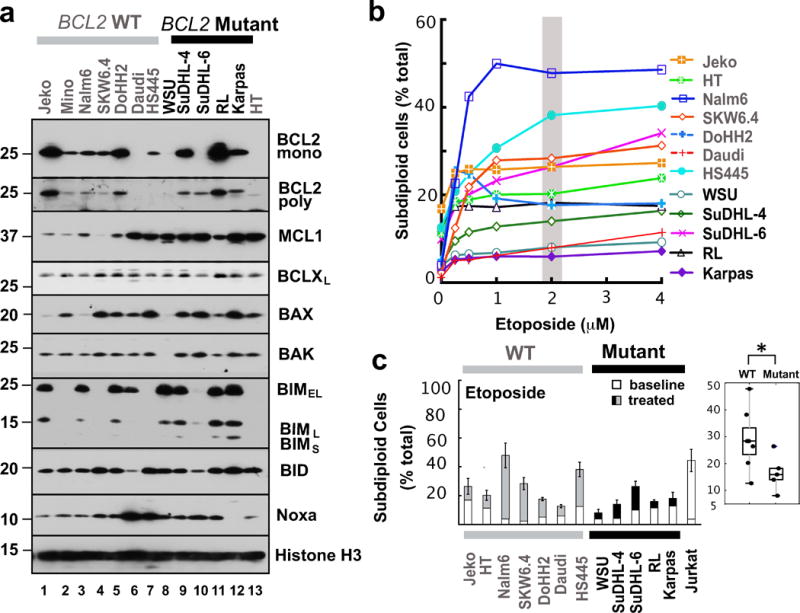
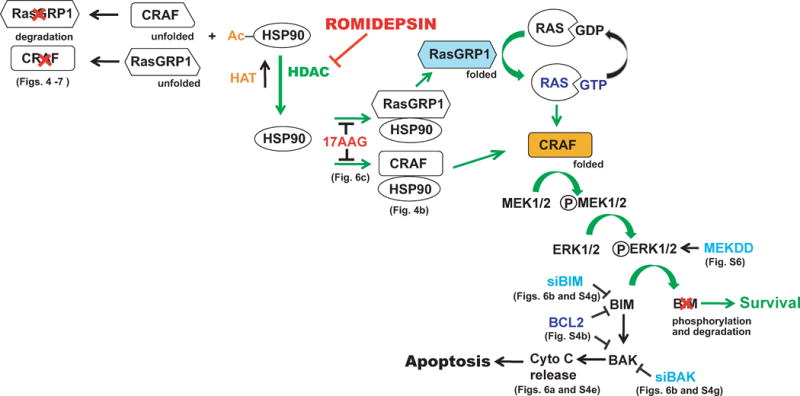
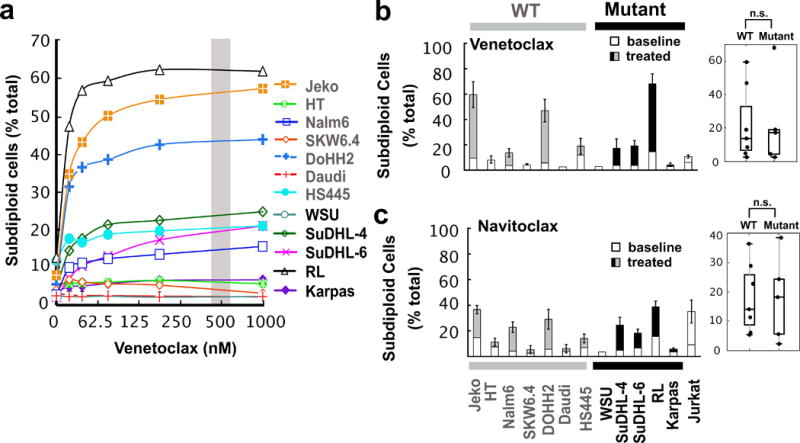
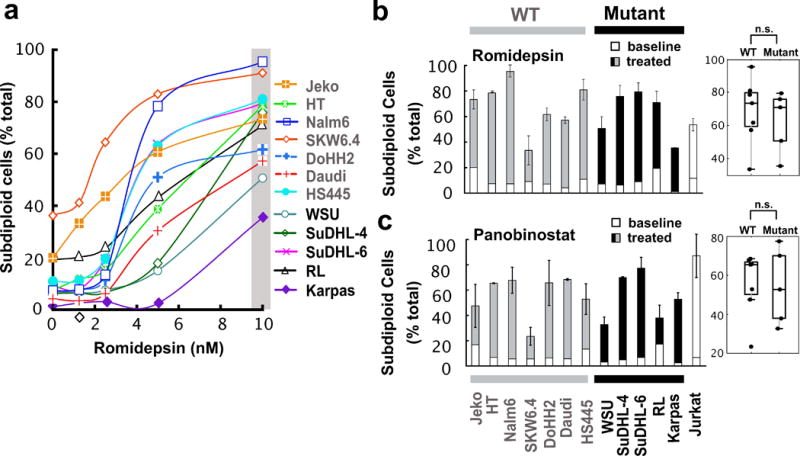
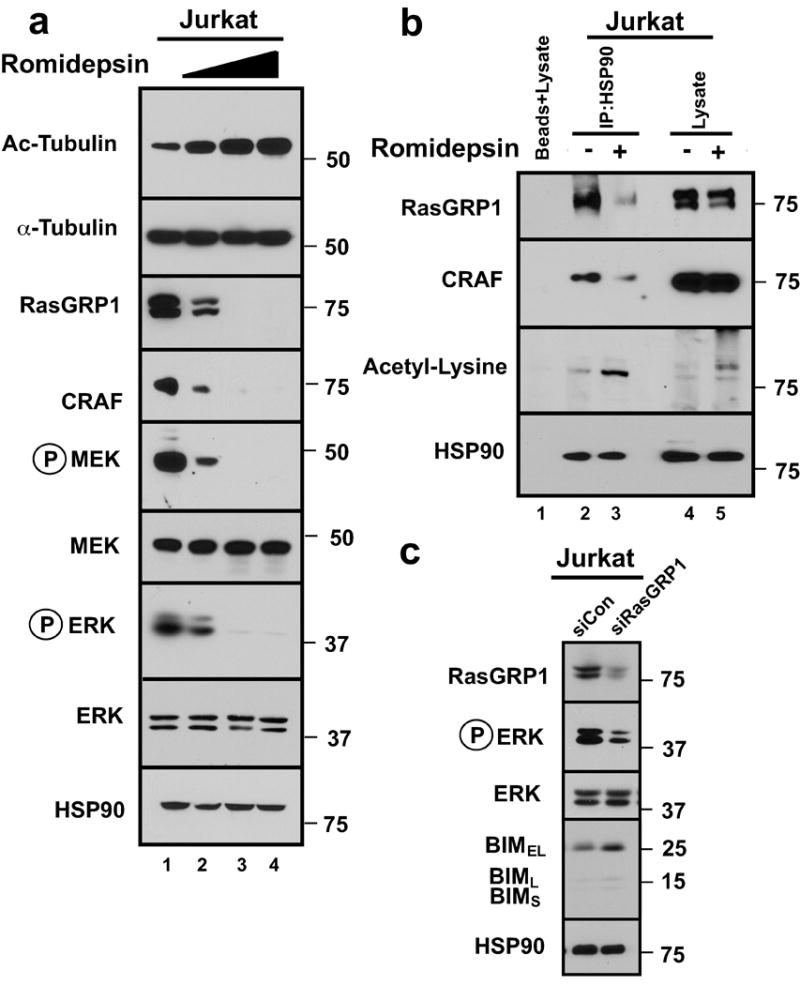
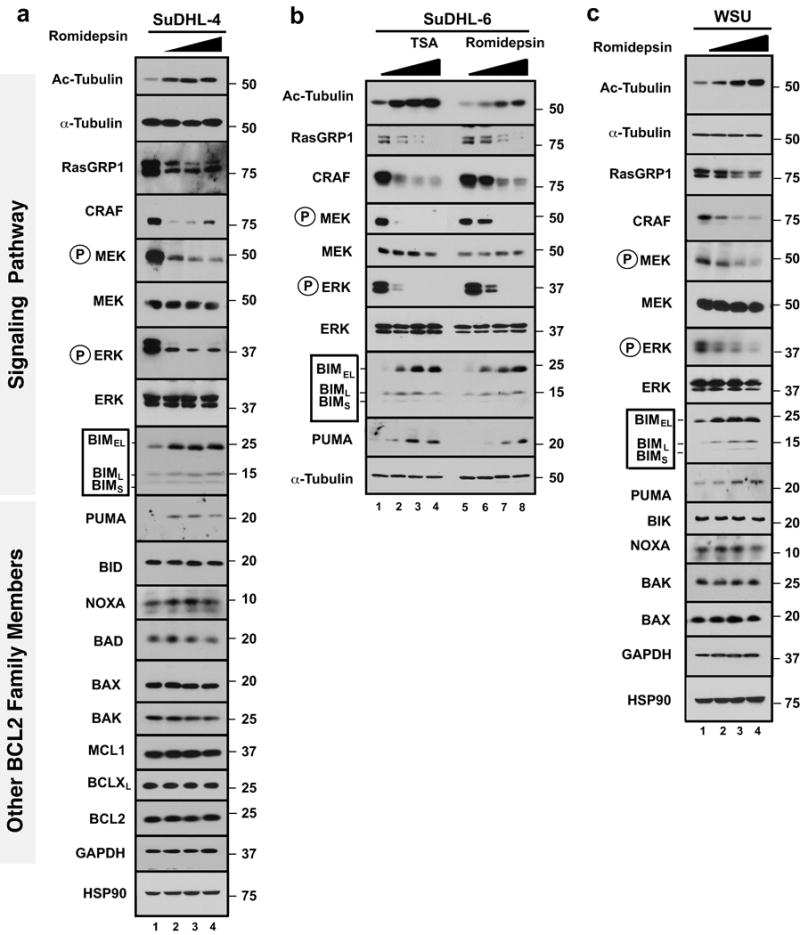
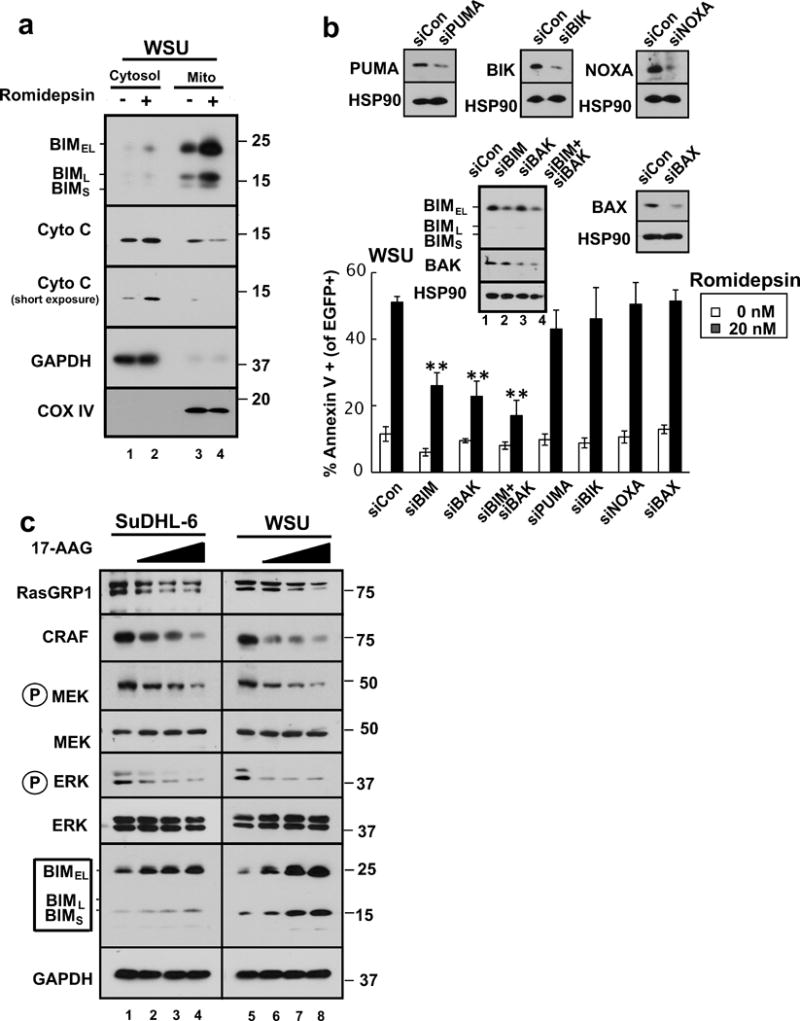
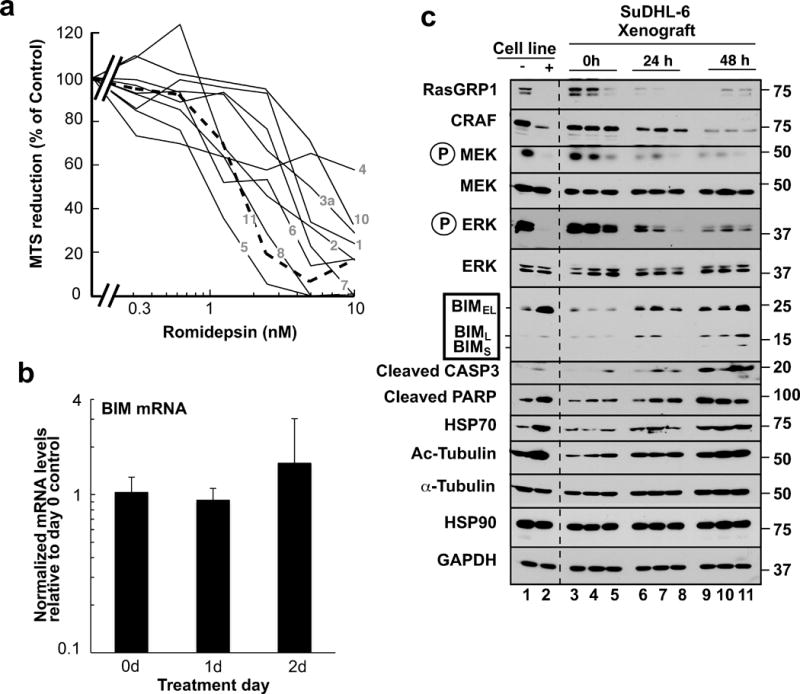
Histone deacetylase (HDAC) inhibitors, which are approved for the treatment of cutaneous T-cell lymphoma and multiple myeloma, are undergoing evaluation in other lymphoid neoplasms. How they kill susceptible cells is incompletely understood. Here, we show that trichostatin A, romidepsin and panobinostat induce apoptosis across a panel of malignant B cell lines, including lines that are intrinsically resistant to bortezomib, etoposide, cytarabine and BH3 mimetics. Further analysis traces the pro-apoptotic effects of HDAC inhibitors to increased acetylation of the chaperone heat shock protein 90 (HSP90), causing release and degradation of the HSP90 client proteins RASGRP1 and CRAF, which in turn leads to downregulation of mitogen-activated protein kinase pathway signaling and upregulation of the pro-apoptotic BCL2 family member BIM in vitro and in vivo. Importantly, these pro-apoptotic effects are mimicked by RASGRP1 small interfering RNA (siRNA) or HSP90 inhibition and reversed by overexpression of constitutively active MEK1 or siRNA-mediated downregulation of BIM. Collectively, these observations not only identify a new HSP90 client protein, RASGRP1, but also delineate a complete signaling pathway from HSP90 acetylation through RASGRP1 and CRAF degradation to BIM upregulation that contributes to selective cytotoxicity of HDAC inhibitors in lymphoid malignancies.
组蛋白去乙酰化酶(HDAC)抑制剂已被批准用于治疗皮肤T细胞淋巴瘤和多发性骨髓瘤,目前正在其他淋巴瘤中进行评估。它们如何杀死敏感细胞尚不完全清楚。在这里,我们表明曲古抑菌素A、罗米地辛和帕比司他可诱导一系列恶性B细胞系发生凋亡,包括对硼替佐米、依托泊苷、阿糖胞苷和BH3模拟物具有内在抗性的细胞系。进一步分析发现,HDAC抑制剂的促凋亡作用源于伴侣热休克蛋白90(HSP90)乙酰化增加,导致HSP90客户蛋白RASGRP1和CRAF释放并降解,进而导致丝裂原活化蛋白激酶信号通路下调,以及促凋亡Bcl-2家族成员BIM在体内外上调。重要的是,这些促凋亡作用可被RASGRP1小干扰RNA(siRNA)或HSP90抑制所模拟,并被组成型活性MEK1的过表达或siRNA介导的BIM下调所逆转。总的来说,这些观察结果不仅鉴定出一种新的HSP90客户蛋白RASGRP1,还描绘了一条从HSP90乙酰化通过RASGRP1和CRAF降解到BIM上调的完整信号通路,这有助于HDAC抑制剂在淋巴瘤中的选择性细胞毒性。