Baumgartner Desiree, Kopf Matthias, Klähn Stephan, Steglich Claudia, Hess Wolfgang R
University of Freiburg, Faculty of Biology, Genetics and Experimental Bioinformatics, Schänzlestr. 1, D-79104, Freiburg, Germany.
Present Address: Molecular Health GmbH, Kurfürsten-Anlage 21, 69115, Heidelberg, Germany.
BMC Microbiol. 2016 Nov 28;16(1):285. doi: 10.1186/s12866-016-0896-z.
Despite their versatile functions in multimeric protein complexes, in the modification of enzymatic activities, intercellular communication or regulatory processes, proteins shorter than 80 amino acids (μ-proteins) are a systematically underestimated class of gene products in bacteria. Photosynthetic cyanobacteria provide a paradigm for small protein functions due to extensive work on the photosynthetic apparatus that led to the functional characterization of 19 small proteins of less than 50 amino acids. In analogy, previously unstudied small ORFs with similar degrees of conservation might encode small proteins of high relevance also in other functional contexts.
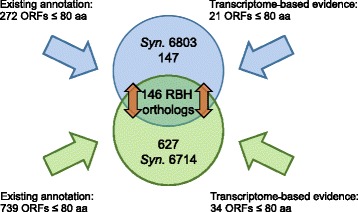
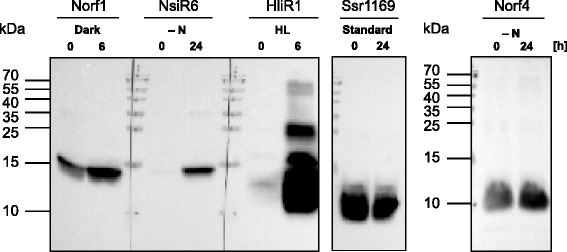
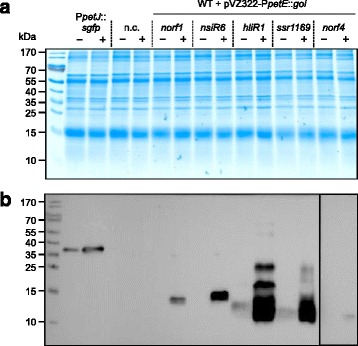
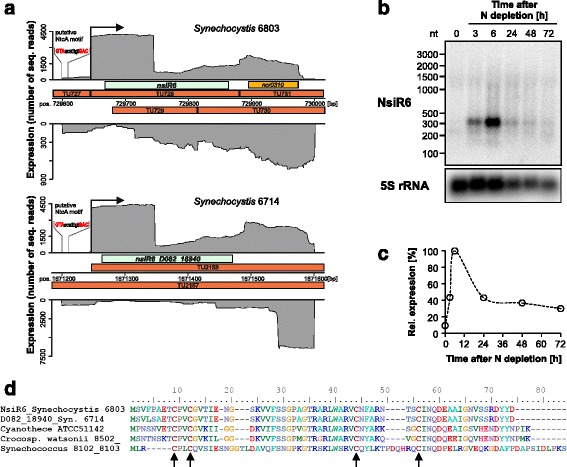
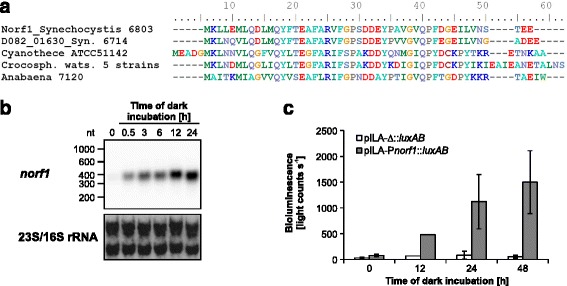
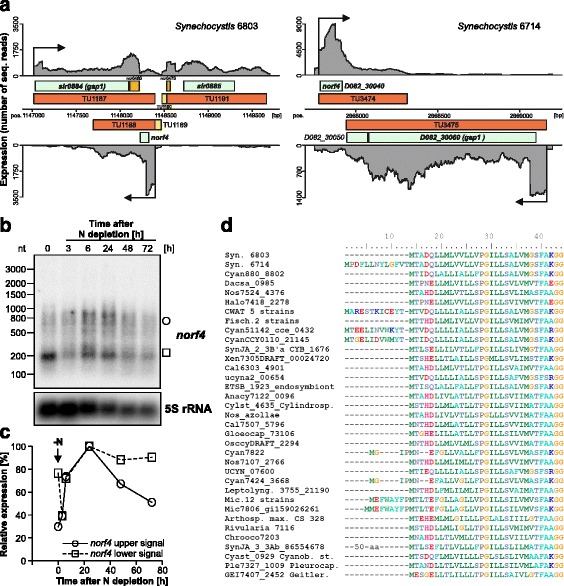
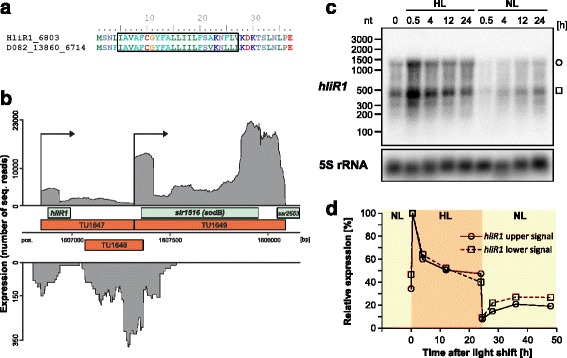
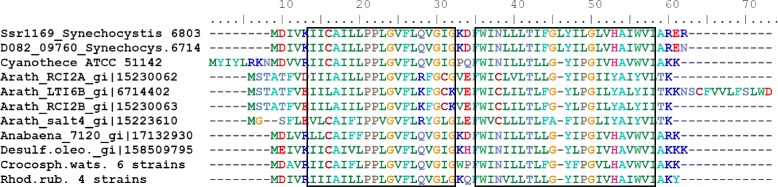
Here we used comparative transcriptomic information available for two model cyanobacteria, Synechocystis sp. PCC 6803 and Synechocystis sp. PCC 6714 for the prediction of small ORFs. We found 293 transcriptional units containing candidate small ORFs ≤80 codons in Synechocystis sp. PCC 6803, also including the known mRNAs encoding small proteins of the photosynthetic apparatus. From these transcriptional units, 146 are shared between the two strains, 42 are shared with the higher plant Arabidopsis thaliana and 25 with E. coli. To verify the existence of the respective μ-proteins in vivo, we selected five genes as examples to which a FLAG tag sequence was added and re-introduced them into Synechocystis sp. PCC 6803. These were the previously annotated gene ssr1169, two newly defined genes norf1 and norf4, as well as nsiR6 (nitrogen stress-induced RNA 6) and hliR1(high light-inducible RNA 1) , which originally were considered non-coding. Upon activation of expression via the Curesponsive petE promoter or from the native promoters, all five proteins were detected in Western blot experiments.
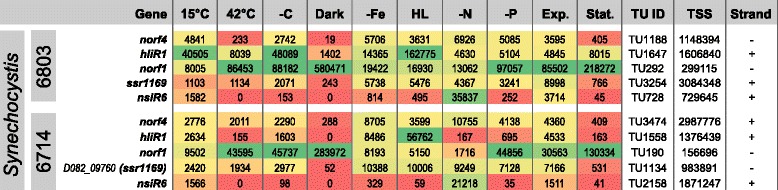
The distribution and conservation of these five genes as well as their regulation of expression and the physico-chemical properties of the encoded proteins underline the likely great bandwidth of small protein functions in bacteria and makes them attractive candidates for functional studies.
尽管蛋白质在多聚体蛋白复合物中具有多种功能,在酶活性修饰、细胞间通讯或调节过程中发挥作用,但长度小于80个氨基酸的蛋白质(微蛋白)在细菌中是一类系统性被低估的基因产物。光合蓝细菌为小蛋白功能提供了一个范例,因为对光合装置进行了广泛研究,从而对19种长度小于50个氨基酸的小蛋白进行了功能表征。类似地,以前未研究过的具有相似保守程度的小开放阅读框在其他功能背景下可能也编码具有高度相关性的小蛋白。
在这里,我们利用可获得的两种模式蓝细菌——聚球藻属PCC 6803和聚球藻属PCC 6714的比较转录组信息来预测小开放阅读框。我们在聚球藻属PCC 6803中发现了293个转录单元,其中包含候选小开放阅读框≤80个密码子,这也包括编码光合装置小蛋白的已知mRNA。在这些转录单元中,有146个在这两个菌株之间共享,42个与高等植物拟南芥共享,25个与大肠杆菌共享。为了在体内验证相应微蛋白的存在,我们选择了五个基因作为示例,给它们添加了FLAG标签序列,然后将它们重新引入聚球藻属PCC 6803。这些基因包括之前注释的基因ssr1169、两个新定义的基因norf1和norf4,以及最初被认为是非编码的nsiR6(氮胁迫诱导RNA 6)和hliR1(高光诱导RNA 1)。通过Curesponsive petE启动子或天然启动子激活表达后,在蛋白质免疫印迹实验中检测到了所有这五种蛋白质。
这五个基因的分布和保守性,以及它们的表达调控和编码蛋白的物理化学性质,突显了细菌中小蛋白功能可能具有的广泛多样性,使其成为功能研究的有吸引力的候选对象。