Wang Chen, Agrawal Shobhit, Laudien Jürgen, Häussermann Vreni, Held Christoph
Alfred Wegener Institute, Helmholtz Center for Polar- and Marine Research, Am Handelshafen 12, 27570, Bremerhaven, Germany.
Universidad Católica de Valparaíso, Facultad de Recursos Naturales, Escuela de Ciencias del Mar, Avda. Brasil 2950, Valparaíso, Chile.
BMC Evol Biol. 2016 Dec 1;16(1):258. doi: 10.1186/s12862-016-0836-4.
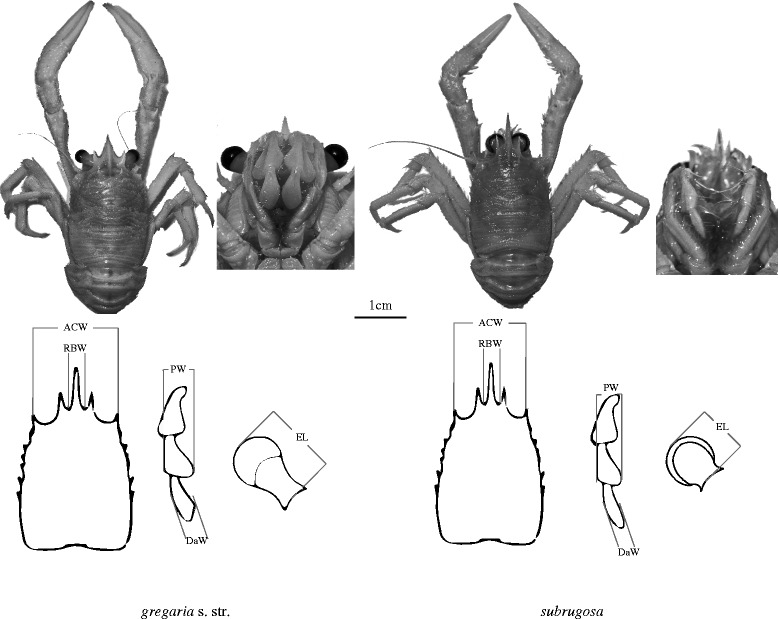
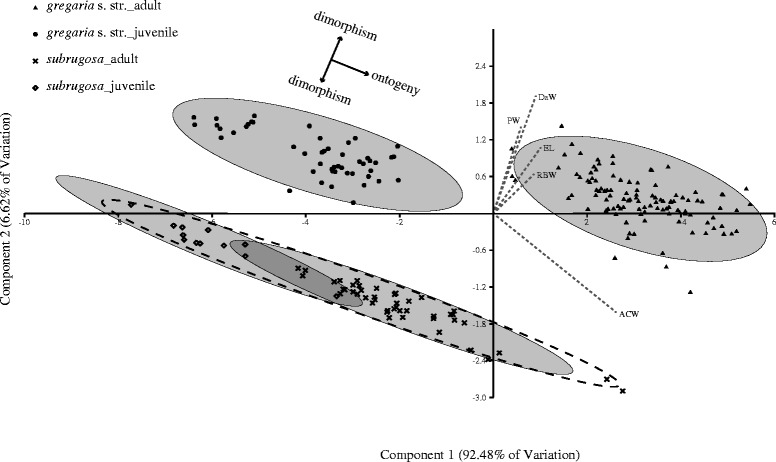
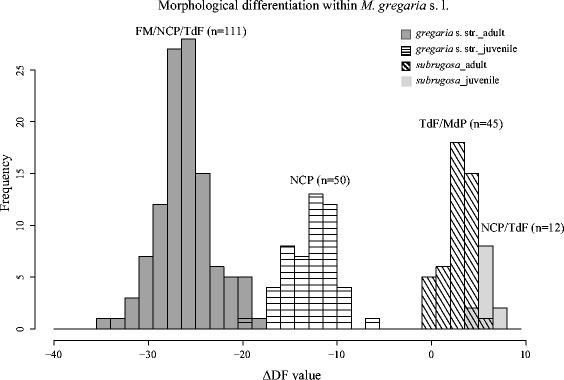
DNA barcoding has demonstrated that many discrete phenotypes are in fact genetically distinct (pseudo)cryptic species. Genetically identical, isogenic individuals, however, can also express similarly different phenotypes in response to a trigger condition, e.g. in the environment. This alternative explanation to cryptic speciation often remains untested because it requires considerable effort to reject the hypothesis that the observed underlying genetic homogeneity of the different phenotypes may be trivially caused by too slowly evolving molecular markers. The widespread squat lobster Munida gregaria comprises two discrete ecotypes, gregaria s. str. and subrugosa, which were long regarded as different species due to marked differences in morphological, ecological and behavioral traits. We studied the morphometry and genetics of M. gregaria s. l. and tested (1) whether the phenotypic differences remain stable after continental-scale sampling and inclusion of different life stages, (2) and whether each phenotype is underpinned by a specific genotype.
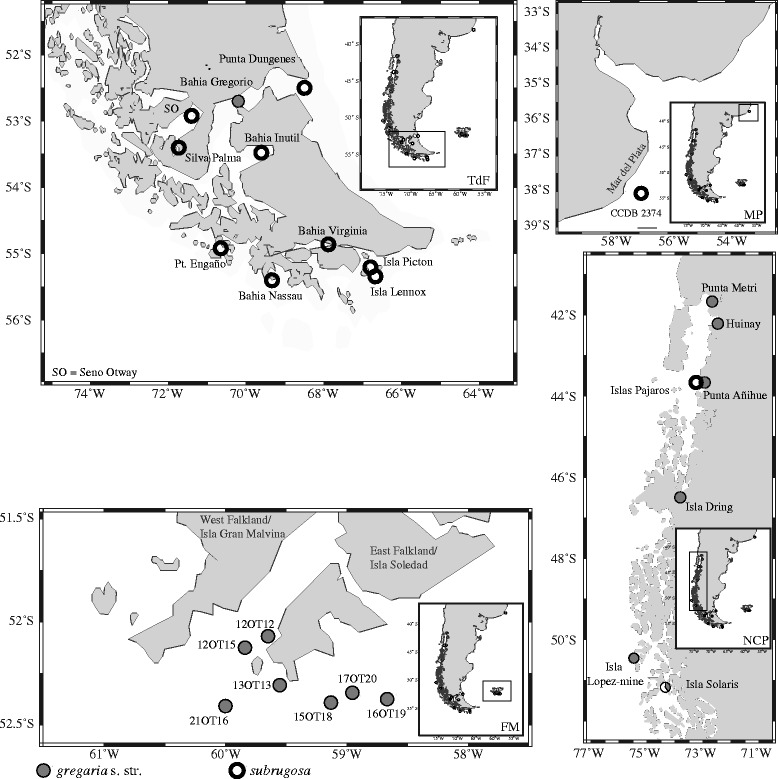
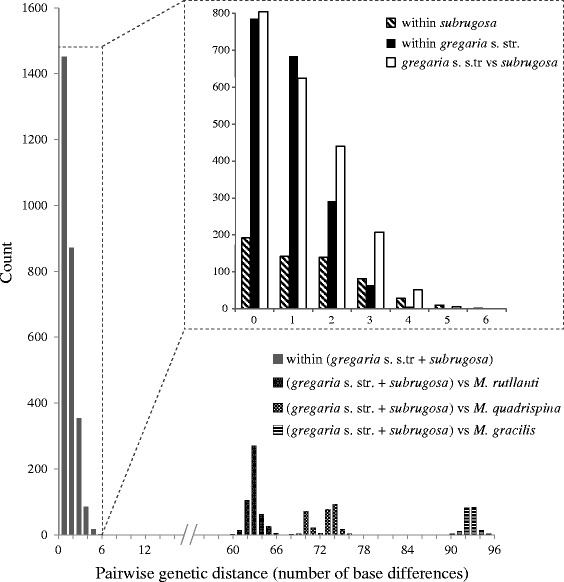
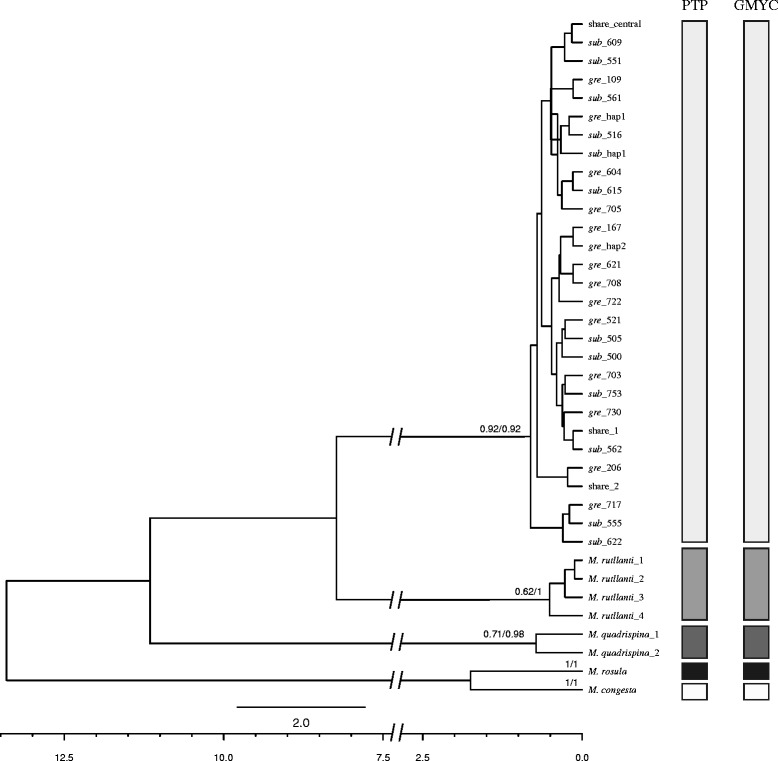
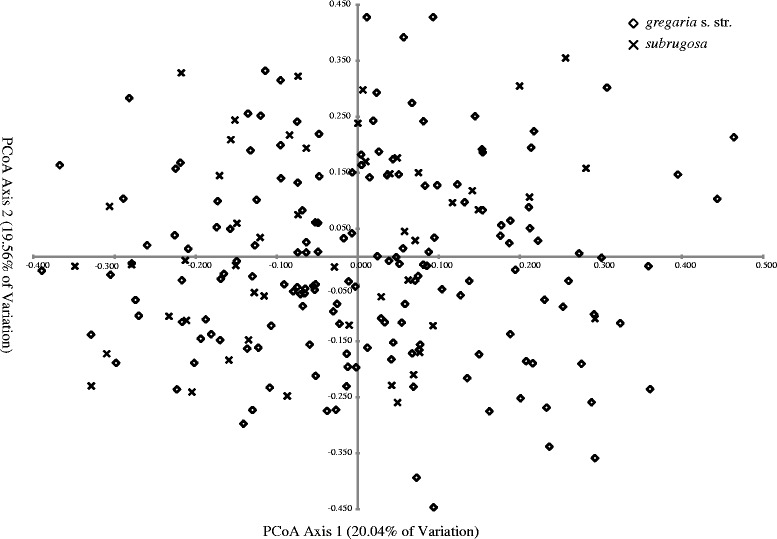
A total number of 219 gregaria s. str. and subrugosa individuals from 25 stations encompassing almost entire range in South America were included in morphological and genetic analyses using nine unlinked hypervariable microsatellites and new COI sequences. Results from the PCA and using discriminant functions demonstrated that the morphology of the two forms remains discrete. The mitochondrial data showed a shallow, star-like haplotype network and complete overlap of genetic distances within and among ecotypes. Coalescent-based species delimitation methods, PTP and GMYC, coherently suggested that haplotypes of both ecotypes forms a single species. Although all microsatellite markers possess sufficient genetic variation, AMOVA, PCoA and Bayesian clustering approaches revealed no genetic clusters corresponding to ecotypes or geographic units across the entire South-American distribution. No evidence of isolation-by-distance could be detected for this species in South America.
Despite their pronounced bimodal morphologies and different lifestyles, the gregaria s. str. and subrugosa ecotypes form a single, dimorphic species M. gregaria s. l.. Based on adequate geographic coverage and multiple independent polymorphic loci, there is no indication that each phenotype may have a unique genetic basis, leaving phenotypic plasticity or localized genomic islands of speciation as possible explanations.
DNA条形码技术已证明,许多离散的表型实际上是基因上不同的(伪)隐存种。然而,基因相同的同基因个体也可以在触发条件下,例如在环境中,表现出类似的不同表型。这种对隐存物种形成的替代解释往往未经检验,因为要拒绝这样一种假设需要付出相当大的努力,即观察到的不同表型潜在的基因同质性可能是由进化过于缓慢的分子标记轻易导致的。广泛分布的蹲龙虾Munida gregaria包括两个离散的生态型,gregaria s. str.和subrugosa,由于形态、生态和行为特征上的显著差异,它们长期以来被视为不同的物种。我们研究了M. gregaria s. l.的形态测量学和遗传学,并测试了:(1)在大陆尺度采样并纳入不同生命阶段后,表型差异是否仍然稳定;(2)每种表型是否由特定的基因型支持。
使用9个不连锁的高变微卫星和新的COI序列,对来自南美洲几乎整个分布范围的25个站点的总共219个gregaria s. str.和subrugosa个体进行了形态学和遗传学分析。主成分分析(PCA)和判别函数的结果表明,两种形态仍然是离散的。线粒体数据显示出一个浅的、星状的单倍型网络,生态型内部和之间的遗传距离完全重叠。基于溯祖的物种界定方法PTP和GMYC一致表明,两种生态型的单倍型构成一个单一物种。尽管所有微卫星标记都具有足够的遗传变异,但方差分析(AMOVA)、主坐标分析(PCoA)和贝叶斯聚类方法均未揭示出与整个南美洲分布范围内的生态型或地理单元相对应的基因簇。在南美洲,没有检测到该物种存在距离隔离的证据。
尽管gregaria s. str.和subrugosa生态型具有明显的双峰形态和不同的生活方式,但它们构成了一个单一的、二态的物种M. gregaria s. l.。基于足够的地理覆盖范围和多个独立的多态位点,没有迹象表明每种表型可能具有独特的基因基础,这使得表型可塑性或局部物种形成的基因组岛成为可能的解释。