Kim Do-Yeon, Park Hyun-Kyung, Kim Nam-Su, Hwang Se-Jin, Lee Hyun Ju
Department of Pediatrics, Hanyang University College of Medicine, Seoul, South Korea.
Division of Neuroanatomy, Department of Anatomy and Histology, Hanyang University College of Medicine, Seoul, South Korea.
Ital J Pediatr. 2016 Dec 1;42(1):104. doi: 10.1186/s13052-016-0309-9.
White matter (WM) abnormalities associated with prematurity are one of the most important causes of neurological disability that involves spastic motor deficits in preterm newborns. This study aimed to evaluate regional microstructural changes in diffusion tensor imaging (DTI) associated with WM abnormalities.
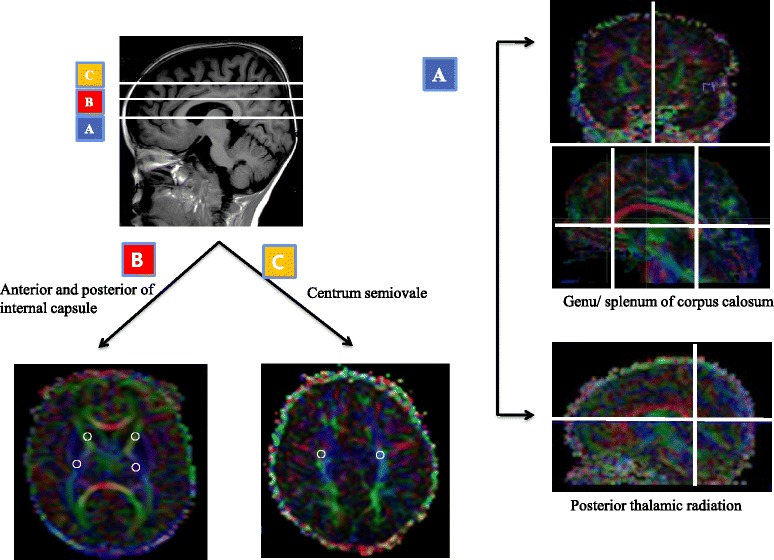
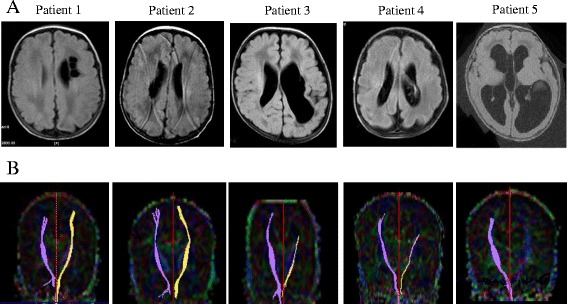
We prospectively studied extremely low birth weight (ELBW; <1000 g) preterm infants who were admitted to the Neonatal Intensive Care Unit of Hanyang University Hospital between February 2011 and February 2014. WM abnormalities were assessed with conventional magnetic resonance (MR) imaging and DTI near term-equivalent age before discharge. Region-of-interests (ROIs) measurements were performed to examine the regional distribution of fractional anisotropy (FA) values.
Thirty-two out of 72 ELBW infants underwent conventional MR imaging and DTI at term-equivalent age. Ten of these infants developed WM abnormalities associated with prematurity. Five of ten of those with WM abnormalities developed cerebral palsy (CP). DTI in the WM abnormalities with CP showed a significant reduction of mean FA in the genu of the corpus callosum (p = 0.022), the ipsilateral posterior limb of the internal capsule (p = 0.019), and the ipsilateral centrum semiovale (p = 0.012) compared to normal WM and WM abnormalities without CP. In infants having WM abnormalities with CP, early FA values in neonatal DTI revealed abnormalities of the WM regions prior to the manifestation of hemiparesis.
DTI performed at term equivalent age shows different FA values in WM regions among infants with or without WM abnormalities associated with prematurity and/or CP. Low FA values of ROIs in DTI are related with later development of spastic CP in preterm infants with WM abnormalities.
与早产相关的白质(WM)异常是导致神经功能障碍的最重要原因之一,涉及早产新生儿的痉挛性运动缺陷。本研究旨在评估与WM异常相关的扩散张量成像(DTI)中的区域微观结构变化。
我们前瞻性地研究了2011年2月至2014年2月期间入住汉阳大学医院新生儿重症监护病房的极低出生体重(ELBW;<1000g)早产儿。在出院前,采用传统磁共振(MR)成像和DTI在近足月等效年龄时评估WM异常。进行感兴趣区(ROI)测量以检查分数各向异性(FA)值的区域分布。
72例ELBW婴儿中有32例在足月等效年龄时接受了传统MR成像和DTI检查。其中10例婴儿出现与早产相关的WM异常。10例有WM异常的婴儿中有5例发展为脑瘫(CP)。与正常WM和无CP的WM异常相比,患有CP的WM异常的DTI显示胼胝体膝部(p = 0.022)、同侧内囊后肢(p = 0.019)和同侧半卵圆中心(p = 0.012)的平均FA显著降低。在患有CP的WM异常婴儿中,新生儿DTI中的早期FA值显示在偏瘫表现之前WM区域就存在异常。
在足月等效年龄进行的DTI显示,有或无与早产和/或CP相关的WM异常的婴儿,其WM区域中的FA值不同。DTI中ROI的低FA值与患有WM异常的早产儿后期痉挛性CP的发生有关。