Shen Xiao-Fei, Jiang Jin-Peng, Yang Jian-Jun, Wang Wei-Zhong, Guan Wen-Xian, Du Jun-Feng
Department of General Surgery, Affiliated Drum Tower Hospital of Nanjing University Medical School , Nanjing , China.
Department of Rehabilitation Medicine, PLA Army General Hospital , Beijing , China.
Front Immunol. 2016 Nov 17;7:511. doi: 10.3389/fimmu.2016.00511. eCollection 2016.
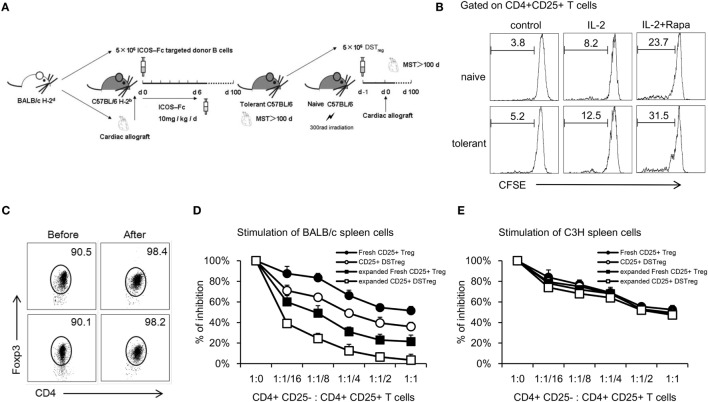
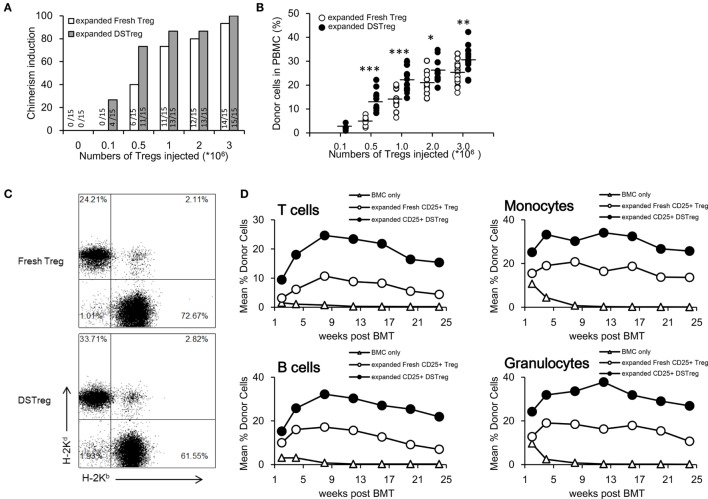
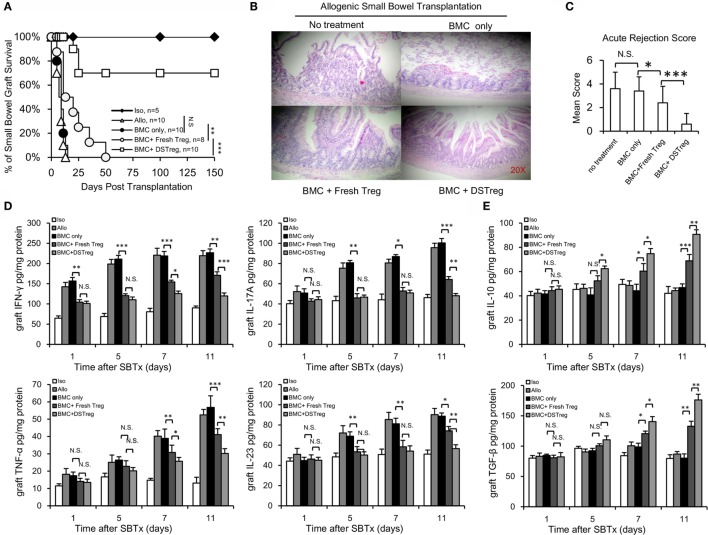
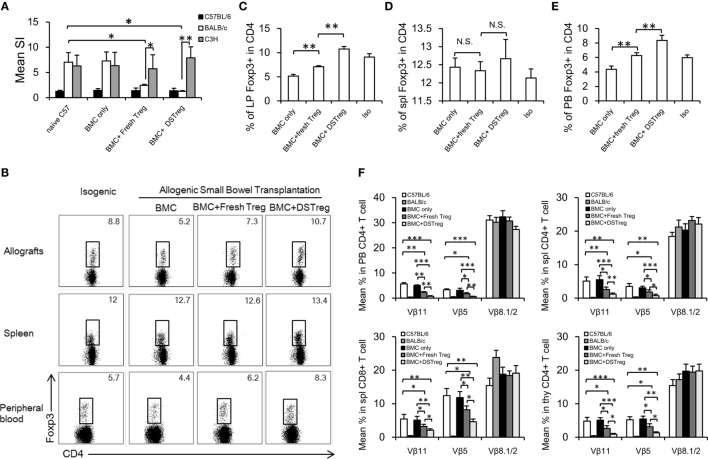
The induction of donor-specific transplant tolerance has always been a central problem for small bowel transplantation (SBT), which is thought to be the best therapy for end-stage bowel failure. With the development of new tolerance-inducing strategies, mixed chimerism induced by co-stimulation blockade has become most potent for tolerance of allografts, such as skin, kidney, and heart. However, a lack of clinically available co-stimulation blockers has hindered efficient application in humans. Furthermore, unlike those for other types of solid organ transplantation, strategies to induce robust mixed chimerism for intestinal allografts have not been fully developed. To improve current mixed chimerism induction protocols for future clinical application, we developed a new protocol using donor-specific regulatory T (Treg) cells from mice with heart allograft tolerance, immunosuppressive drugs which could be used clinically and low doses of irradiation. Our results demonstrated that donor-specific Treg cells acquired from tolerant mice after expansion generate stable chimerism and lead to acceptance of intestinal allograft. Increased intragraft Treg cells and clonal deletion contribute to the development of SBT tolerance.
诱导供体特异性移植耐受一直是小肠移植(SBT)的核心问题,小肠移植被认为是终末期肠衰竭的最佳治疗方法。随着新型耐受诱导策略的发展,共刺激阻断诱导的混合嵌合体已成为对皮肤、肾脏和心脏等同种异体移植物产生耐受的最有效方法。然而,缺乏临床可用的共刺激阻断剂阻碍了其在人类中的有效应用。此外,与其他类型的实体器官移植不同,诱导肠道同种异体移植物产生强大混合嵌合体的策略尚未得到充分发展。为了改进当前的混合嵌合体诱导方案以便未来临床应用,我们开发了一种新方案,使用来自具有心脏同种异体移植耐受性的小鼠的供体特异性调节性T(Treg)细胞、可临床使用的免疫抑制药物和低剂量辐射。我们的结果表明,从耐受小鼠中获取并扩增后的供体特异性Treg细胞可产生稳定的嵌合体,并导致肠道同种异体移植被接受。移植内Treg细胞增加和克隆清除有助于小肠移植耐受的形成。