Fraser F C, Todman L C, Corstanje R, Deeks L K, Harris J A, Pawlett M, Whitmore A P, Ritz K
School of Water, Energy, and Environment, Cranfield University, Bedford, MK43 0AL, UK.
Rothamsted Research, Harpenden, Hertfordshire, AL5 2JQ, UK.
Soil Biol Biochem. 2016 Dec;103:493-501. doi: 10.1016/j.soilbio.2016.09.015.
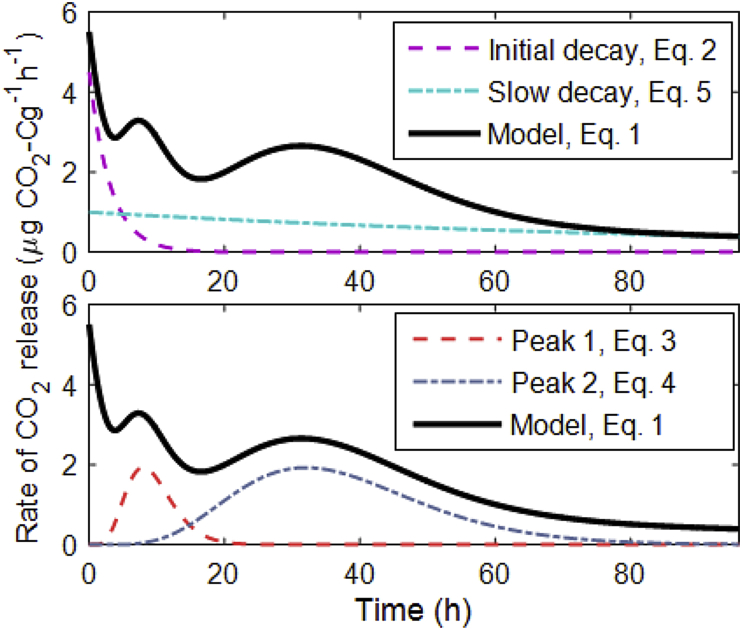
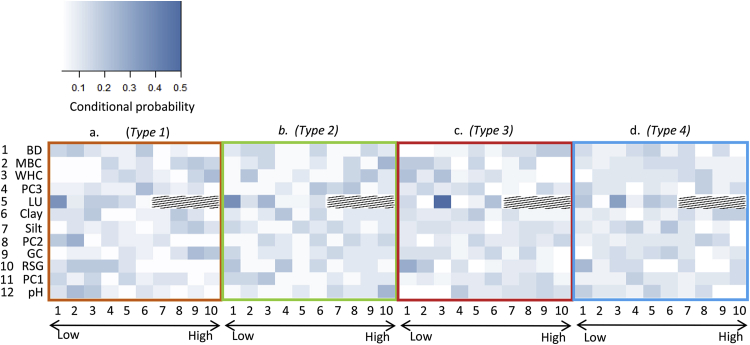
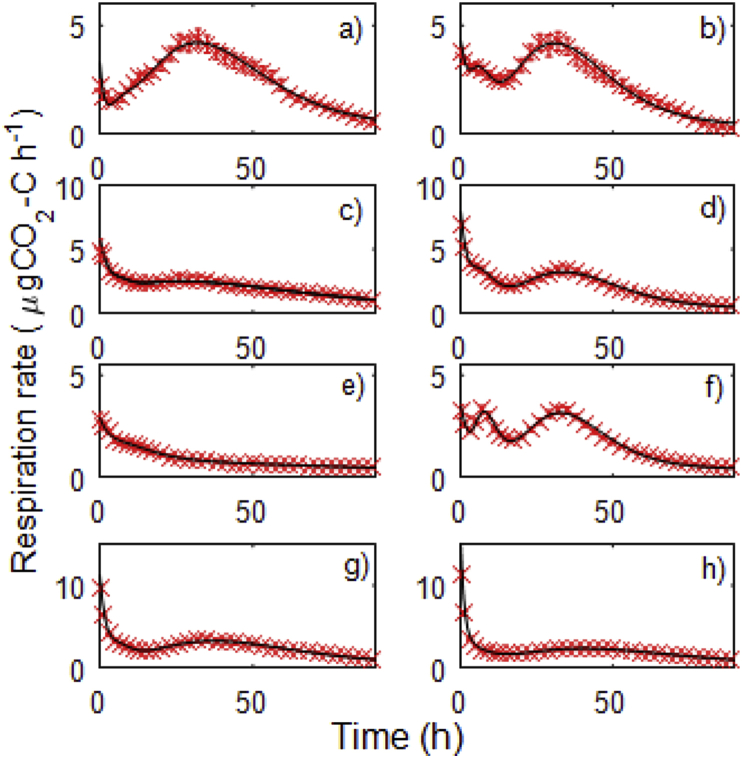
Factors governing the turnover of organic matter (OM) added to soils, including substrate quality, climate, environment and biology, are well known, but their relative importance has been difficult to ascertain due to the interconnected nature of the soil system. This has made their inclusion in mechanistic models of OM turnover or nutrient cycling difficult despite the potential power of these models to unravel complex interactions. Using high temporal-resolution respirometery (6 min measurement intervals), we monitored the respiratory response of 67 soils sampled from across England and Wales over a 5 day period following the addition of a complex organic substrate (green barley powder). Four respiratory response archetypes were observed, characterised by different rates of respiration as well as different time-dependent patterns. We also found that it was possible to predict, with 95% accuracy, which type of respiratory behaviour a soil would exhibit based on certain physical and chemical soil properties combined with the size and phenotypic structure of the microbial community. Bulk density, microbial biomass carbon, water holding capacity and microbial community phenotype were identified as the four most important factors in predicting the soils' respiratory responses using a Bayesian belief network. These results show that the size and constitution of the microbial community are as important as physico-chemical properties of a soil in governing the respiratory response to OM addition. Such a combination suggests that the 'architecture' of the soil, i.e. the integration of the spatial organisation of the environment and the interactions between the communities living and functioning within the pore networks, is fundamentally important in regulating such processes.
影响添加到土壤中的有机物质(OM)周转的因素,包括底物质量、气候、环境和生物学因素,已为人熟知,但由于土壤系统的相互联系性质,其相对重要性难以确定。尽管这些模型有潜力揭示复杂的相互作用,但这使得将它们纳入有机物质周转或养分循环的机理模型变得困难。我们使用高时间分辨率呼吸测量法(6分钟测量间隔),在添加复杂有机底物(绿色大麦粉)后的5天内,监测了从英格兰和威尔士各地采集的67种土壤的呼吸反应。观察到四种呼吸反应原型,其特征在于不同的呼吸速率以及不同的时间依赖性模式。我们还发现,基于某些土壤物理和化学性质以及微生物群落的大小和表型结构,可以95%的准确率预测土壤将表现出哪种类型的呼吸行为。使用贝叶斯信念网络,土壤容重、微生物生物量碳、持水能力和微生物群落表型被确定为预测土壤呼吸反应的四个最重要因素。这些结果表明,在控制对添加有机物质的呼吸反应方面,微生物群落的大小和组成与土壤的物理化学性质同样重要。这样的组合表明,土壤的“结构”,即环境空间组织与孔隙网络中生存和发挥功能的群落之间相互作用的整合,在调节此类过程中至关重要。