
胰高血糖素样肽-1类似物利拉鲁肽可延缓Lewis大鼠实验性自身免疫性脑脊髓炎的发病。
Glucagon-Like Peptide-1 Analog, Liraglutide, Delays Onset of Experimental Autoimmune Encephalitis in Lewis Rats.
作者信息
DellaValle Brian, Brix Gitte S, Brock Birgitte, Gejl Michael, Landau Anne M, Møller Arne, Rungby Jørgen, Larsen Agnete
机构信息
Department of Biomedicine/Pharmacology, Aarhus UniversityAarhus, Denmark; Centre of Medical Parasitology, Department of Clinical Microbiology, Copenhagen University HospitalCopenhagen, Denmark.
Department of Biomedicine/Pharmacology, Aarhus University Aarhus, Denmark.
出版信息
Front Pharmacol. 2016 Nov 18;7:433. doi: 10.3389/fphar.2016.00433. eCollection 2016.
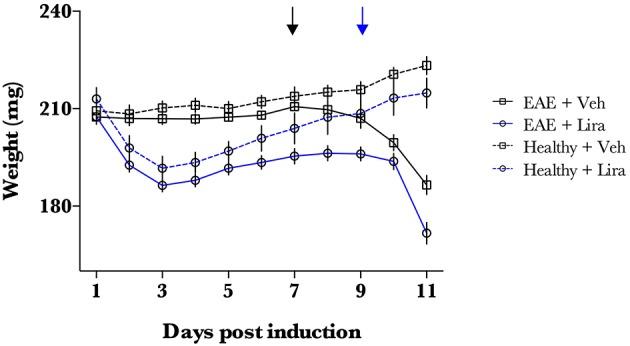
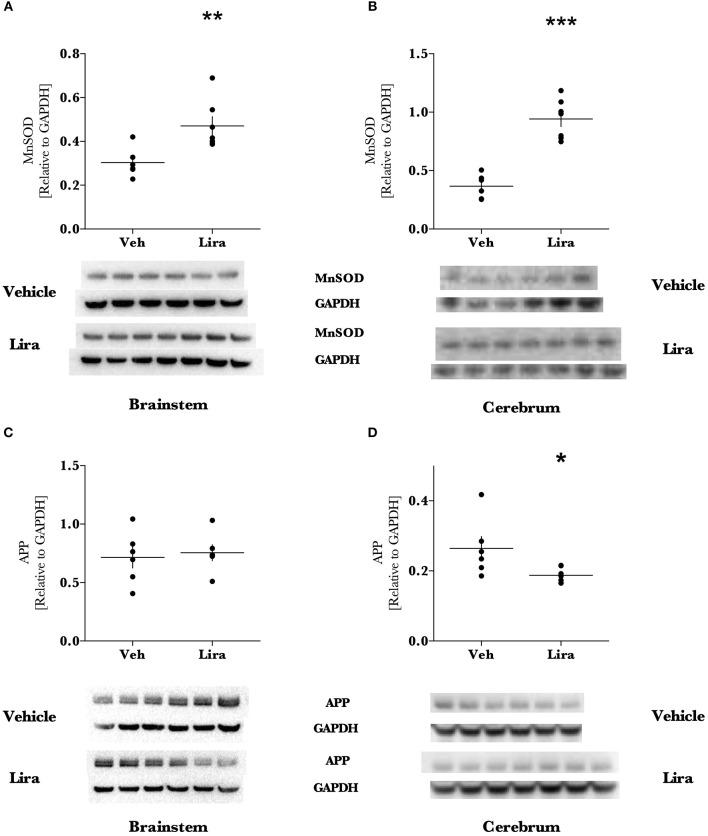
Recent findings indicate that metabolic disturbances are involved in multiple sclerosis (MS) pathology and influence the susceptibility to treatment, directing attention toward anti-diabetic drugs such as metformin and pioglitazone. Liraglutide, a drug of the glucagon-like peptide-1 (GLP-1) family, is also anti-diabetic and weight-reducing and is, moreover, directly neuroprotective and anti-inflammatory in a broad spectrum of experimental models of brain disease. In this study we investigate the potential for this FDA-approved drug, liraglutide, as a treatment for MS by utilizing the experimental model, experimental autoimmune encephalitis (EAE). EAE was induced in 30 female Lewis rats that subsequently received twice-daily liraglutide (200 μg/kg s.c.) or saline. Healthy controls were included (saline, = 6, liraglutide, = 7). Clinical score and weight were assessed daily by blinded observers. Animals were killed at peak disease severity (day 11) or if exceeding humane endpoint (clinical score ≥4). Protein levels of manganese superoxide dismutase (MnSOD), amyloid precursor protein (APP), and glial fibrillary acidic protein (GFAP) were determined. Liraglutide treatment delayed disease onset (group clinical score significantly >0) by 2 days and markedly reduced disease severity (median clinical score 2 vs. 5; = 0.0003). Fourteen of 15 (93%) of vehicle-treated rats reached the humane endpoint (clinical score ≥4) by day 11 compared to 5 of 15 (33%) of liraglutide-treated rats ( = 0.0004). Liraglutide substantially increased the mitochondrial antioxidant MnSOD ( < 0.01) and reduced the neurodegenerative marker APP ( = 0.036) in the brain. GFAP levels were not significantly changed with drug treatment ( = 0.09). We demonstrate, for the first time, that liraglutide treatment delays onset of EAE in Lewis rats and is associated with improved protective capacity against oxidative stress. These data suggest GLP-1 receptor agonists should be investigated further as a potential therapy for MS.
最近的研究结果表明,代谢紊乱参与了多发性硬化症(MS)的病理过程,并影响治疗的易感性,从而将注意力引向了二甲双胍和吡格列酮等抗糖尿病药物。利拉鲁肽是胰高血糖素样肽-1(GLP-1)家族的一种药物,也具有抗糖尿病和减肥作用,此外,在多种脑疾病的实验模型中具有直接的神经保护和抗炎作用。在本研究中,我们利用实验性自身免疫性脑脊髓炎(EAE)实验模型,研究了这种已获美国食品药品监督管理局(FDA)批准的药物利拉鲁肽治疗MS的潜力。在30只雌性Lewis大鼠中诱导EAE,随后这些大鼠每天接受两次利拉鲁肽(200μg/kg皮下注射)或生理盐水。纳入健康对照(生理盐水组,n = 6;利拉鲁肽组,n = 7)。由不知情的观察者每天评估临床评分和体重。在疾病严重程度达到峰值时(第11天)或如果超过人道终点(临床评分≥4)时处死动物。测定锰超氧化物歧化酶(MnSOD)、淀粉样前体蛋白(APP)和胶质纤维酸性蛋白(GFAP)的蛋白水平。利拉鲁肽治疗使疾病发作延迟了2天(组临床评分显著>0),并显著降低了疾病严重程度(临床评分中位数为2 vs. 5;P = 0.0003)。到第11天,15只接受赋形剂治疗的大鼠中有14只(93%)达到人道终点(临床评分≥4),而接受利拉鲁肽治疗的大鼠中这一比例为15只中的5只(3


 Zotero 插件