Maass Juan C, Gu Rende, Cai Tiantian, Wan Ying-Wooi, Cantellano Silvia C, Asprer Joanna S T, Zhang Hongyuan, Jen Hsin-I, Edlund Renée K, Liu Zhandong, Groves Andrew K
Department of Otolaryngology, Hospital Clínico Universidad de Chile and Interdisciplinary Program of Physiology and Biophysics ICBM Universidad de Chile, Santiago, Chile.
Department of Otolaryngology, Clínica Alemana de Santiago, Facultad de Medicina Clínica Alemana-Universidad del Desarrollo, Santiago, Chile.
PLoS One. 2016 Dec 5;11(12):e0167286. doi: 10.1371/journal.pone.0167286. eCollection 2016.
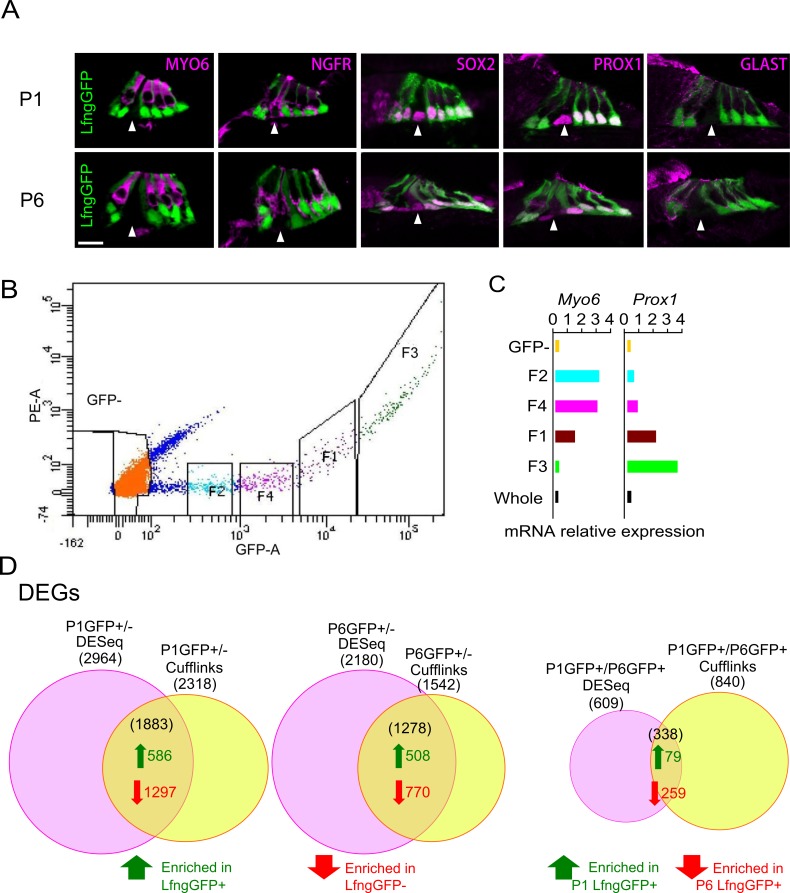
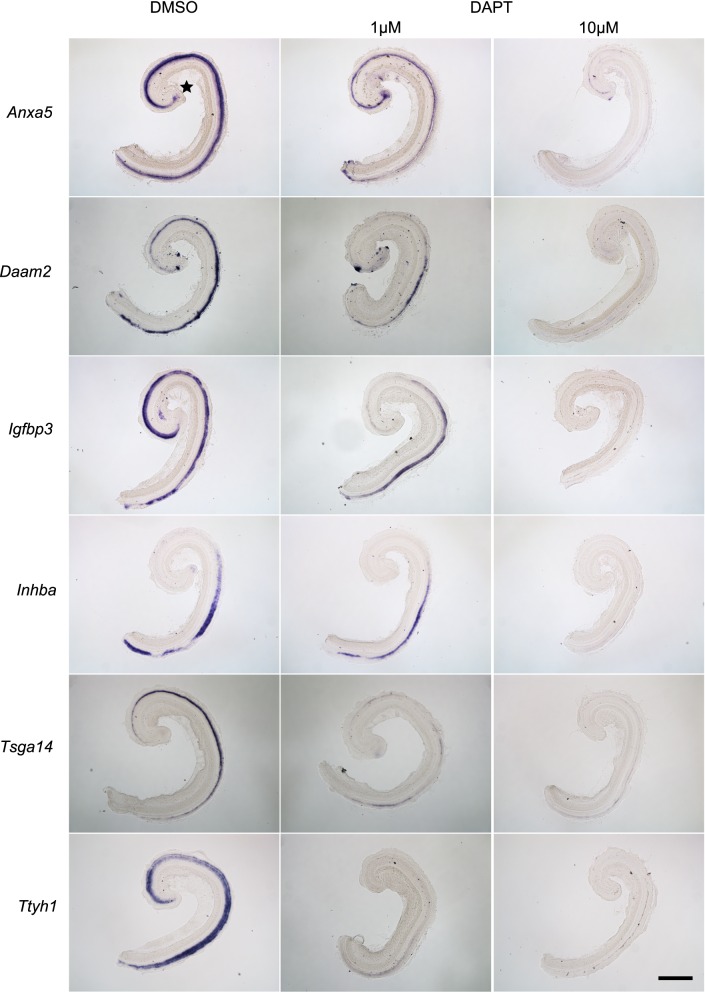
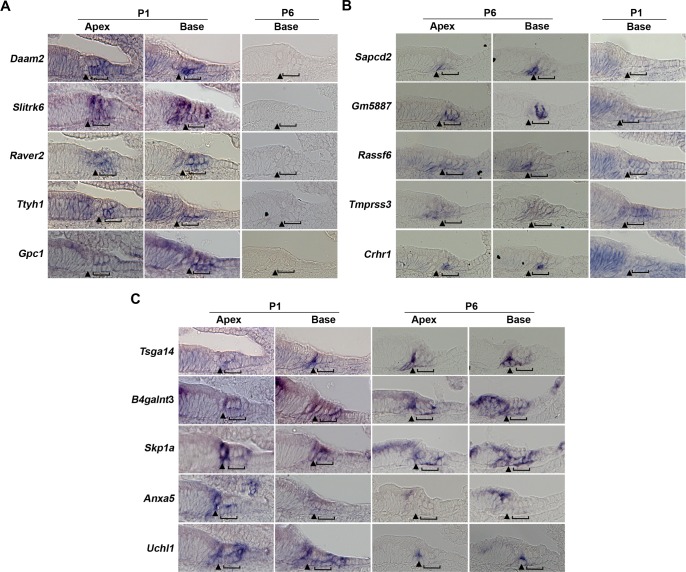
Neonatal mouse cochlear supporting cells have a limited ability to divide and trans-differentiate into hair cells, but this ability declines rapidly in the two weeks after birth. This decline is concomitant with the morphological and functional maturation of the organ of Corti prior to the onset of hearing. However, despite this association between maturation and loss of regenerative potential, little is known of the molecular changes that underlie these events. To identify these changes, we used RNA-seq to generate transcriptional profiles of purified cochlear supporting cells from 1- and 6-day-old mice. We found many significant changes in gene expression during this period, many of which were related to regulation of proliferation, differentiation of inner ear components and the maturation of the organ of Corti prior to the onset of hearing. One example of a change in regenerative potential of supporting cells is their robust production of hair cells in response to a blockade of the Notch signaling pathway at the time of birth, but a complete lack of response to such blockade just a few days later. By comparing our supporting cell transcriptomes to those of supporting cells cultured in the presence of Notch pathway inhibitors, we show that the transcriptional response to Notch blockade disappears almost completely in the first postnatal week. Our results offer some of the first molecular insights into the failure of hair cell regeneration in the mammalian cochlea.
新生小鼠的耳蜗支持细胞具有有限的分裂能力,并能转分化为毛细胞,但这种能力在出生后的两周内迅速下降。这种下降与在听力开始之前柯蒂氏器的形态和功能成熟同时发生。然而,尽管成熟与再生潜能丧失之间存在这种关联,但对于这些事件背后的分子变化却知之甚少。为了确定这些变化,我们使用RNA测序来生成1日龄和6日龄小鼠纯化耳蜗支持细胞的转录谱。我们发现在这段时间内基因表达有许多显著变化,其中许多与增殖调控、内耳成分的分化以及听力开始之前柯蒂氏器的成熟有关。支持细胞再生潜能变化的一个例子是,它们在出生时对Notch信号通路的阻断会强烈产生毛细胞,但几天后对此类阻断则完全没有反应。通过将我们的支持细胞转录组与在Notch通路抑制剂存在下培养的支持细胞的转录组进行比较,我们发现对Notch阻断的转录反应在出生后的第一周几乎完全消失。我们的结果为哺乳动物耳蜗中毛细胞再生失败提供了一些初步的分子见解。