Laboratory for Corrosion and Protection of Metals, Institute of Metal Research, Chinese Academy of Sciences, 62 Wencui Road, 110016 Shenyang, China.
Nat Commun. 2016 Dec 7;7:13797. doi: 10.1038/ncomms13797.
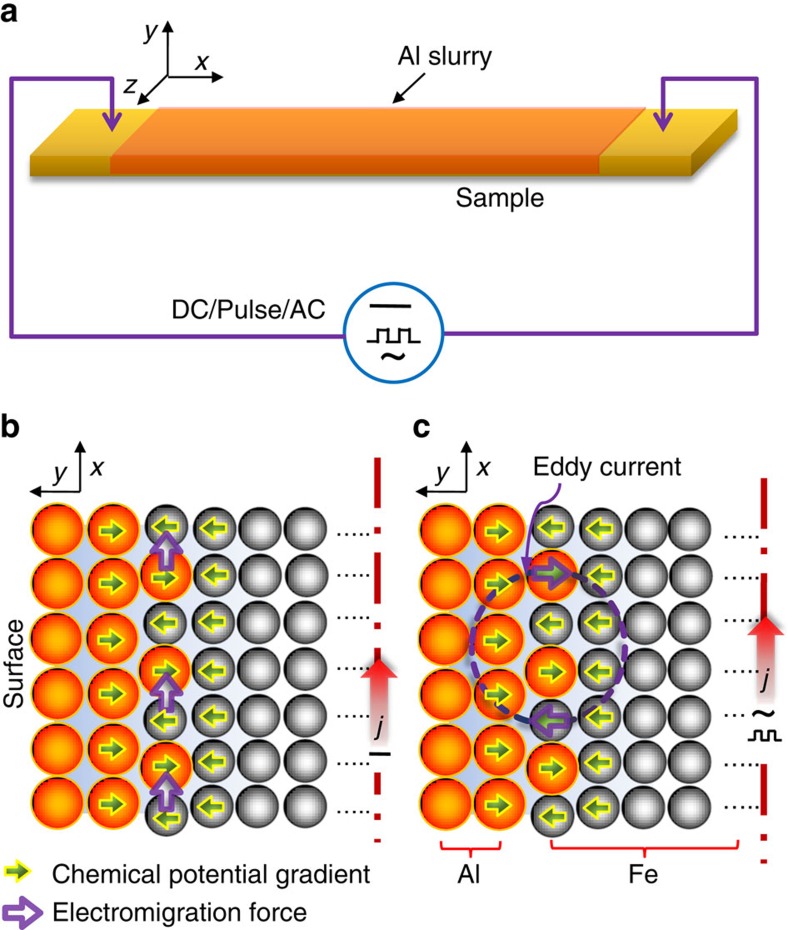
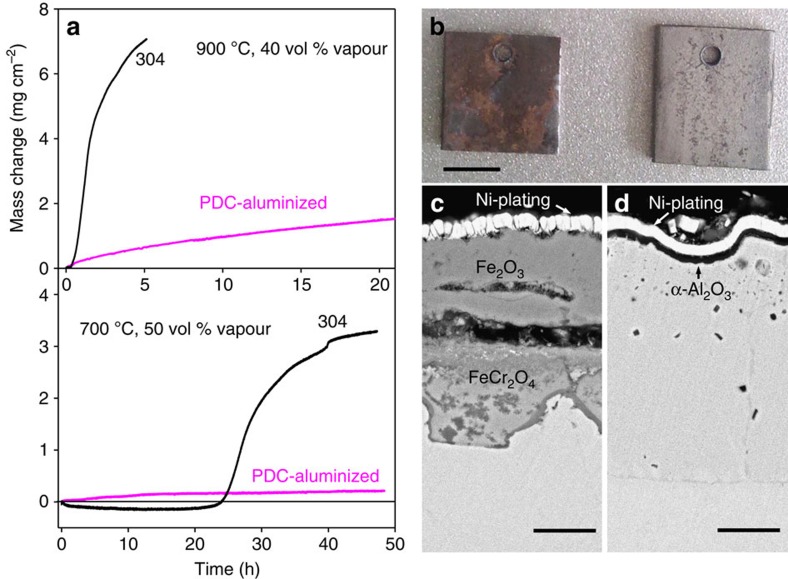
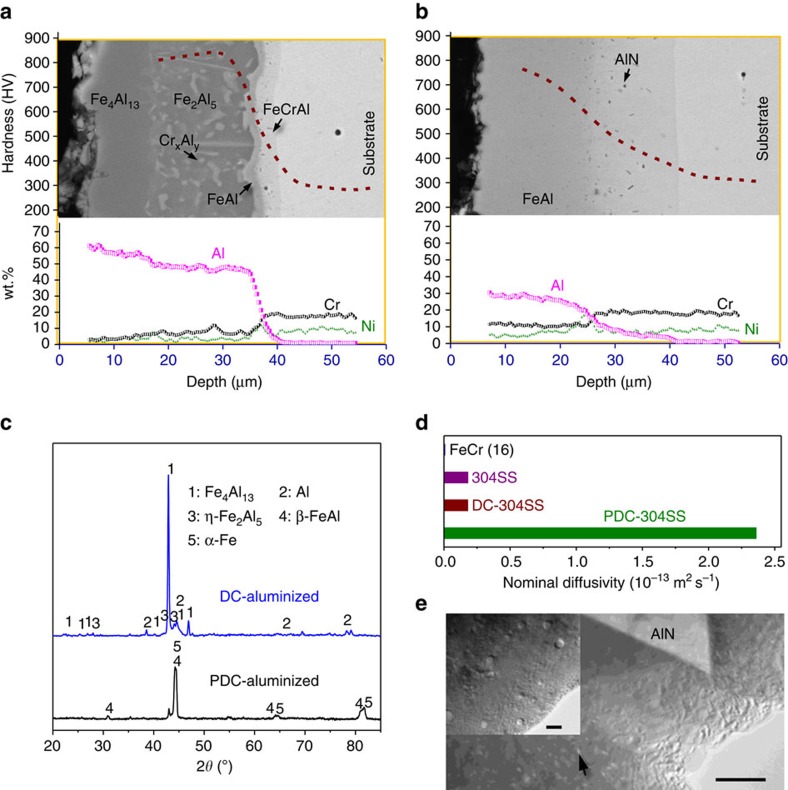
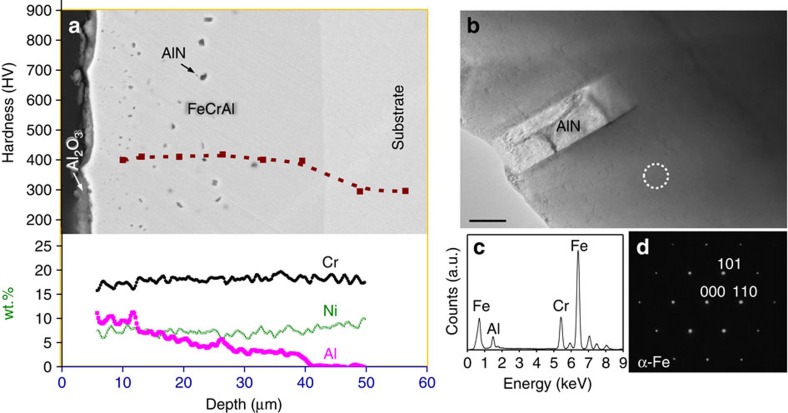
Surface modification is an essential step in engineering materials that can withstand the increasingly aggressive environments encountered in various modern energy-conversion systems and chemical processing industries. However, most traditional technologies exhibit disadvantages such as slow diffusion kinetics, processing difficulties or compatibility issues. Here, we present a general strategy for the ultrafast surface modification of metals inspired by electromigration, using aluminizing austenitic stainless steel as an example. Our strategy facilitates the rapid formation of a favourable ductile surface layer composed of FeCrAl or β-FeAl within only 10 min compared with several hours in conventional processes. This result indicates that electromigration can be used to achieve the ultrafast surface modification of metals and can overcome the limitations of traditional technologies. This strategy could be used to aluminize ultra-supercritical steam tubing to withstand aggressive oxidizing environments.
表面改性是工程材料的一个重要步骤,可以承受各种现代能量转换系统和化学加工工业中遇到的日益苛刻的环境。然而,大多数传统技术都存在扩散动力学缓慢、加工困难或兼容性问题等缺点。在这里,我们提出了一种受电迁移启发的超快金属表面改性的通用策略,以渗铝奥氏体不锈钢为例。与传统工艺需要几个小时相比,我们的策略仅需 10 分钟即可快速形成由 FeCrAl 或 β-FeAl 组成的有利的延性表面层。这一结果表明,电迁移可以用于实现金属的超快表面改性,并克服传统技术的局限性。该策略可用于渗铝超超临界蒸汽管,以承受苛刻的氧化环境。