Zeng Delong, Liu Maoxing, Pan Jingxuan
Jinan University Institute of Tumor Pharmacology, College of Pharmacy, Jinan University, Guangzhou, China.
Oncotarget. 2017 Jan 10;8(2):3396-3411. doi: 10.18632/oncotarget.13773.
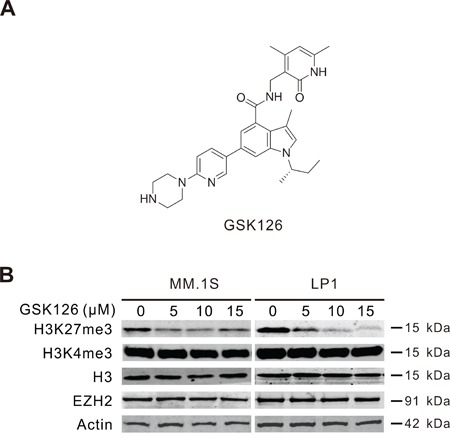
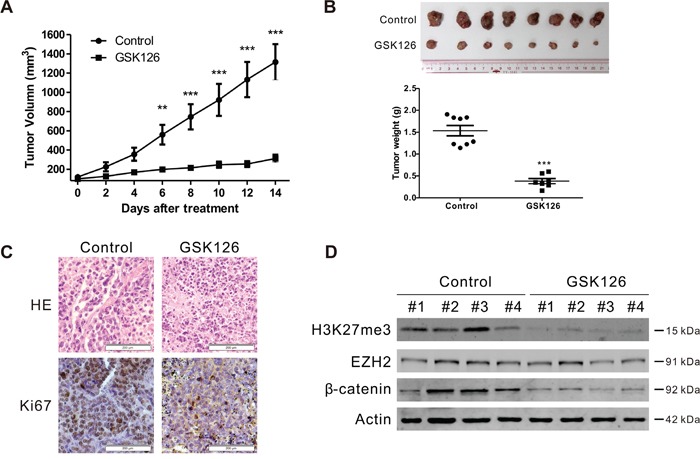
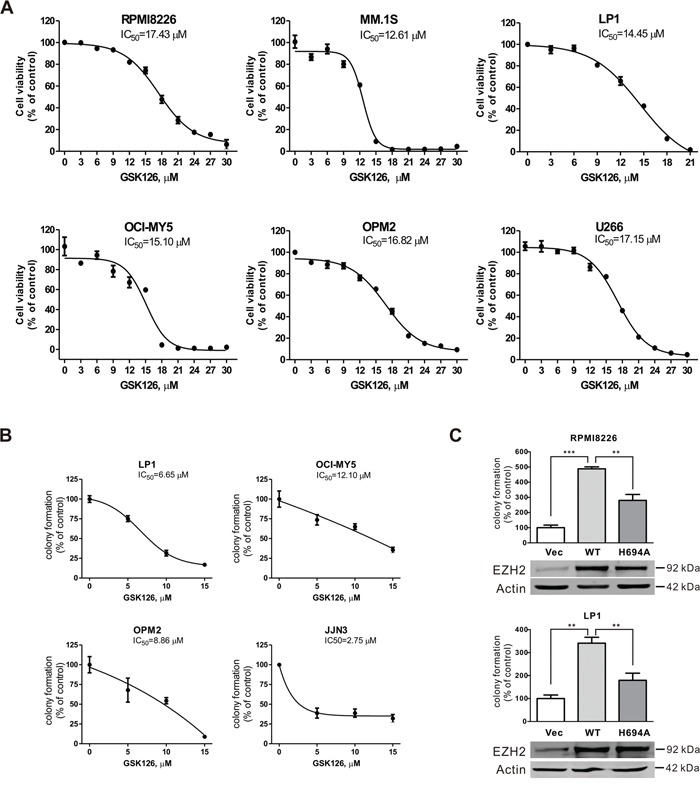
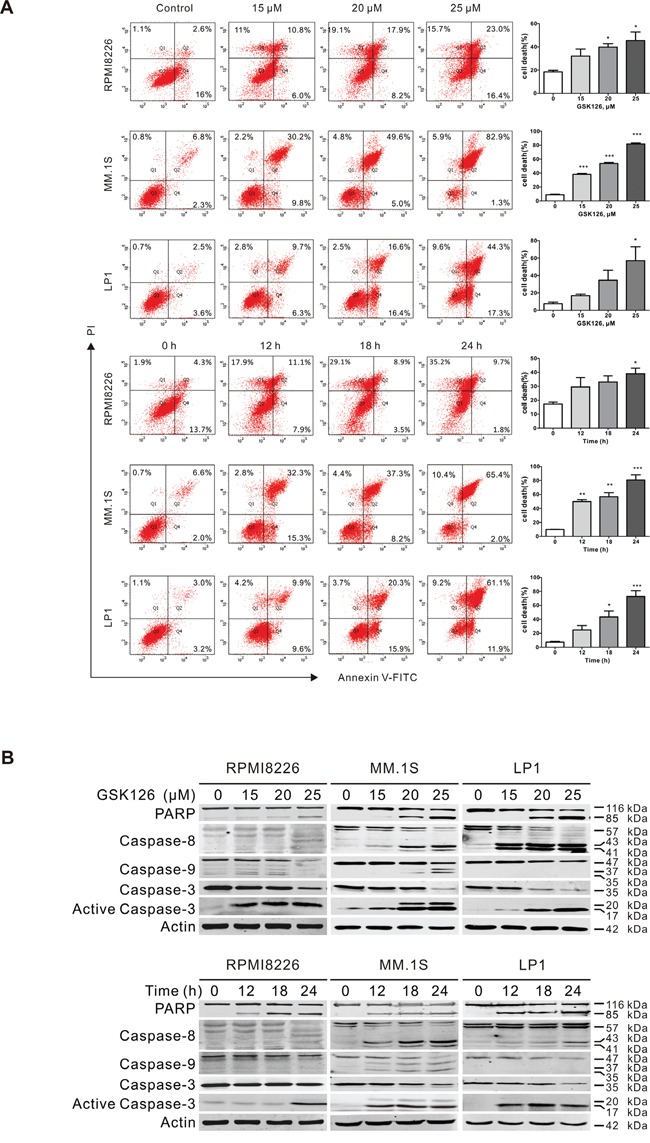
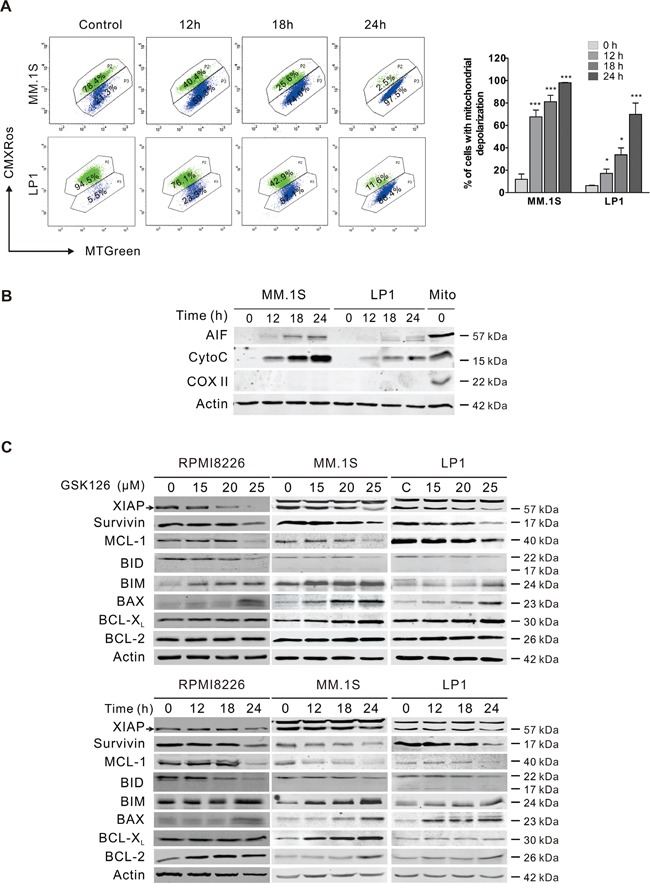
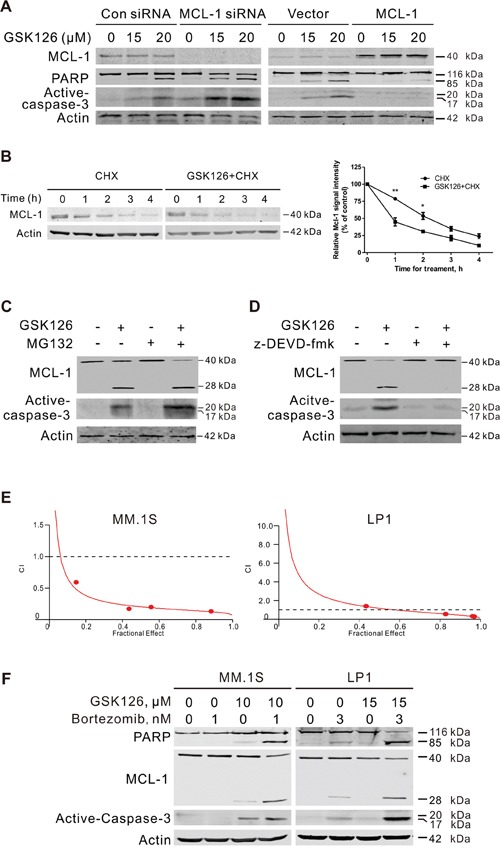
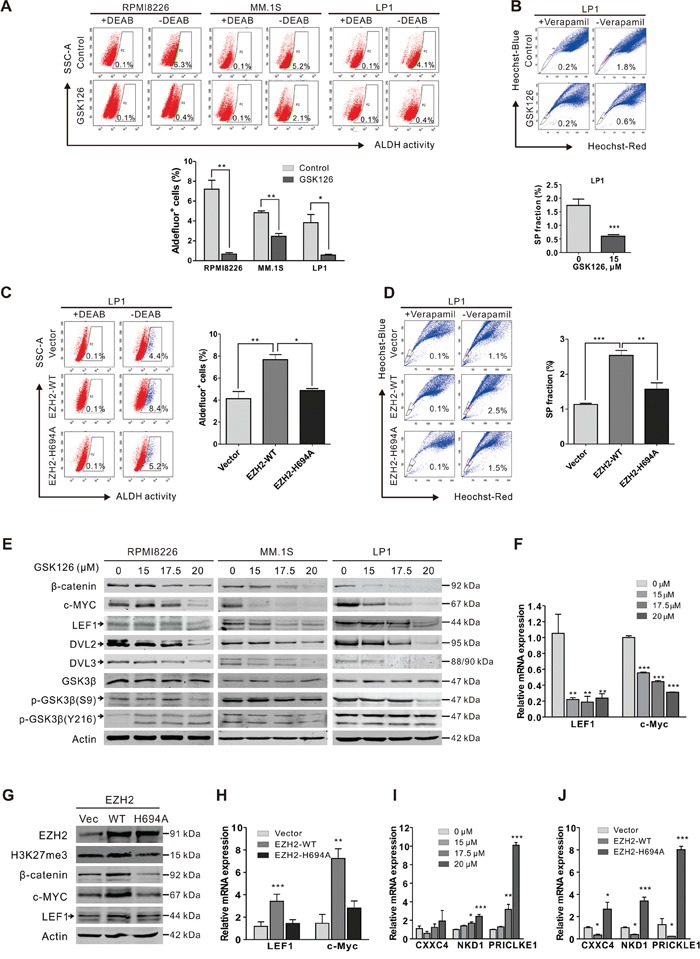
EZH2 is a critical epigenetic regulator that is deregulated in various types of cancers including multiple myeloma (MM). In the present study, we hypothesized that targeting EZH2 might induce apoptosis in myeloma cells including stem cell-like cells (CSCs). We investigated the effect of EZH2 inhibition on MM cells using a potent inhibitor (GSK126). The results showed that GSK126 effectively abrogated the methylated histone 3 (H3K27me3) level in MM.1S and LP1 cells, and inhibited the number of live cells and colony formation in soft agar of six MM cell lines. GSK126 induced massive apoptosis in MM.1S, LP1 and RPMI8226 cells. Progressive release of mitochondrial cytochrome c and AIF into the cytosol was detected in GSK126-treated MM cells. GSK126 treatment elicited caspase-3-dependent MCL-1 cleavage with accumulation of proapoptotic truncated MCL-1. These results suggested that GSK126 triggers the intrinsic mitochondrial apoptosis pathway. Enhanced apoptosis was observed in the combination of GSK126 with bortezomib. Using ALDH and side population (SP) assays to characterize CSCs, we found that GSK126 eliminated the stem-like myeloma cells by blocking the Wnt/β-catenin pathway. The in vivo anti-tumor effect of GSK126 was confirmed by using RPMI8226 cells in a xenograft mouse model. In conclusion, our findings suggest that EZH2 inactivation by GSK126 is effective in killing MM cells and CSCs as a single agent or in combination with bortezomib. Clinical trial of GSK126 in patients with MM may be warranted.
EZH2是一种关键的表观遗传调节因子,在包括多发性骨髓瘤(MM)在内的多种癌症中均发生失调。在本研究中,我们假设靶向EZH2可能诱导骨髓瘤细胞(包括干细胞样细胞,即CSCs)凋亡。我们使用一种强效抑制剂(GSK126)研究了EZH2抑制对MM细胞的影响。结果显示,GSK126有效消除了MM.1S和LP1细胞中甲基化组蛋白3(H3K27me3)水平,并抑制了6种MM细胞系的活细胞数量和软琼脂中的集落形成。GSK126在MM.1S、LP1和RPMI8226细胞中诱导大量凋亡。在经GSK126处理的MM细胞中检测到线粒体细胞色素c和AIF逐渐释放到细胞质中。GSK126处理引发了caspase-3依赖性的MCL-1裂解,并伴有促凋亡截短型MCL-1的积累。这些结果表明,GSK126触发了内在的线粒体凋亡途径。在GSK126与硼替佐米联合使用时观察到增强的凋亡。使用ALDH和侧群(SP)分析来鉴定CSCs,我们发现GSK126通过阻断Wnt/β-连环蛋白途径消除了干细胞样骨髓瘤细胞。在异种移植小鼠模型中使用RPMI8226细胞证实了GSK126的体内抗肿瘤作用。总之,我们的研究结果表明,GSK126使EZH2失活作为单一药物或与硼替佐米联合使用对杀死MM细胞和CSCs有效。可能有必要对MM患者进行GSK126的临床试验。