Adeyemi Oluwapelumi O, Nicol Clare, Stonehouse Nicola J, Rowlands David J
School of Molecular and Cellular Biology, Faculty of Biological Sciences and Astbury Centre for Structural Molecular Biology, University of Leeds, Leeds, United Kingdom.
School of Molecular and Cellular Biology, Faculty of Biological Sciences and Astbury Centre for Structural Molecular Biology, University of Leeds, Leeds, United Kingdom
J Virol. 2017 Jan 31;91(4). doi: 10.1128/JVI.01586-16. Print 2017 Feb 15.
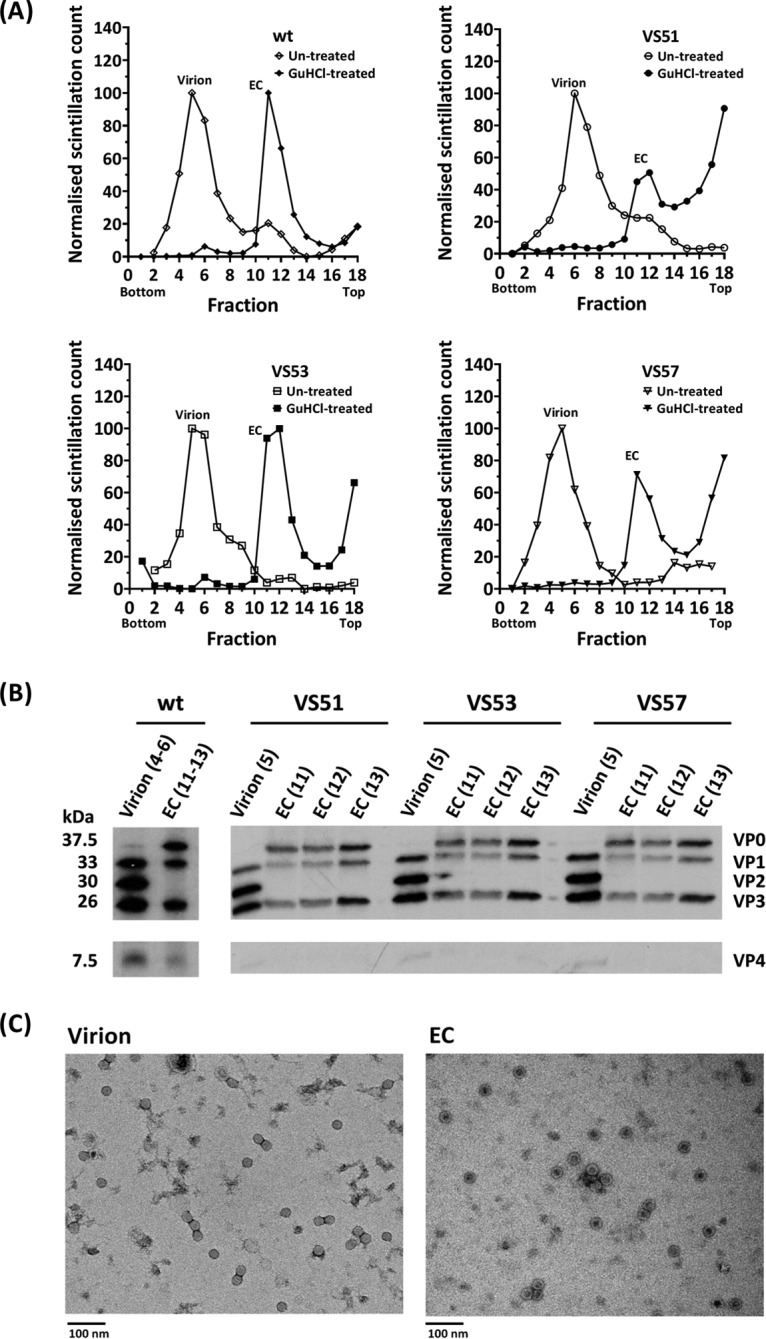
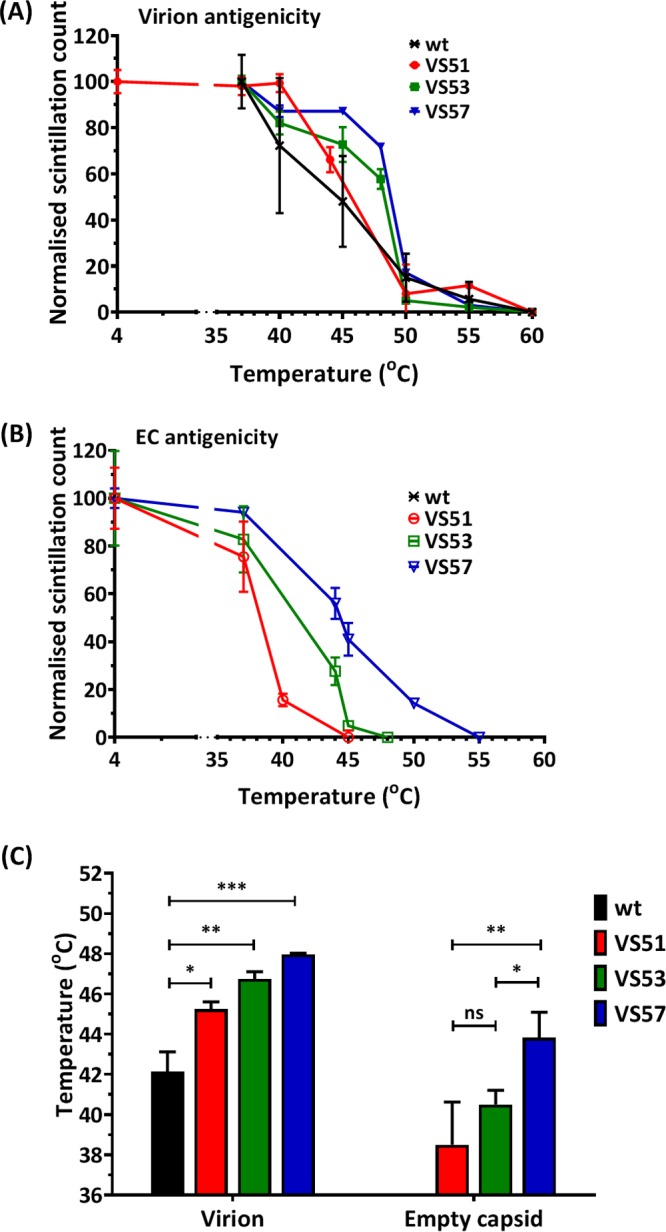
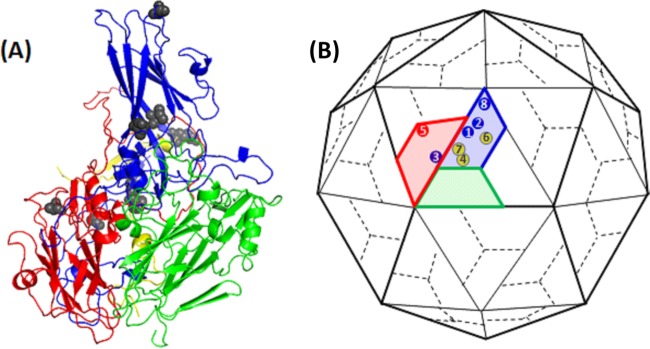
Poliomyelitis is a highly infectious disease caused by poliovirus (PV). It can result in paralysis and may be fatal. Integrated global immunization programs using live-attenuated oral (OPV) and/or inactivated (IPV) PV vaccines have systematically reduced its spread and paved the way for eradication. Immunization will continue posteradication to ensure against reintroduction of the disease, but there are biosafety concerns for both OPV and IPV. They could be addressed by the production and use of virus-free virus-like particle (VLP) vaccines that mimic the "empty" capsids (ECs) normally produced in viral infection. Although ECs are antigenically indistinguishable from mature virus particles, they are less stable and readily convert into an alternative conformation unsuitable for vaccine purposes. Stabilized ECs, expressed recombinantly as VLPs, could be ideal candidate vaccines for a polio-free world. However, although genome-free PV ECs have been expressed as VLPs in a variety of systems, their inherent antigenic instability has proved a barrier to further development. In this study, we selected thermally stable ECs of type 1 PV (PV-1). The ECs are antigenically stable at temperatures above the conversion temperature of wild-type (wt) virions. We have identified mutations on the capsid surface and in internal networks that are responsible for EC stability. With reference to the capsid structure, we speculate on the roles of these residues in capsid stability and postulate that such stabilized VLPs could be used as novel vaccines.
Poliomyelitis is a highly infectious disease caused by PV and is on the verge of eradication. There are biosafety concerns about reintroduction of the disease from current vaccines that require live virus for production. Recombinantly expressed virus-like particles (VLPs) could address these inherent problems. However, the genome-free capsids (ECs) of wt PV are unstable and readily change antigenicity to a form not suitable as a vaccine. Here, we demonstrate that the ECs of type 1 PV can be stabilized by selecting heat-resistant viruses. Our data show that some capsid mutations stabilize the ECs and could be applied as candidates to synthesize stable VLPs as future genome-free poliovirus vaccines.
脊髓灰质炎是一种由脊髓灰质炎病毒(PV)引起的高度传染性疾病。它可导致瘫痪,甚至可能致命。使用减毒活口服(OPV)和/或灭活(IPV)PV疫苗的全球综合免疫计划已系统性地减少了其传播,并为根除该疾病铺平了道路。在根除之后仍将继续进行免疫接种,以确保防止该疾病再次传入,但OPV和IPV都存在生物安全问题。可以通过生产和使用无病毒的病毒样颗粒(VLP)疫苗来解决这些问题,这种疫苗模仿病毒感染时正常产生的“空”衣壳(EC)。尽管EC在抗原性上与成熟病毒颗粒无法区分,但它们不太稳定,容易转变为不适合用于疫苗的另一种构象。作为VLP重组表达的稳定化EC,可能是无脊髓灰质炎世界的理想候选疫苗。然而,尽管无基因组的PV EC已在多种系统中作为VLP表达,但其固有的抗原不稳定性已证明是进一步开发的障碍。在本研究中,我们选择了1型PV(PV - 1)的热稳定EC。这些EC在高于野生型(wt)病毒粒子转化温度的温度下抗原稳定。我们已经确定了衣壳表面和内部网络中负责EC稳定性的突变。参照衣壳结构,我们推测了这些残基在衣壳稳定性中的作用,并假设这种稳定化的VLP可作为新型疫苗使用。
脊髓灰质炎是由PV引起的高度传染性疾病,正处于根除的边缘。对于目前需要活病毒生产的疫苗重新引入该疾病存在生物安全担忧。重组表达的病毒样颗粒(VLP)可以解决这些固有问题。然而,wt PV的无基因组衣壳(EC)不稳定,容易将抗原性改变为不适合作为疫苗的形式。在此,我们证明1型PV的EC可以通过选择耐热病毒来稳定。我们的数据表明,一些衣壳突变可稳定EC,并可作为合成稳定VLP的候选者,作为未来的无基因组脊髓灰质炎病毒疫苗。