Bhullar Dilbag S, Sheahan Michael B, Rose Ray J
School of Environmental and Life Sciences, The University of Newcastle, Callaghan, NSW, Australia.
Protoplasma. 2017 Jul;254(4):1627-1637. doi: 10.1007/s00709-016-1053-0. Epub 2016 Dec 7.
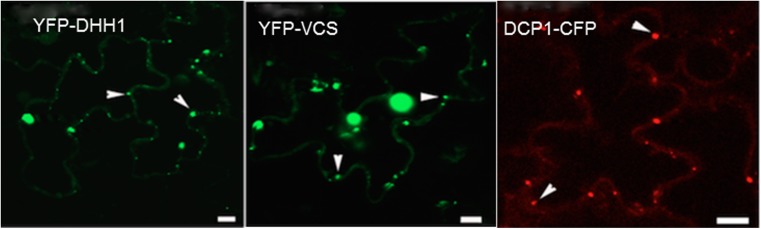
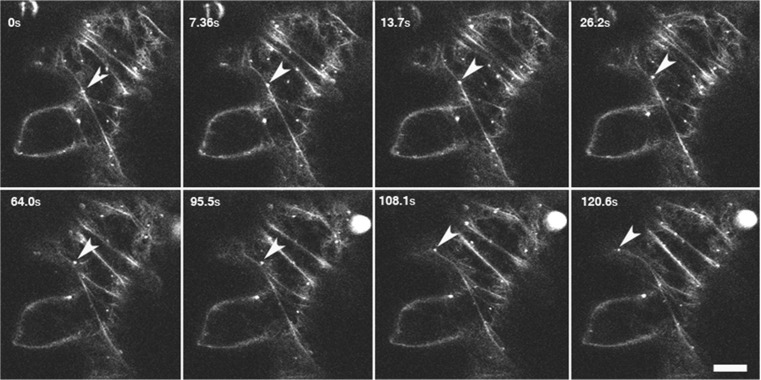
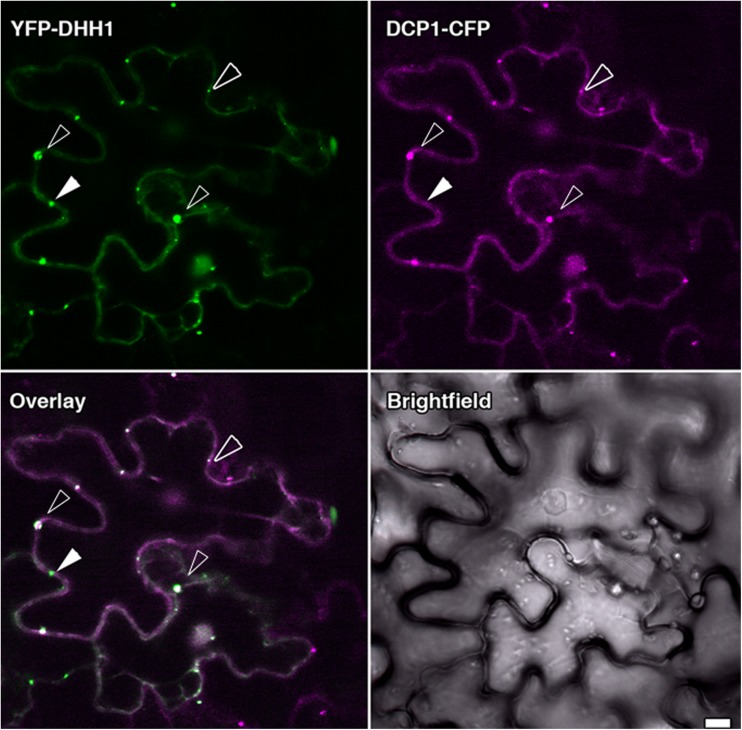
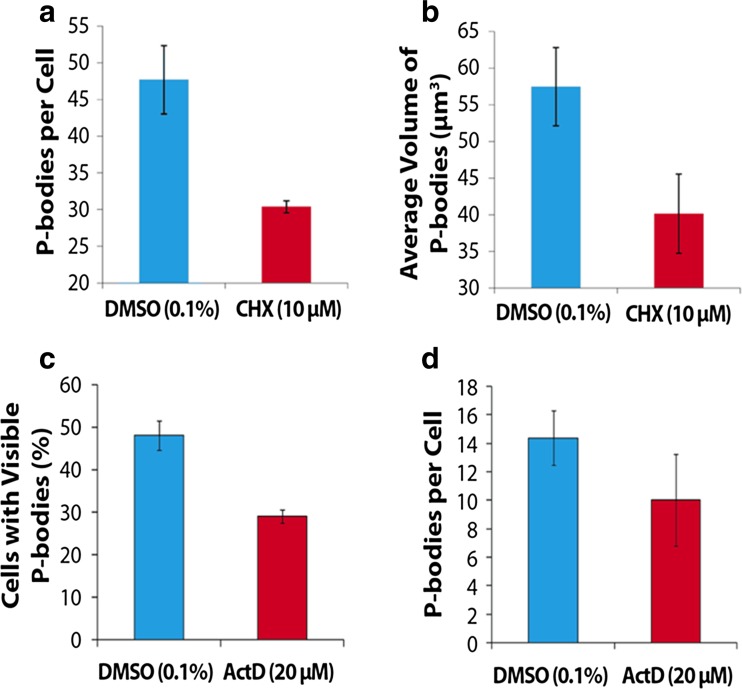
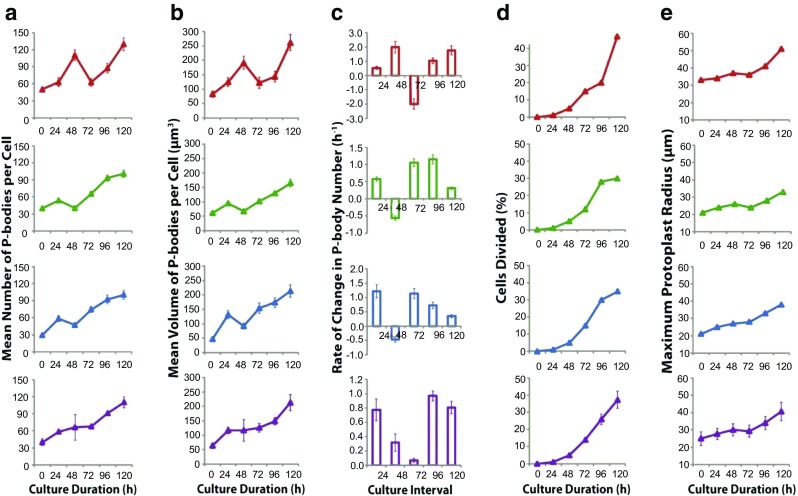
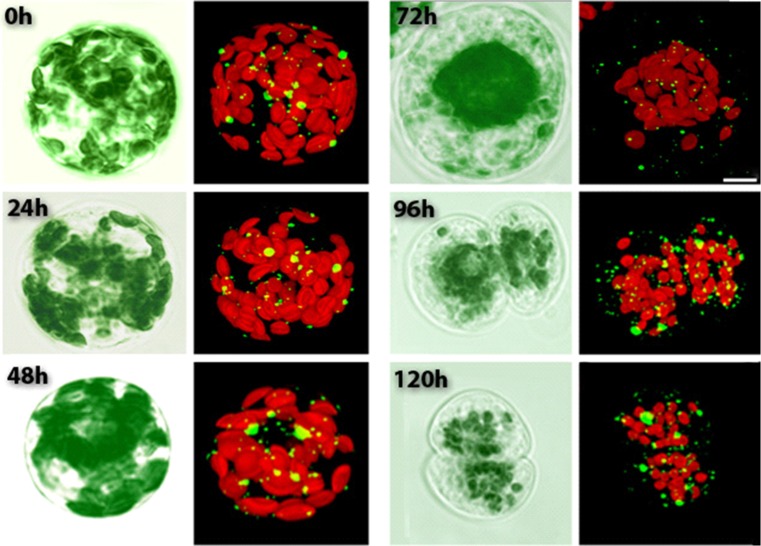
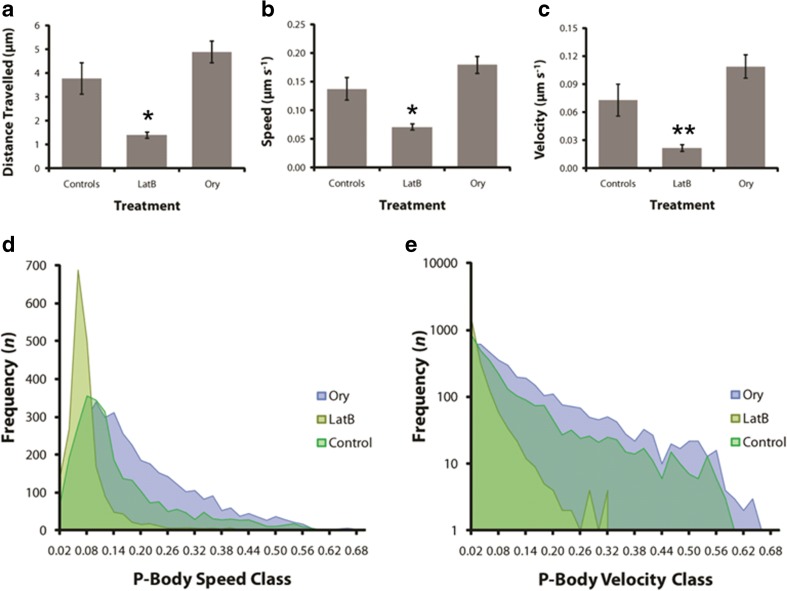
The ability of plants to regenerate lies in the capacity of differentiated cells to reprogram and re-enter the cell cycle. Reprogramming of cells requires changes in chromatin organisation and gene expression. However, there has been less focus on changes at the post transcription level. We have investigated P-bodies, sites of post transcriptional gene regulation, in plant cell reprogramming in cultured mesophyll protoplasts; by using a YFP-VARICOSE (YFP-VCSc) translational fusion. We showed an early increase in P-body number and volume, followed by a decline, then a subsequent continued increase in P-body number and volume as cell division was initiated and cell proliferation continued. We infer that plant P-bodies have a role to play in reprogramming the mature cell and re-initiating the cell division cycle. The timing of the first phase is consistent with the degredation of messages no longer required, as the cell transits to the division state, and may also be linked to the stress response associated with division induction in cultured cells. The subsequent increase in P-body formation, with partitioning to the daughter cells during the division process, suggests a role in the cell cycle and its re-initiation in daughter cells. P-bodies were shown to be mobile in the cytoplasm and show actin-based motility which facilitates their post-transcriptional role and partitioning to daughter cells.
植物的再生能力在于分化细胞重新编程并重新进入细胞周期的能力。细胞的重新编程需要染色质组织和基因表达的改变。然而,转录后水平的变化受到的关注较少。我们通过使用YFP-VARICOSE(YFP-VCSc)翻译融合,研究了培养的叶肉原生质体中植物细胞重编程过程中转录后基因调控位点——P小体。我们发现,随着细胞分裂启动和细胞增殖持续,P小体的数量和体积先早期增加,随后下降,接着又持续增加。我们推断植物P小体在成熟细胞重编程和重新启动细胞分裂周期中发挥作用。第一阶段的时间与细胞转变为分裂状态时不再需要的信使RNA的降解一致,也可能与培养细胞中与分裂诱导相关的应激反应有关。随后P小体形成增加,并在分裂过程中分配到子细胞中,这表明其在细胞周期及其在子细胞中的重新启动中发挥作用。研究表明,P小体在细胞质中是可移动的,并表现出基于肌动蛋白的运动性,这有助于其转录后作用以及向子细胞的分配。