Shi Qiankun, Hong Liang, Mu Xinwei, Zhang Cui, Chen Xin
Department of Critical Care Medicine Department of Thoracic and Cardiovascular Surgery, Nanjing First Hospital, Nanjing Medical University, Nanjing, Jiangsu, China.
Medicine (Baltimore). 2016 Dec;95(49):e5558. doi: 10.1097/MD.0000000000005558.
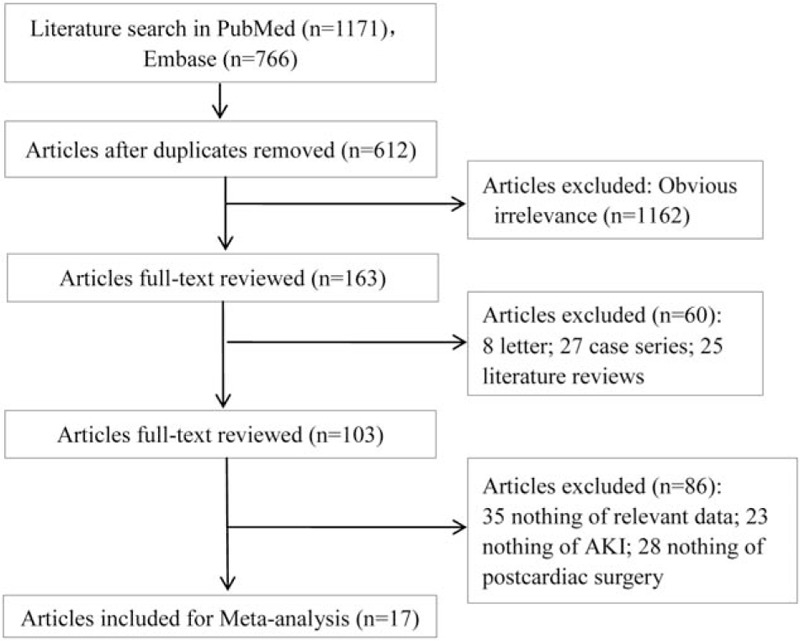
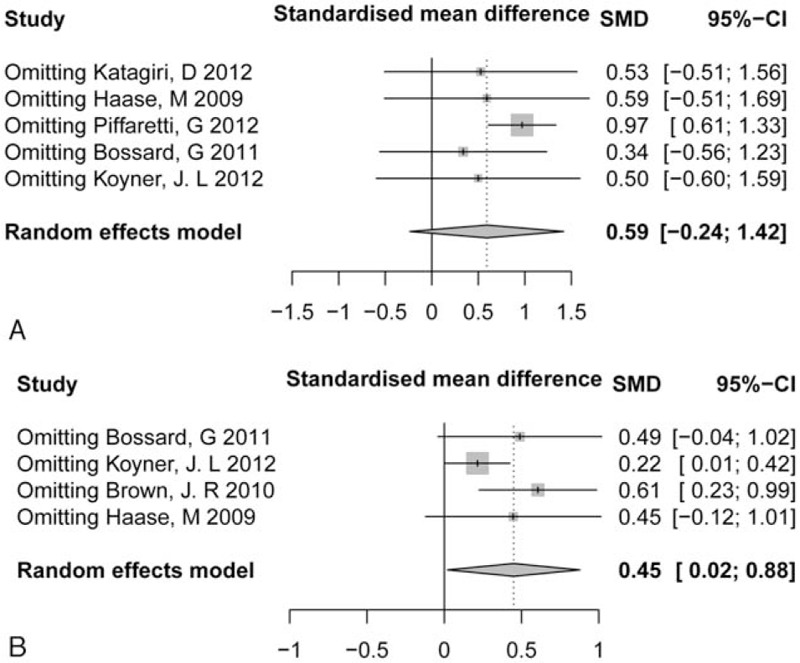
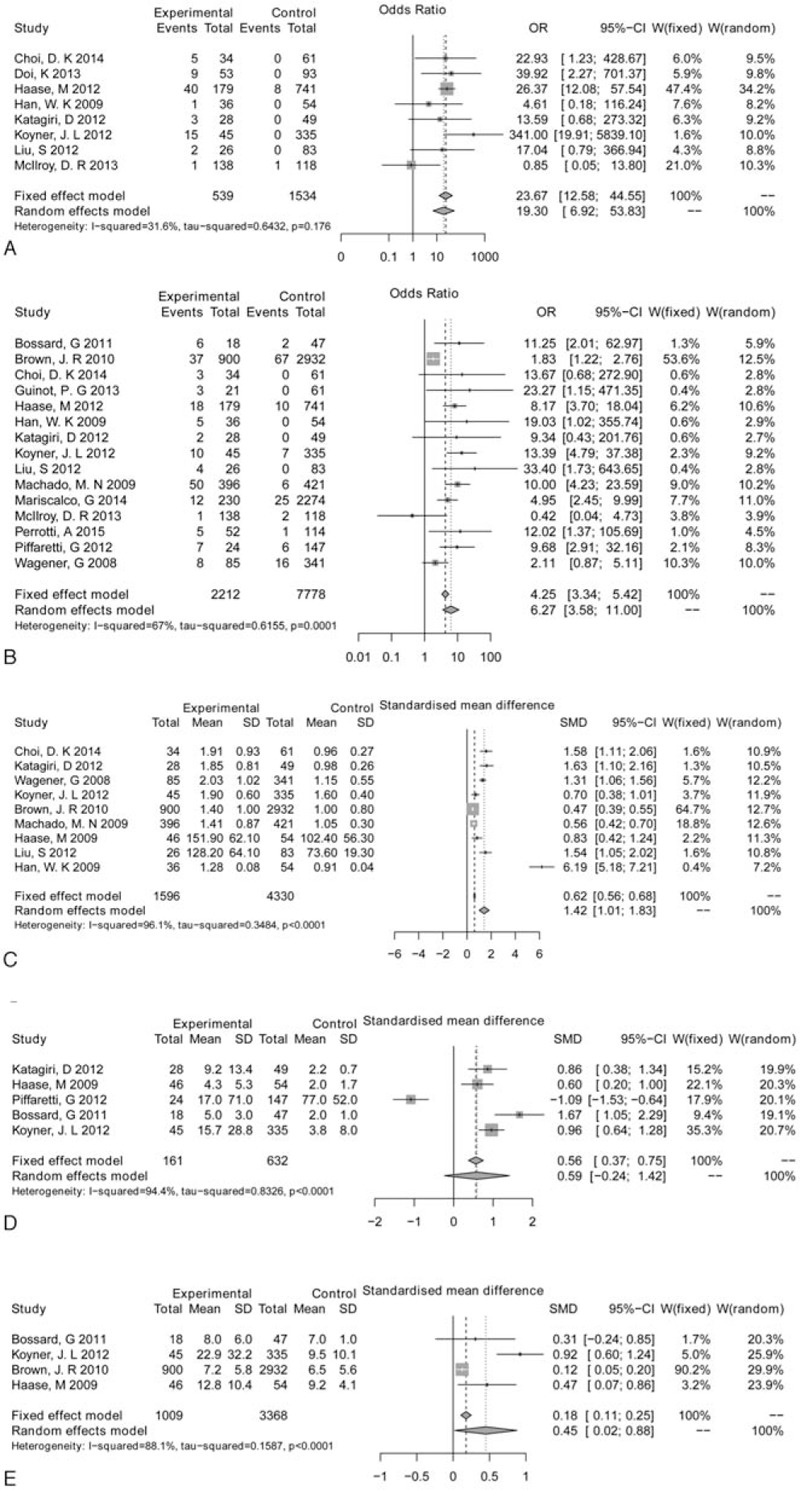
This study aimed to investigate the outcomes of acute kidney injury (AKI) after cardiac surgery by the meta-analysis.Electronic databases PubMed and Embase were searched for relative studies from December 2008 to June 2015. For eligible studies, the R software was conducted to meta-analyze outcomes of AKI patients (AKI group) and none-AKI patients after cardiac surgery (NO AKI group). The chi-square-based Q test and I statistic were used for heterogeneity analysis. P < 0.1 or I > 50% revealed significant heterogeneity among studies, and then a random effects model was used; otherwise a fixed effect model was performed. Egger's test was performed for publication bias assessment. Subgroup analysis was performed by stratifying AKI definitions and study type.Totally 17 studies with 9656 subjects (2331 in the AKI group and 7325 in the NO AKI group) were enrolled. Significantly higher renal replacement therapy (RRT) (OR=23.67, 95%CI: 12.58-44.55), mortality (OR = 6.27, 95%CI: 3.58-11.00), serum creatinine (SMD = 1.42, 95%CI: 1.01-1.83), and hospital length of stay (LOS) (SMD = 0.45, 95%CI: 0.02-0.88) were shown in the AKI group compared with patients in the NO AKI group. Subgroup analysis showed that results of only 3 subgroups were reversed indicating that the definition of AKI did not affect its outcomes. Publication bias was only found among studies involving mortality and serum creatinine, but the 2 outcomes were not reversed after correction.This meta-analysis confirmed the worse outcomes of AKI in patients after cardiac surgery, including higher RRT rates, mortality, and longer hospital LOS than those of NO AKI patients.
本研究旨在通过荟萃分析调查心脏手术后急性肾损伤(AKI)的结局。检索了电子数据库PubMed和Embase,以查找2008年12月至2015年6月的相关研究。对于符合条件的研究,使用R软件对心脏手术后AKI患者(AKI组)和非AKI患者(非AKI组)的结局进行荟萃分析。基于卡方的Q检验和I统计量用于异质性分析。P<0.1或I>50%表明研究间存在显著异质性,然后使用随机效应模型;否则采用固定效应模型。进行Egger检验以评估发表偏倚。通过对AKI定义和研究类型进行分层来进行亚组分析。共纳入17项研究,9656名受试者(AKI组2331名,非AKI组7325名)。与非AKI组患者相比,AKI组的肾脏替代治疗(RRT)(OR=23.67,95%CI:12.58-44.55)、死亡率(OR = 6.27,95%CI:3.58-11.00)、血清肌酐(SMD = 1.42,95%CI:1.01-1.83)和住院时间(LOS)(SMD = 0.45,95%CI:0.02-0.88)显著更高。亚组分析显示,只有3个亚组的结果相反,表明AKI的定义不影响其结局。仅在涉及死亡率和血清肌酐的研究中发现发表偏倚,但校正后这2个结局并未逆转。这项荟萃分析证实了心脏手术后AKI患者的结局更差,包括RRT率、死亡率更高,住院LOS比非AKI患者更长。