Sanchez Olallo, Campuzano Oscar, Fernández-Falgueras Anna, Sarquella-Brugada Georgia, Cesar Sergi, Mademont Irene, Mates Jesus, Pérez-Serra Alexandra, Coll Monica, Pico Ferran, Iglesias Anna, Tirón Coloma, Allegue Catarina, Carro Esther, Gallego María Ángeles, Ferrer-Costa Carles, Hospital Anna, Bardalet Narcís, Borondo Juan Carlos, Vingut Albert, Arbelo Elena, Brugada Josep, Castellà Josep, Medallo Jordi, Brugada Ramon
Cardiovascular Genetics Center, University of Girona-IDIBGI, Girona (Spain).
Department of Medical Sciences, School of Medicine, University of Girona, Girona (Spain).
PLoS One. 2016 Dec 8;11(12):e0167358. doi: 10.1371/journal.pone.0167358. eCollection 2016.
Sudden unexplained death may be the first manifestation of an unknown inherited cardiac disease. Current genetic technologies may enable the unraveling of an etiology and the identification of relatives at risk. The aim of our study was to define the etiology of natural deaths, younger than 50 years of age, and to investigate whether genetic defects associated with cardiac diseases could provide a potential etiology for the unexplained cases.
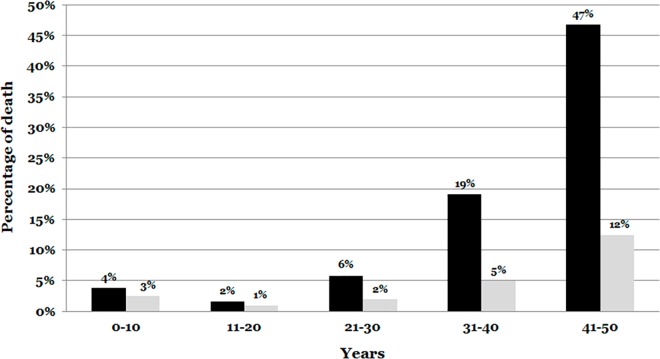
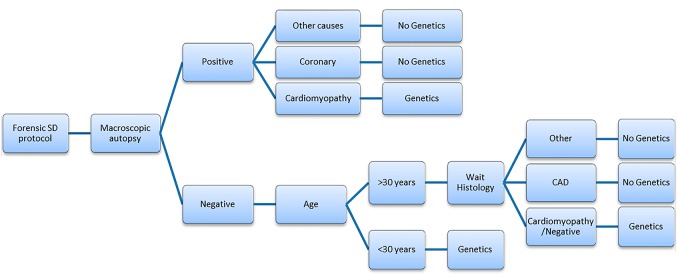
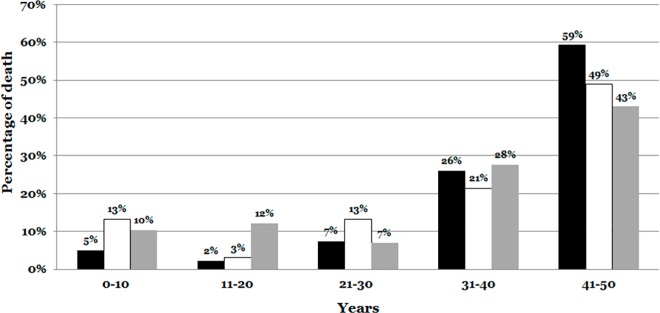
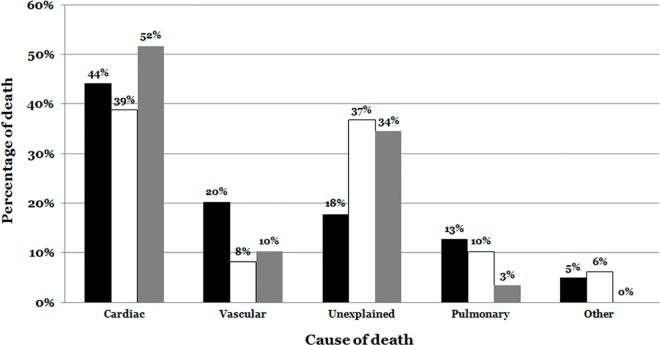
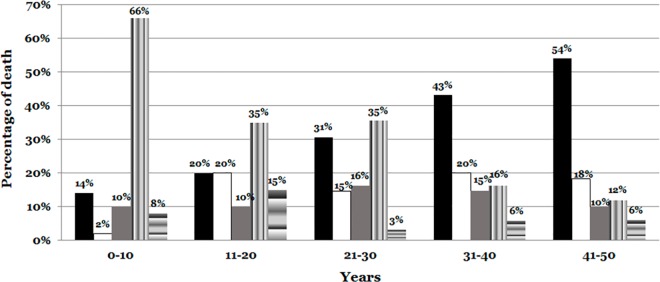
Our cohort included a total of 789 consecutive cases (77.19% males) <50 years old (average 38.6±12.2 years old) who died suddenly from non-violent causes. A comprehensive autopsy was performed according to current forensic guidelines. During autopsy a cause of death was identified in most cases (81.1%), mainly due to cardiac alterations (56.87%). In unexplained cases, genetic analysis of the main genes associated with sudden cardiac death was performed using Next Generation Sequencing technology. Genetic analysis was performed in suspected inherited diseases (cardiomyopathy) and in unexplained death, with identification of potentially pathogenic variants in nearly 50% and 40% of samples, respectively.
Cardiac disease is the most important cause of sudden death, especially after the age of 40. Close to 10% of cases may remain unexplained after a complete autopsy investigation. Molecular autopsy may provide an explanation for a significant part of these unexplained cases. Identification of genetic variations enables genetic counseling and undertaking of preventive measures in relatives at risk.
不明原因猝死可能是未知遗传性心脏病的首发表现。当前的基因技术或许能够揭示病因并识别有风险的亲属。我们研究的目的是明确50岁以下自然死亡的病因,并调查与心脏病相关的基因缺陷是否能为不明原因的病例提供潜在病因。
我们的队列包括789例连续的50岁以下(平均38.6±12.2岁)因非暴力原因突然死亡的病例(男性占77.19%)。根据当前法医指南进行了全面尸检。在尸检过程中,大多数病例(81.1%)确定了死因,主要是由于心脏病变(56.87%)。在不明原因的病例中,使用下一代测序技术对与心源性猝死相关的主要基因进行了基因分析。在疑似遗传性疾病(心肌病)和不明原因死亡病例中进行了基因分析,分别在近50%和40%的样本中鉴定出潜在的致病变异。
心脏病是猝死的最重要原因,尤其是40岁以后。经过全面的尸检调查后,仍有近10%的病例可能原因不明。分子尸检可能为这些不明原因病例的很大一部分提供解释。识别基因变异能够为有风险的亲属提供遗传咨询并采取预防措施。