Interdisciplinary Center for Health Sciences, Scuola Superiore Sant'Anna, Piazza Martiri della Libertà 33, 56127, Pisa, Italy.
Cardiology and Cardiovascular Medicine Division, Fondazione Toscana Gabriele Monasterio, CNR - Regione Toscana, Via Giuseppe Moruzzi 1, 56124, Pisa, Italy.
Hum Genomics. 2024 Sep 16;18(1):102. doi: 10.1186/s40246-024-00657-x.
Juvenile sudden cardiac death (SCD) remains unexplained in approximately 40% of cases, leading to a significant emotional burden for the victims' families and society. Comprehensive investigations are essential to uncover its elusive causes and enable cascade family screening. This study aimed to enhance the identification of likely causative variants in juvenile SCD cases (age ≤ 50 years), particularly when autopsy findings are inconclusive.
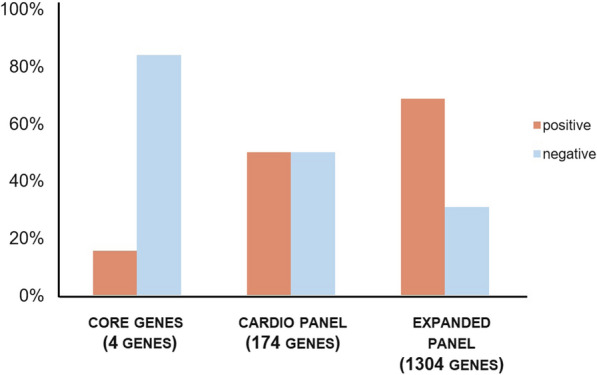
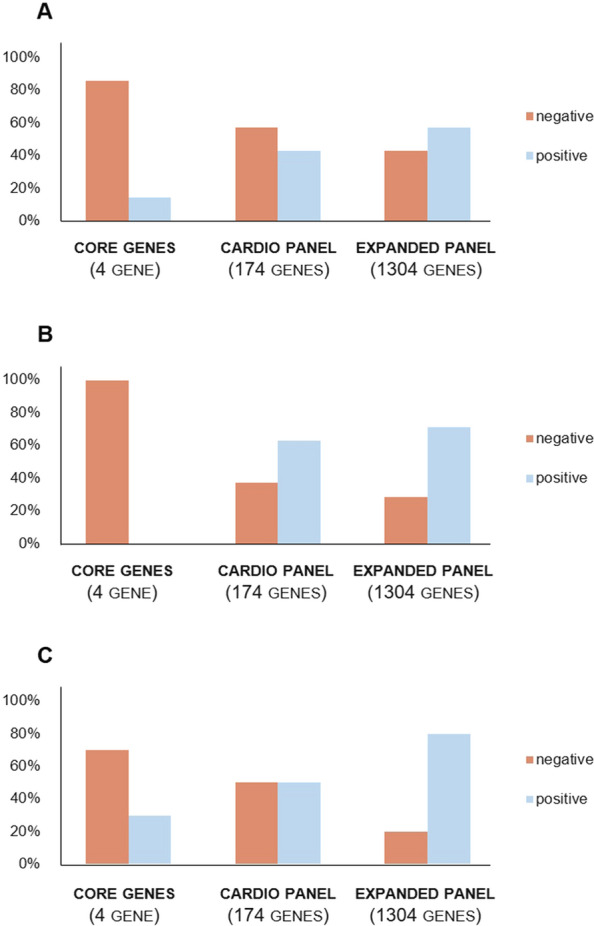
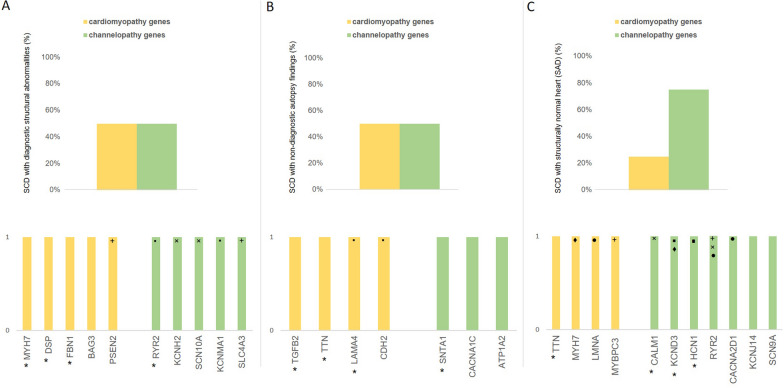
Autopsy revealed diagnostic structural abnormalities in 46%, non-diagnostic findings in 23%, and structurally normal hearts in 31% of cases. Whole-exome sequencing (WES), refined through a customized virtual gene panel was used to identify variants. These variants were then evaluated using a multidisciplinary approach and a structured variant prioritization scheme. Our extended approach identified likely causative variants in 69% of cases, outperforming the diagnostic yields of both the cardio panel and standard susceptibility gene analysis (50% and 16%, respectively). The extended cardio panel achieved an 80% diagnostic yield in cases with structurally normal hearts, demonstrating its efficacy in challenging scenarios. Notably, half of the positive cases harboured a single variant, while the remainder had two or more variants.
This study highlights the efficacy of a multidisciplinary approach employing WES and a tailored virtual gene panel to elucidate the aetiology of juvenile SCD. The findings support the expansion of genetic testing using tailored gene panels and prioritization schemes as part of routine autopsy evaluations to improve the identification of causative variants and potentially facilitate early diagnosis in first-degree relatives.
约 40%的青少年心源性猝死 (SCD) 病例仍无法解释,这给受害者家庭和社会带来了巨大的情感负担。全面的调查对于揭示其难以捉摸的原因并实现级联家族筛查至关重要。本研究旨在提高青少年 SCD 病例(年龄≤50 岁)中可能的致病变异的识别能力,尤其是当尸检结果不确定时。
尸检显示 46%的病例存在诊断性结构异常,23%的病例为非诊断性发现,31%的病例心脏结构正常。全外显子组测序 (WES) 通过定制的虚拟基因面板进行了细化,用于识别变异。然后使用多学科方法和结构化变异优先级方案对这些变异进行评估。我们的扩展方法在 69%的病例中识别出可能的致病变异,优于心脏基因 panel 和标准易感基因分析的诊断率(分别为 50%和 16%)。在心脏结构正常的病例中,扩展的心脏基因 panel 达到了 80%的诊断率,证明了其在具有挑战性的情况下的有效性。值得注意的是,一半的阳性病例仅携带一个变异,而其余病例则携带两个或更多变异。
本研究强调了采用 WES 和定制虚拟基因面板的多学科方法阐明青少年 SCD 病因的有效性。这些发现支持使用定制基因 panel 和优先级方案扩展基因检测作为常规尸检评估的一部分,以提高致病变异的识别能力,并有可能促进一级亲属的早期诊断。