Slaney Clare Y, von Scheidt Bianca, Davenport Alexander J, Beavis Paul A, Westwood Jennifer A, Mardiana Sherly, Tscharke David C, Ellis Sarah, Prince H Miles, Trapani Joseph A, Johnstone Ricky W, Smyth Mark J, Teng Michele W, Ali Aesha, Yu Zhiya, Rosenberg Steven A, Restifo Nicholas P, Neeson Paul, Darcy Phillip K, Kershaw Michael H
Cancer Immunology Program, Peter MacCallum Cancer Center, Melbourne, Victoria, Australia.
Sir Peter MacCallum Department of Oncology, University of Melbourne, Parkville, Victoria, Australia.
Clin Cancer Res. 2017 May 15;23(10):2478-2490. doi: 10.1158/1078-0432.CCR-16-1860. Epub 2016 Dec 13.
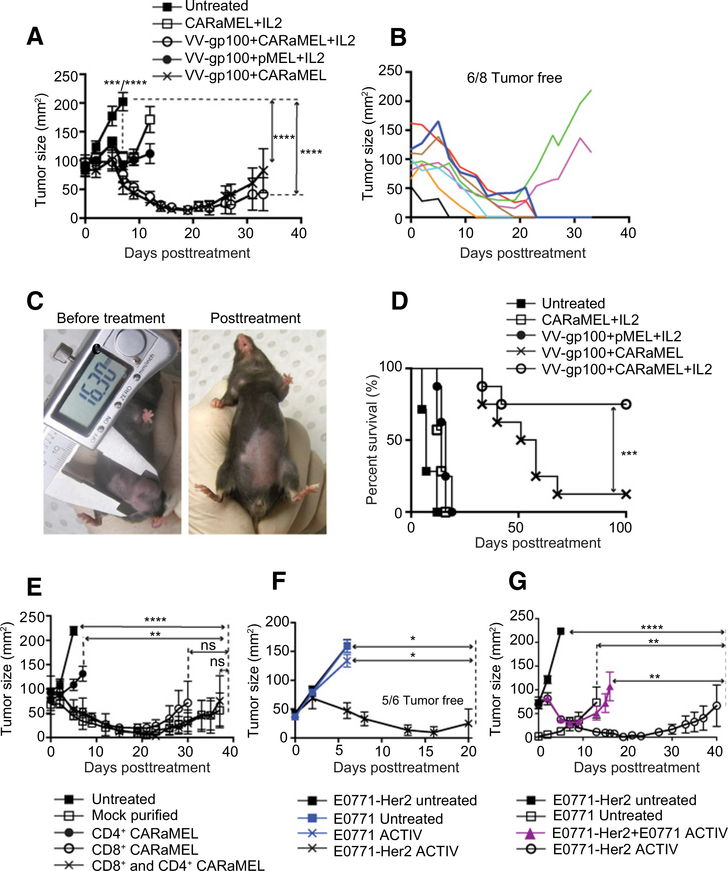
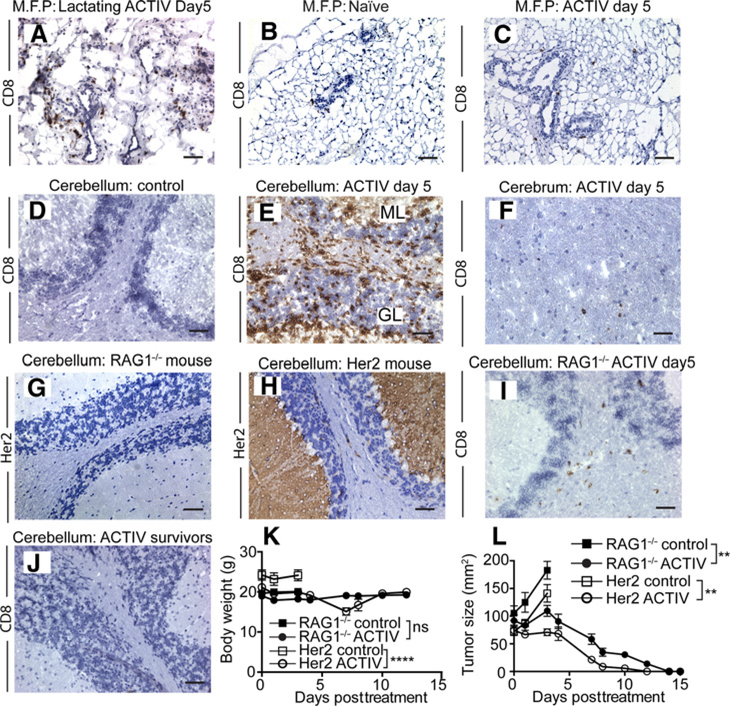
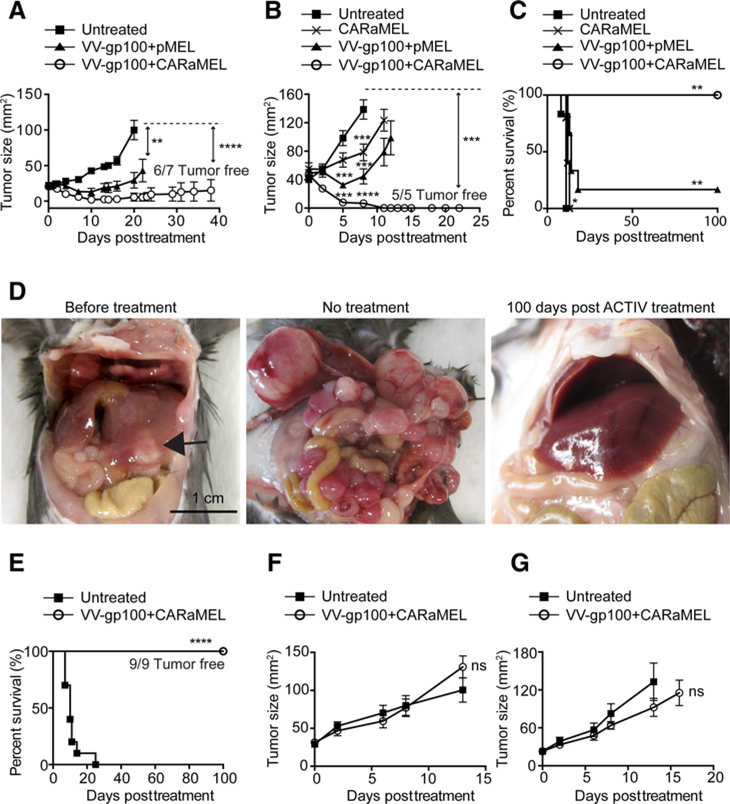
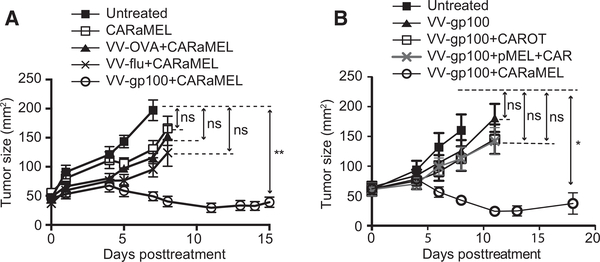
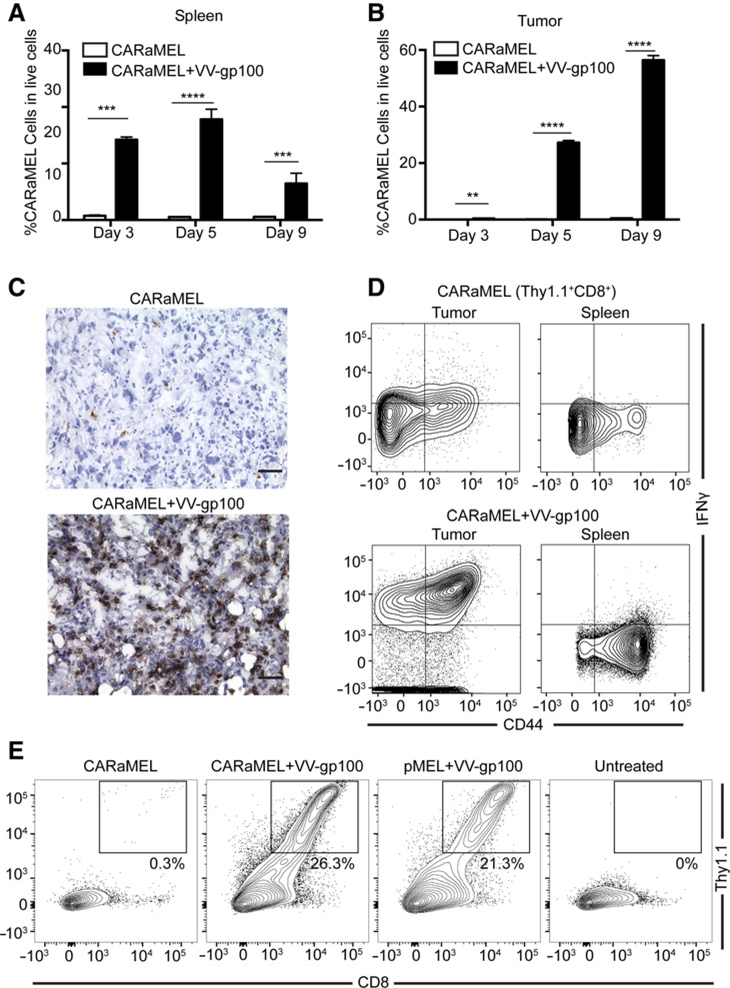
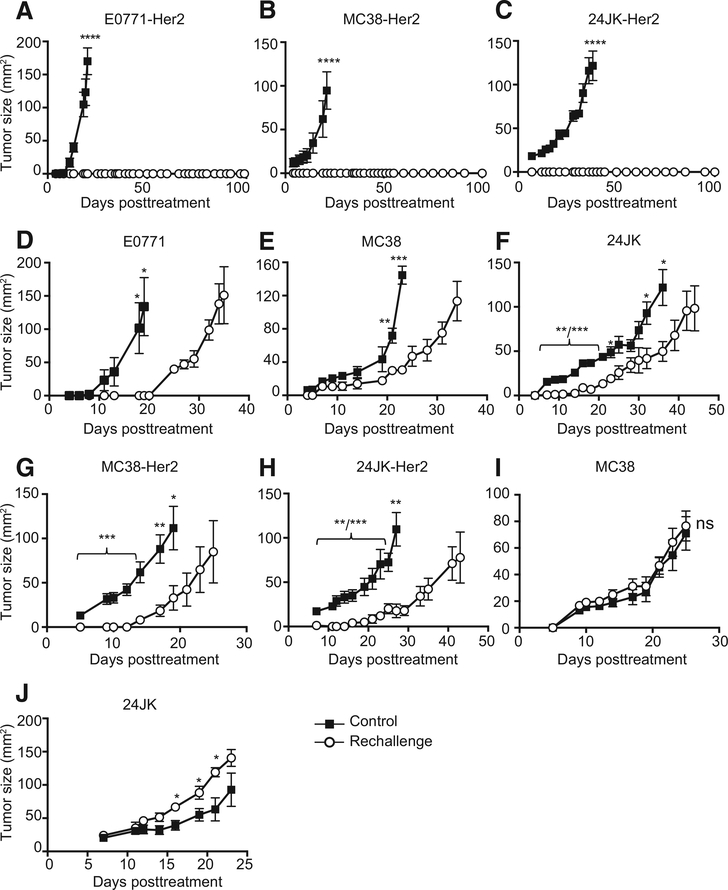
While adoptive transfer of T cells bearing a chimeric antigen receptor (CAR) can eliminate substantial burdens of some leukemias, the ultimate challenge remains the eradication of large solid tumors for most cancers. We aimed to develop an immunotherapy approach effective against large tumors in an immunocompetent, self-antigen preclinical mouse model. In this study, we generated dual-specific T cells expressing both a CAR specific for Her2 and a TCR specific for the melanocyte protein (gp100). We used a regimen of adoptive cell transfer incorporating vaccination (ACTIV), with recombinant vaccinia virus expressing gp100, to treat a range of tumors including orthotopic breast tumors and large liver tumors. ACTIV therapy induced durable complete remission of a variety of Her2 tumors, some in excess of 150 mm, in immunocompetent mice expressing Her2 in normal tissues, including the breast and brain. Vaccinia virus induced extensive proliferation of T cells, leading to massive infiltration of T cells into tumors. Durable tumor responses required the chemokine receptor CXCR3 and exogenous IL2, but were independent of IFNγ. Mice were resistant to tumor rechallenge, indicating immune memory involving epitope spreading. Evidence of limited neurologic toxicity was observed, associated with infiltration of cerebellum by T cells, but was only transient. This study supports a view that it is possible to design a highly effective combination immunotherapy for solid cancers, with acceptable transient toxicity, even when the target antigen is also expressed in vital tissues. .
虽然携带嵌合抗原受体(CAR)的T细胞的过继性转移可以消除某些白血病的大量负担,但对于大多数癌症来说,最终的挑战仍然是根除大型实体瘤。我们旨在开发一种在具有免疫活性的自身抗原临床前小鼠模型中对大型肿瘤有效的免疫治疗方法。在本研究中,我们生成了同时表达针对Her2的CAR和针对黑素细胞蛋白(gp100)的TCR的双特异性T细胞。我们采用了一种结合疫苗接种的过继性细胞转移方案(ACTIV),使用表达gp100的重组痘苗病毒,来治疗一系列肿瘤,包括原位乳腺肿瘤和大型肝肿瘤。ACTIV疗法在正常组织(包括乳腺和脑)中表达Her2的免疫活性小鼠中诱导了多种Her2肿瘤的持久完全缓解,有些肿瘤超过150毫米。痘苗病毒诱导T细胞广泛增殖,导致T细胞大量浸润肿瘤。持久的肿瘤反应需要趋化因子受体CXCR3和外源性IL2,但与IFNγ无关。小鼠对肿瘤再次攻击具有抗性,表明存在涉及表位扩展的免疫记忆。观察到有限的神经毒性证据,与T细胞浸润小脑有关,但只是短暂的。本研究支持这样一种观点,即即使靶抗原也在重要组织中表达,也有可能设计出一种对实体癌有效的联合免疫疗法,且具有可接受的短暂毒性。