Department of Plant Biology, Carnegie Institution for Science, Stanford, California 94305, USA.
Department of Bioenergy Science and Technology, Chonnam National University, Gwangju 61186, Korea.
Nat Commun. 2016 Dec 14;7:13692. doi: 10.1038/ncomms13692.
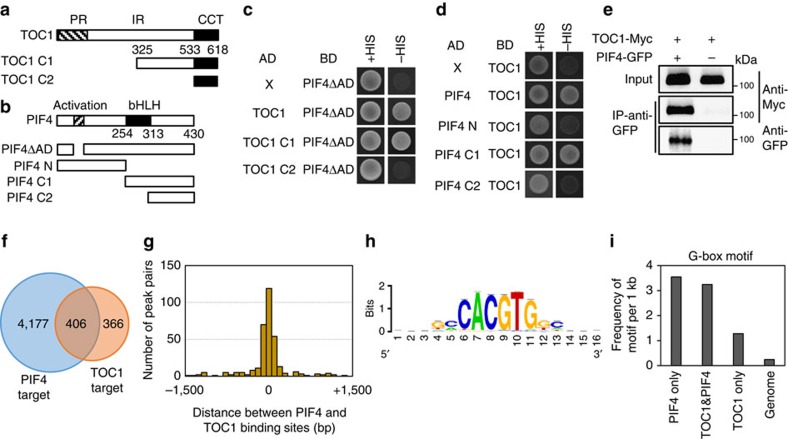
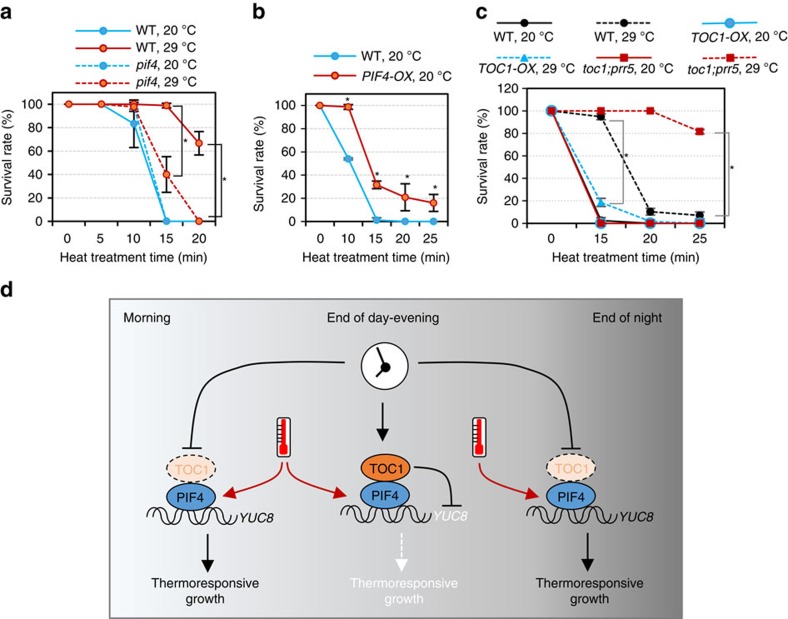
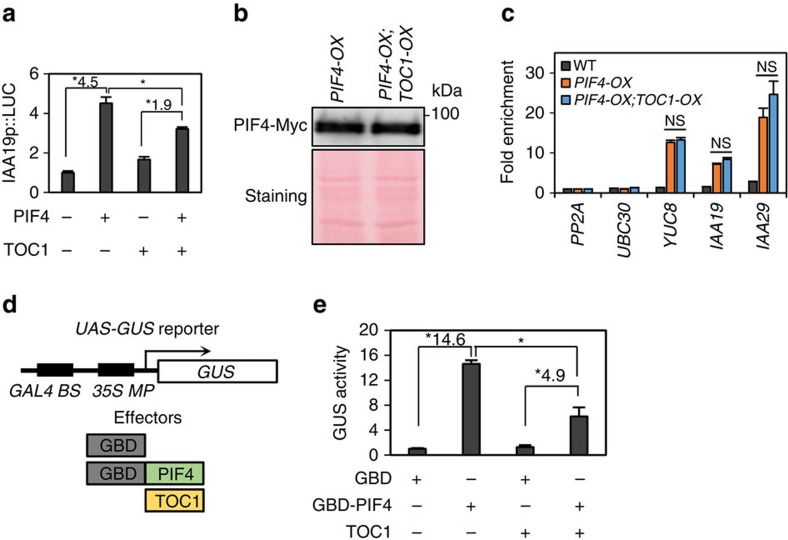
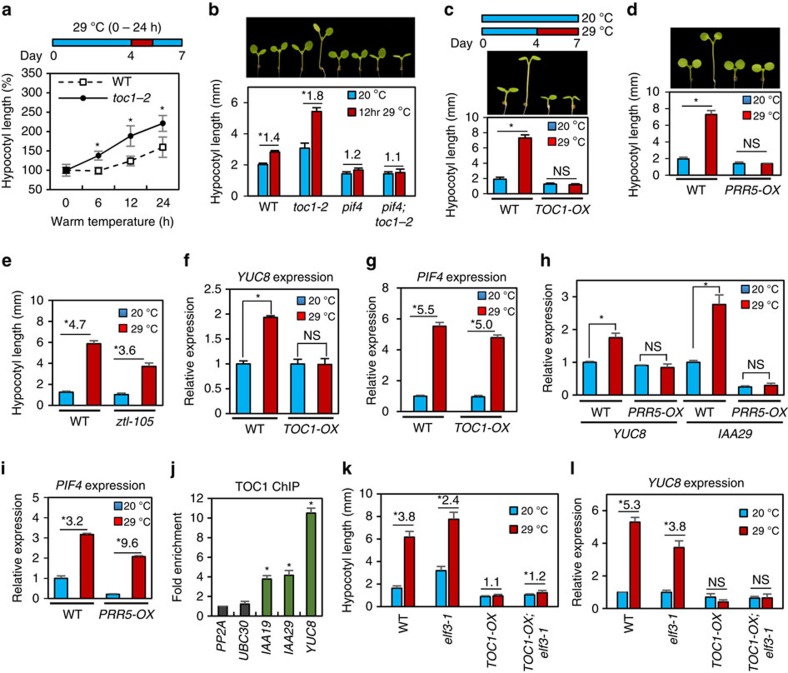
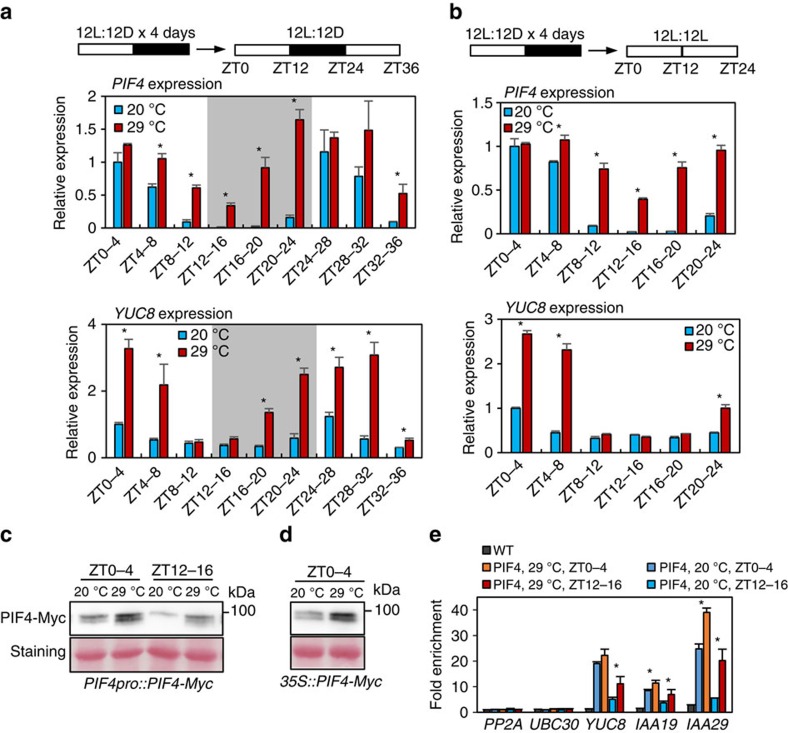
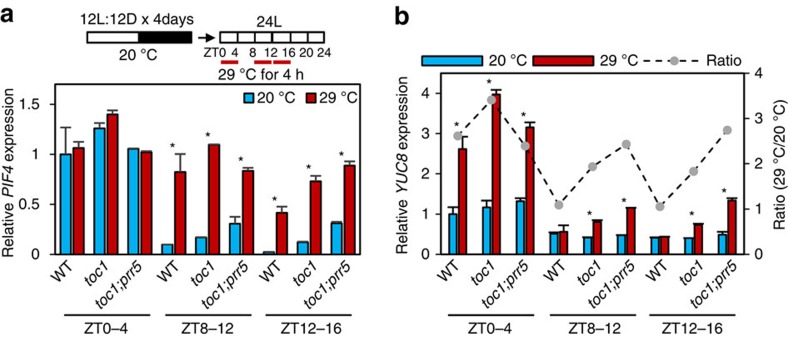
Arabidopsis adapts to elevated temperature by promoting stem elongation and hyponastic growth through a temperature-responsive transcription factor PIF4. Here we show that the evening-expressed clock component TOC1 interacts with and inactivates PIF4, thereby suppressing thermoresponsive growth in the evening. We find that the expression of PIF4 target genes show circadian rhythms of thermosensitivity, with minimum responsiveness in the evening when TOC1 level is high. Loss of function of TOC1 and its close homologue PRR5 restores thermosensitivity in the evening, whereas TOC1 overexpression causes thermo insensitivity, demonstrating that TOC1 mediates the evening-specific inhibition of thermoresponses. We further show that PIF4 is required for thermoadaptation mediated by moderately elevated temperature. Our results demonstrate that the interaction between TOC1 and PIF4 mediates the circadian gating of thermoresponsive growth, which may serve to increase fitness by matching thermoresponsiveness with the day-night cycles of fluctuating temperature and light conditions.
拟南芥通过促进茎伸长和下胚轴生长来适应高温,这一过程是通过温度响应转录因子 PIF4 实现的。在这里,我们表明,夜间表达的时钟成分 TOC1 与 PIF4 相互作用并使其失活,从而抑制夜间的热响应生长。我们发现,PIF4 靶基因的表达表现出对热敏感性的昼夜节律,当 TOC1 水平较高时,夜间的反应性最低。TOC1 及其近同源物 PRR5 的功能丧失会恢复夜间的热敏感性,而 TOC1 的过表达则导致热不敏感性,这表明 TOC1 介导了夜间特有的热响应抑制。我们进一步表明,PIF4 是由适度升高的温度介导的热适应所必需的。我们的结果表明,TOC1 和 PIF4 之间的相互作用介导了热响应生长的昼夜门控,这可能通过将热响应与温度和光照条件的昼夜波动相匹配来提高适应性。