Chen Wenbo, Hasegawa Daniel K, Kaur Navneet, Kliot Adi, Pinheiro Patricia Valle, Luan Junbo, Stensmyr Marcus C, Zheng Yi, Liu Wenli, Sun Honghe, Xu Yimin, Luo Yuan, Kruse Angela, Yang Xiaowei, Kontsedalov Svetlana, Lebedev Galina, Fisher Tonja W, Nelson David R, Hunter Wayne B, Brown Judith K, Jander Georg, Cilia Michelle, Douglas Angela E, Ghanim Murad, Simmons Alvin M, Wintermantel William M, Ling Kai-Shu, Fei Zhangjun
Boyce Thompson Institute, Cornell University, Ithaca, NY, 14853, USA.
US Department of Agriculture-Agricultural Research Service, US Vegetable Laboratory, Charleston, SC, 29414, USA.
BMC Biol. 2016 Dec 14;14(1):110. doi: 10.1186/s12915-016-0321-y.
The whitefly Bemisia tabaci (Hemiptera: Aleyrodidae) is among the 100 worst invasive species in the world. As one of the most important crop pests and virus vectors, B. tabaci causes substantial crop losses and poses a serious threat to global food security.
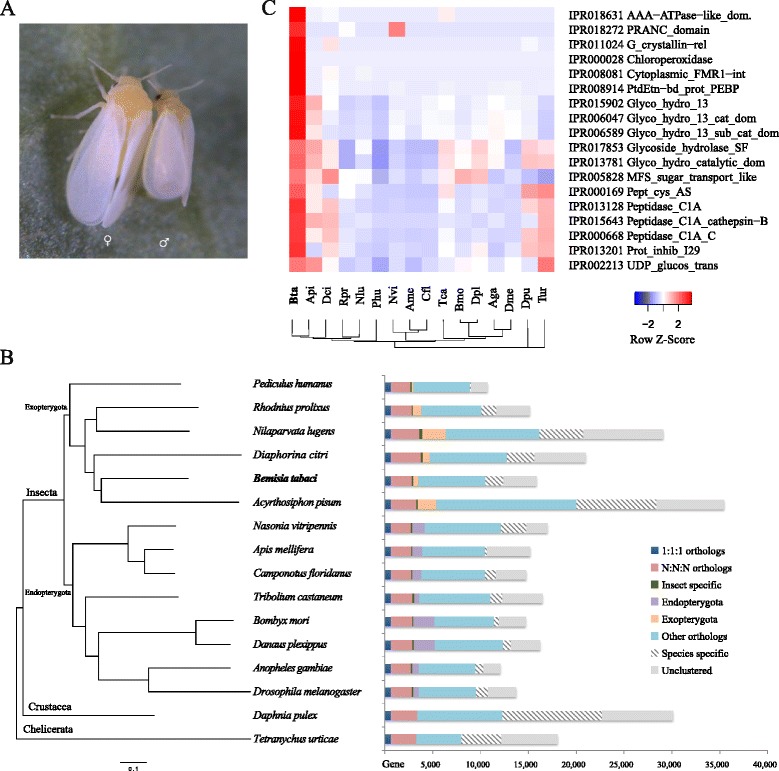
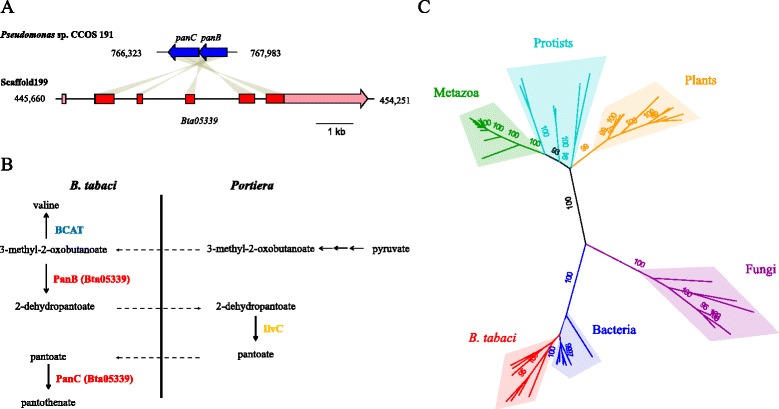
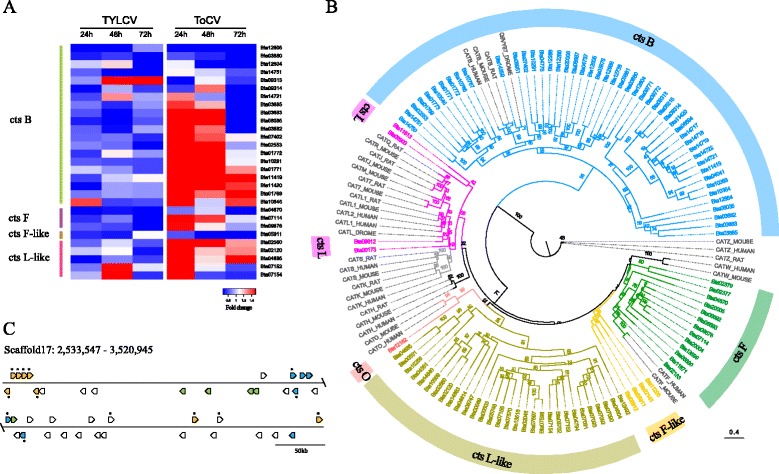
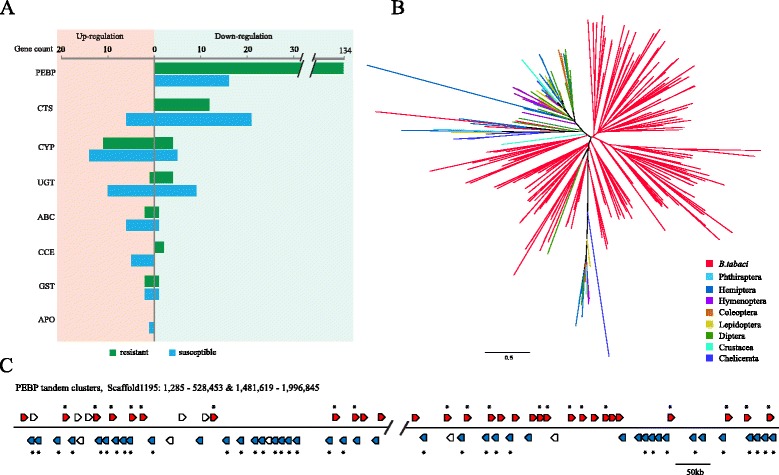
We report the 615-Mb high-quality genome sequence of B. tabaci Middle East-Asia Minor 1 (MEAM1), the first genome sequence in the Aleyrodidae family, which contains 15,664 protein-coding genes. The B. tabaci genome is highly divergent from other sequenced hemipteran genomes, sharing no detectable synteny. A number of known detoxification gene families, including cytochrome P450s and UDP-glucuronosyltransferases, are significantly expanded in B. tabaci. Other expanded gene families, including cathepsins, large clusters of tandemly duplicated B. tabaci-specific genes, and phosphatidylethanolamine-binding proteins (PEBPs), were found to be associated with virus acquisition and transmission and/or insecticide resistance, likely contributing to the global invasiveness and efficient virus transmission capacity of B. tabaci. The presence of 142 horizontally transferred genes from bacteria or fungi in the B. tabaci genome, including genes encoding hopanoid/sterol synthesis and xenobiotic detoxification enzymes that are not present in other insects, offers novel insights into the unique biological adaptations of this insect such as polyphagy and insecticide resistance. Interestingly, two adjacent bacterial pantothenate biosynthesis genes, panB and panC, have been co-transferred into B. tabaci and fused into a single gene that has acquired introns during its evolution.
The B. tabaci genome contains numerous genetic novelties, including expansions in gene families associated with insecticide resistance, detoxification and virus transmission, as well as numerous horizontally transferred genes from bacteria and fungi. We believe these novelties likely have shaped B. tabaci as a highly invasive polyphagous crop pest and efficient vector of plant viruses. The genome serves as a reference for resolving the B. tabaci cryptic species complex, understanding fundamental biological novelties, and providing valuable genetic information to assist the development of novel strategies for controlling whiteflies and the viruses they transmit.
烟粉虱(半翅目:粉虱科)是世界上100种最严重的入侵物种之一。作为最重要的作物害虫和病毒传播媒介之一,烟粉虱导致大量作物损失,并对全球粮食安全构成严重威胁。
我们报告了中东-小亚细亚1型(MEAM1)烟粉虱的615 Mb高质量基因组序列,这是粉虱科的首个基因组序列,包含15664个蛋白质编码基因。烟粉虱基因组与其他已测序的半翅目基因组高度不同,未检测到共线性。一些已知的解毒基因家族,包括细胞色素P450和UDP-葡糖醛酸基转移酶,在烟粉虱中显著扩增。其他扩增的基因家族,包括组织蛋白酶、大量串联重复的烟粉虱特异性基因簇和磷脂酰乙醇胺结合蛋白(PEBP),被发现与病毒获取和传播及/或杀虫剂抗性有关,可能促成了烟粉虱的全球入侵性和高效病毒传播能力。烟粉虱基因组中存在142个来自细菌或真菌的水平转移基因,包括编码藿烷/甾醇合成和异生物质解毒酶的基因,这些基因在其他昆虫中不存在,为这种昆虫独特的生物学适应性(如多食性和抗药性)提供了新见解。有趣的是,两个相邻的细菌泛酸生物合成基因panB和panC已共同转移到烟粉虱中,并融合成一个在进化过程中获得内含子的单一基因。
烟粉虱基因组包含众多遗传新奇之处,包括与杀虫剂抗性、解毒和病毒传播相关的基因家族扩增,以及大量来自细菌和真菌的水平转移基因。我们认为这些新奇之处可能使烟粉虱成为一种高度入侵性的多食性作物害虫和植物病毒的高效传播媒介。该基因组为解析烟粉虱隐种复合体、理解基本生物学新奇之处以及提供有价值的遗传信息以协助制定控制粉虱及其传播病毒的新策略提供了参考。