Pathangey Latha B, McCurry Dustin B, Gendler Sandra J, Dominguez Ana L, Gorman Jessica E, Pathangey Girish, Mihalik Laurie A, Dang Yushe, Disis Mary L, Cohen Peter A
Department of Biochemistry and Molecular Biology, Mayo Clinic, Scottsdale, AZ, USA.
Department of Immunology, Mayo Clinic, Scottsdale, AZ, USA.
Oncotarget. 2017 Feb 14;8(7):10785-10808. doi: 10.18632/oncotarget.13911.
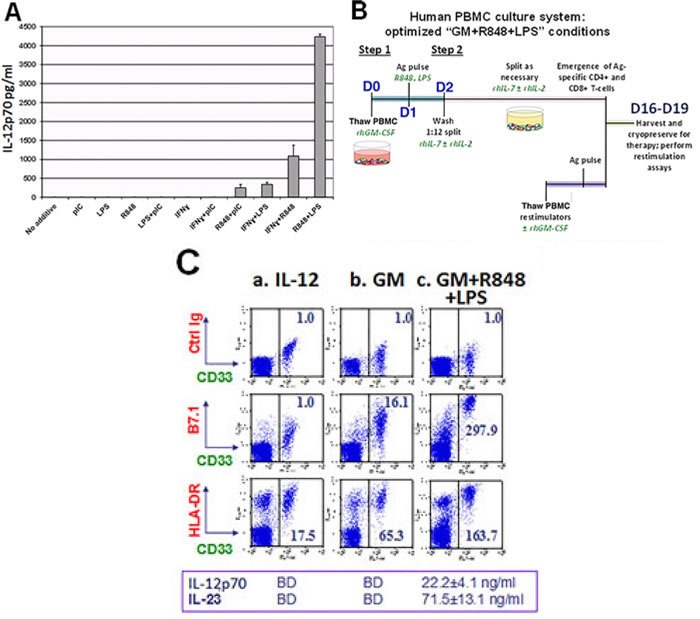
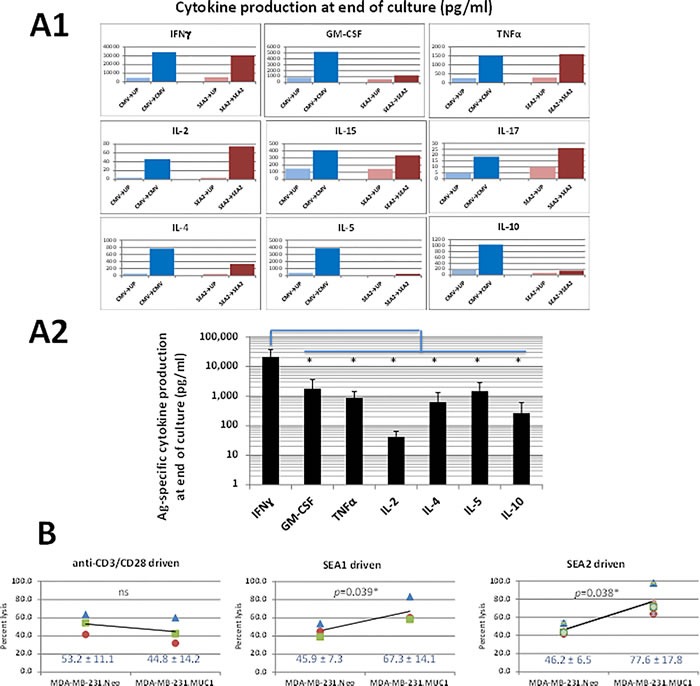
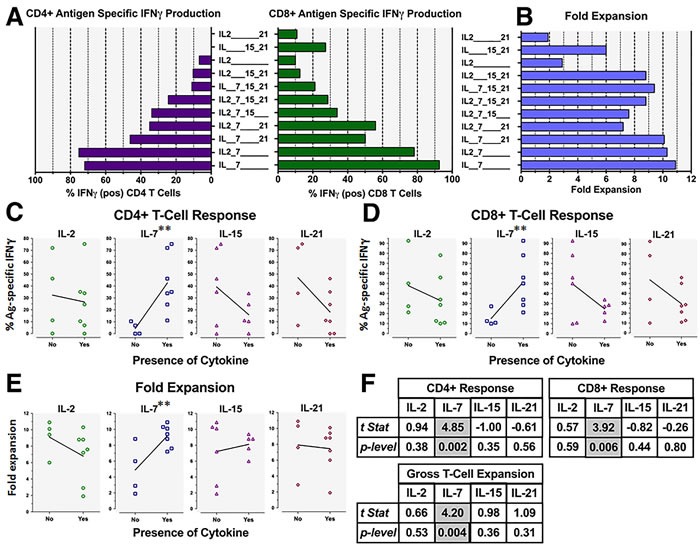
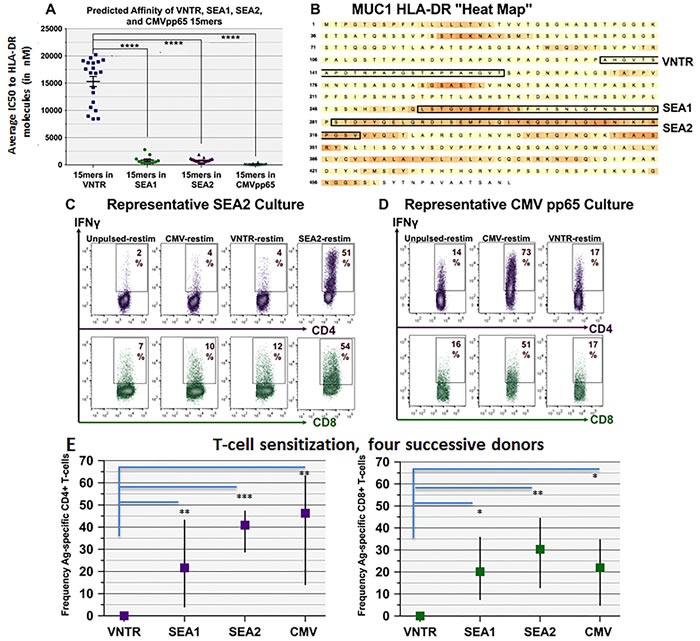
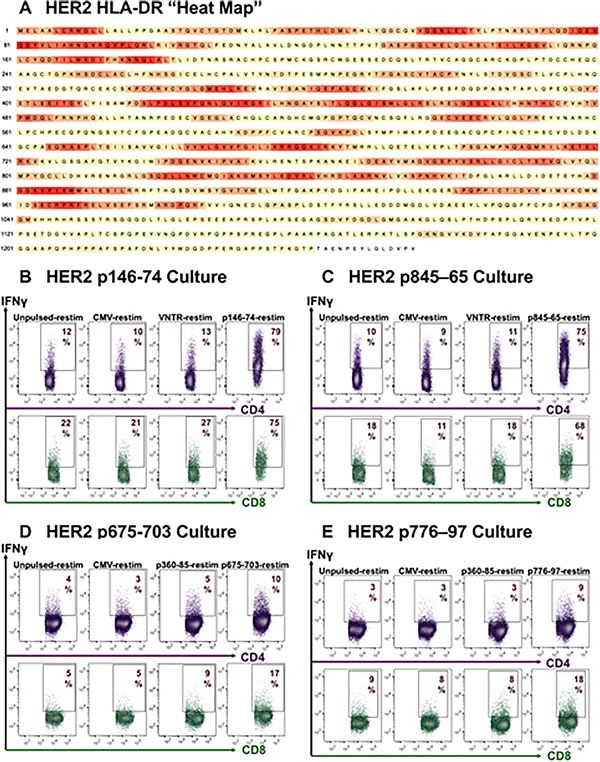
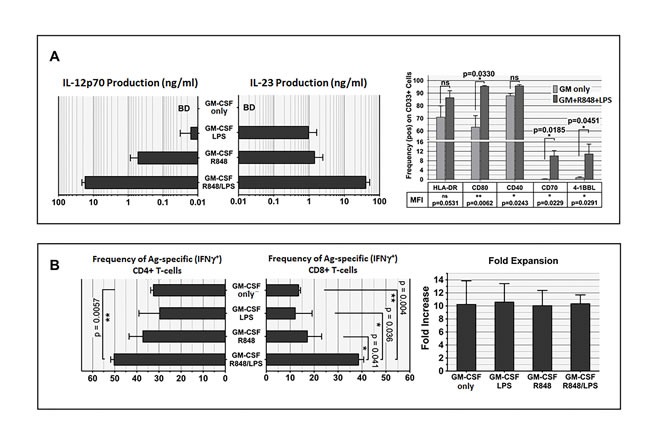
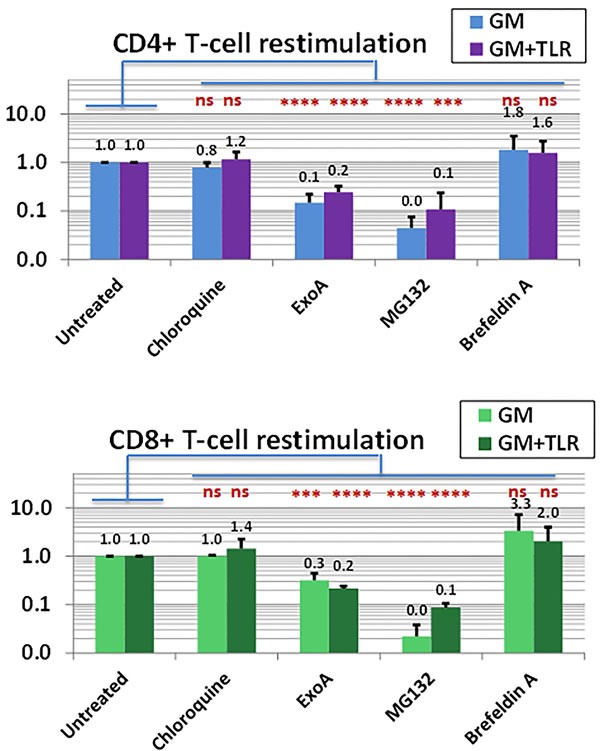
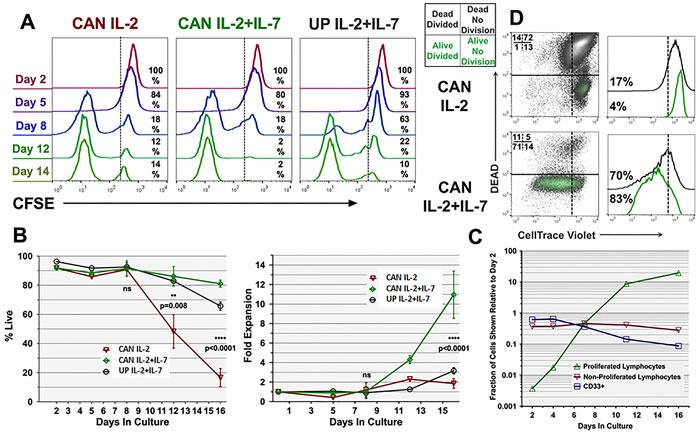
Effective adoptive immunotherapy has proved elusive for many types of human cancer, often due to difficulties achieving robust expansion of natural tumor-specific T-cells from peripheral blood. We hypothesized that antigen-driven T-cell expansion might best be triggered in vitro by acute activation of innate immunity to mimic a life-threatening infection. Unfractionated peripheral blood mononuclear cells (PBMC) were subjected to a two-step culture, first synchronizing their exposure to exogenous antigens with aggressive surrogate activation of innate immunity, followed by γ-chain cytokine-modulated T-cell hyperexpansion. Step 1 exposure to GM-CSF plus paired Toll-like receptor agonists (resiquimod and LPS), stimulated abundant IL-12 and IL-23 secretion, as well as upregulated co-stimulatory molecules and CD11c expression within the myeloid (CD33+) subpopulation. Added synthetic long peptides (>20aa) derived from widely expressed oncoproteins (MUC1, HER2/neu and CMVpp65), were reliably presented to CD4+ T-cells and cross-presented to CD8+ T-cells. Both presentation and cross-presentation demonstrated proteasomal and Sec61 dependence that could bypass the endoplasmic reticulum. Step 2 exposure to exogenous IL-7 or IL-7+IL-2 produced selective and sustained expansion of both CD4+ and CD8+ peptide-specific T-cells with a predominant interferon-γ-producing T1-type, as well as the antigen-specific ability to lyse tumor targets. Other γ-chain cytokines and/or combinations were initially proliferogenic, but followed by a contractile phase not observed with IL-7 or IL-7+IL-2. Regulatory T-cells were minimally propagated under these culture conditions. This mechanistically rational culture sequence, effective even for unvaccinated donors, enables rapid preparation of T-cells recognizing tumor-associated antigens expressed by the majority of human cancers, including pancreatic cancers, breast cancers and glioblastomas.
对于多种类型的人类癌症而言,有效的过继性免疫疗法一直难以实现,这通常是由于难以从外周血中实现天然肿瘤特异性T细胞的强劲扩增。我们推测,通过急性激活先天免疫以模拟危及生命的感染,可能最有利于在体外触发抗原驱动的T细胞扩增。未分离的外周血单核细胞(PBMC)进行两步培养,首先通过先天免疫的积极替代激活使其暴露于外源性抗原同步,然后进行γ链细胞因子调节的T细胞过度扩增。第一步,暴露于GM-CSF加配对的Toll样受体激动剂(瑞喹莫德和LPS),刺激大量IL-12和IL-23分泌,以及髓样(CD33+)亚群中共刺激分子上调和CD11c表达。添加的源自广泛表达的癌蛋白(MUC1、HER2/neu和CMVpp65)的合成长肽(>20aa)可靠地呈递给CD4+T细胞并交叉呈递给CD8+T细胞。呈递和交叉呈递均显示出蛋白酶体和Sec61依赖性,可绕过内质网。第二步,暴露于外源性IL-7或IL-7+IL-2可使CD4+和CD8+肽特异性T细胞选择性且持续扩增,产生主要分泌干扰素-γ的T1型细胞,以及裂解肿瘤靶标的抗原特异性能力。其他γ链细胞因子和/或组合最初具有增殖作用,但随后进入收缩期,而IL-7或IL-7+IL-2则未观察到这种情况。在这些培养条件下,调节性T细胞的增殖极少。这种机制合理的培养序列,即使对于未接种疫苗的供体也有效,能够快速制备识别大多数人类癌症(包括胰腺癌、乳腺癌和胶质母细胞瘤)所表达的肿瘤相关抗原的T细胞。