Xiao Yong-Tao, Wang Jun, Lu Wei, Cao Yi, Cai Wei
Department of Pediatric Surgery, Xin Hua Hospital, School of Medicine, Shanghai Jiao Tong University, Shanghai, China.
Shanghai Institute for Pediatric Research, Shanghai, China.
Cell Death Dis. 2016 Dec 15;7(12):e2521. doi: 10.1038/cddis.2016.426.
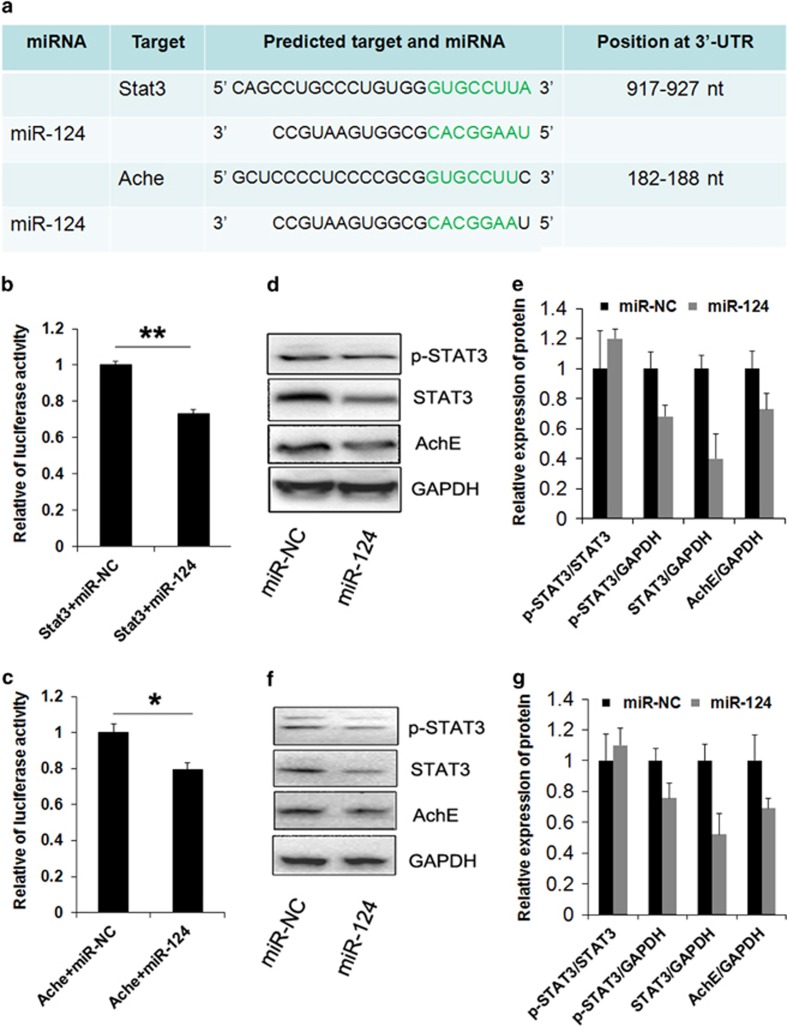
Intestinal inflammation plays a critical role in the pathogenesis of intestinal failure (IF). The macrophages are essential to maintain the intestinal homeostasis. However, the underlying mechanisms of intestinal macrophages activation remain poorly understood. Since microRNAs (miRNAs) have pivotal roles in regulation of immune responses, here we aimed to investigate the role of miR-124 in the activation of intestinal macrophages. In this study, we showed that the intestinal macrophages increased in pediatric IF patients and resulted in the induction of interleukin-6 (IL-6) and tumor necrosis factor-α (TNF-α). The miRNA fluorescence in situ hybridization analysis showed that the expression of miR-124 significantly reduced in intestinal macrophages in IF patients. Overexpression of miR-124 was sufficient to inhibit intestinal macrophages activation by attenuating production of IL-6 and TNF-α. Further studies showed that miR-124 could directly target the 3'-untranslated region of both signal transducer and activator of transcription 3 (STAT3) and acetylcholinesterase (AChE) mRNAs, and suppress their protein expressions. The AChE potentially negates the cholinergic anti-inflammatory signal by hydrolyzing the acetylcholine. We here showed that intestinal macrophages increasingly expressed the AChE and STAT3 in IF patients when compared with controls. The inhibitors against to STAT3 and AChE significantly suppressed the lipopolysaccharides-induced IL-6 and TNF-α production in macrophages. Taken together, these findings highlight an important role for miR-124 in the regulation of intestinal macrophages activation, and suggest a potential application of miR-124 in pediatric IF treatment regarding as suppressing intestinal inflammation.
肠道炎症在肠衰竭(IF)的发病机制中起关键作用。巨噬细胞对于维持肠道内环境稳定至关重要。然而,肠道巨噬细胞激活的潜在机制仍知之甚少。由于微小RNA(miRNA)在免疫反应调节中起关键作用,因此我们旨在研究miR-124在肠道巨噬细胞激活中的作用。在本研究中,我们发现儿科IF患者的肠道巨噬细胞增多,并导致白细胞介素-6(IL-6)和肿瘤坏死因子-α(TNF-α)的诱导。miRNA荧光原位杂交分析表明,IF患者肠道巨噬细胞中miR-124的表达显著降低。miR-124的过表达足以通过减弱IL-6和TNF-α的产生来抑制肠道巨噬细胞的激活。进一步研究表明,miR-124可以直接靶向信号转导和转录激活因子3(STAT3)和乙酰胆碱酯酶(AChE)mRNA的3'-非翻译区,并抑制它们的蛋白表达。AChE可能通过水解乙酰胆碱来消除胆碱能抗炎信号。我们在此表明,与对照组相比,IF患者的肠道巨噬细胞中AChE和STAT3的表达增加。针对STAT3和AChE的抑制剂显著抑制了脂多糖诱导的巨噬细胞中IL-6和TNF-α的产生。综上所述,这些发现突出了miR-124在调节肠道巨噬细胞激活中的重要作用,并提示miR-124在儿科IF治疗中作为抑制肠道炎症的潜在应用价值。