Saito Ryuta, Tominaga Teiji
Department of Neurosurgery, Tohoku University Graduate School of Medicine.
Neurol Med Chir (Tokyo). 2017 Jan 15;57(1):8-16. doi: 10.2176/nmc.ra.2016-0071. Epub 2016 Dec 15.
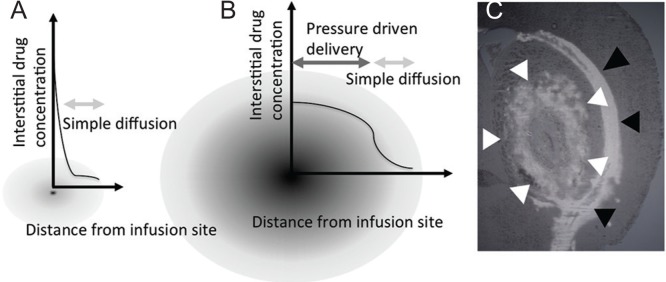
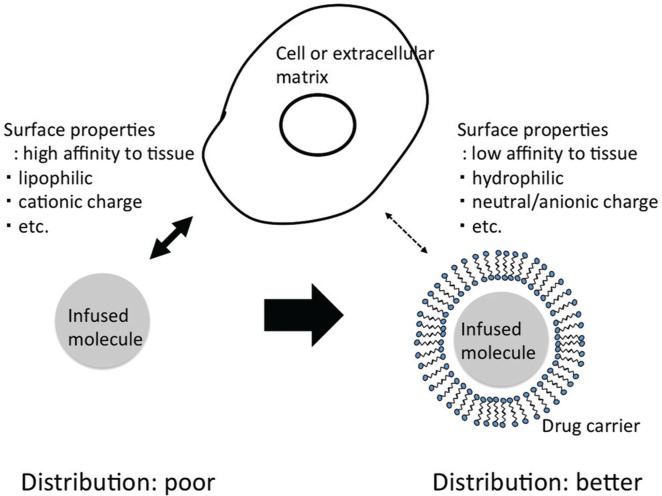
Convection-enhanced delivery (CED) circumvents the blood-brain barrier by delivering agents directly into the tumor and surrounding parenchyma. CED can achieve large volumes of distribution by continuous positive-pressure infusion. Although promising as an effective drug delivery method in concept, the administration of therapeutic agents via CED is not without challenges. Limitations of distribution remain a problem in large brains, such as those of humans. Accurate and consistent delivery of an agent is another challenge associated with CED. Similar to the difficulties caused by immunosuppressive environments associated with gliomas, there are several mechanisms that make effective local drug distribution difficult in malignant gliomas. In this review, methods for local drug application targeting gliomas are discussed with special emphasis on CED. Although early clinical trials have failed to demonstrate the efficacy of CED against gliomas, CED potentially can be a platform for translating the molecular understanding of glioblastomas achieved in the laboratory into effective clinical treatments. Several clinical studies using CED of chemotherapeutic agents are ongoing. Successful delivery of effective agents should prove the efficacy of CED in the near future.
对流增强递送(CED)通过将药物直接递送至肿瘤及周围实质组织来绕过血脑屏障。CED可通过持续正压输注实现大量药物分布。尽管在概念上作为一种有效的药物递送方法很有前景,但通过CED给药治疗药物并非没有挑战。在诸如人类大脑这样的大型脑内,分布受限仍是一个问题。准确且一致地递送药物是与CED相关的另一项挑战。与胶质瘤相关的免疫抑制环境所造成的困难类似,在恶性胶质瘤中存在多种机制使得有效的局部药物分布变得困难。在本综述中,将讨论针对胶质瘤的局部药物应用方法,并特别强调CED。尽管早期临床试验未能证明CED对胶质瘤的疗效,但CED有可能成为一个平台,将在实验室中对胶质母细胞瘤的分子理解转化为有效的临床治疗方法。几项使用化疗药物进行CED的临床研究正在进行中。有效药物的成功递送应能在不久的将来证明CED的疗效。