Huang X, Teng Y, Yang H, Ma J
Department of Gynecology, the People's Hospital of Laiwu, Jinan, China.
Department of Oncology, the People's Hospital of Rizhao, Rizhao, China.
Braz J Med Biol Res. 2016 Dec 12;49(12):e5717. doi: 10.1590/1414-431X20165717.
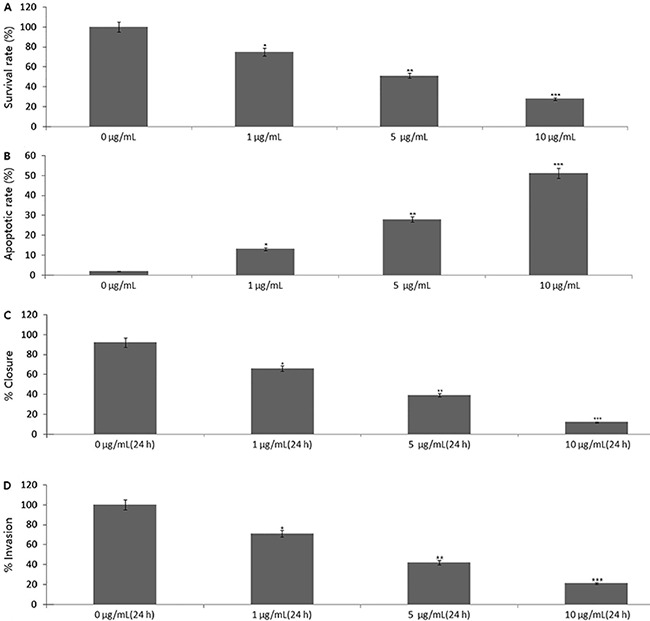
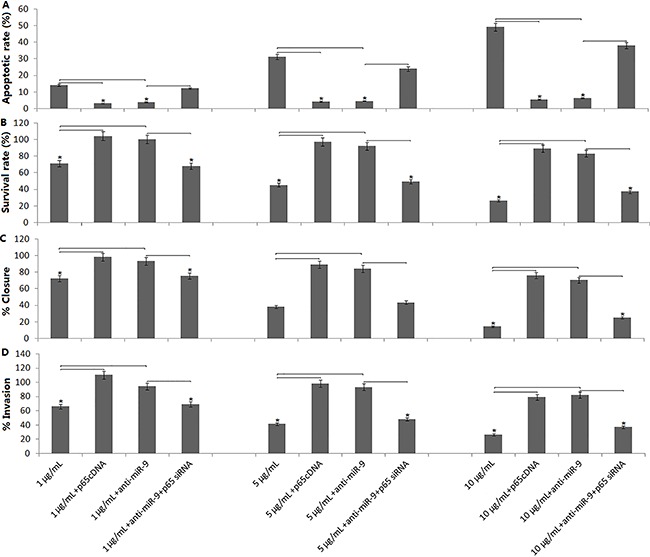
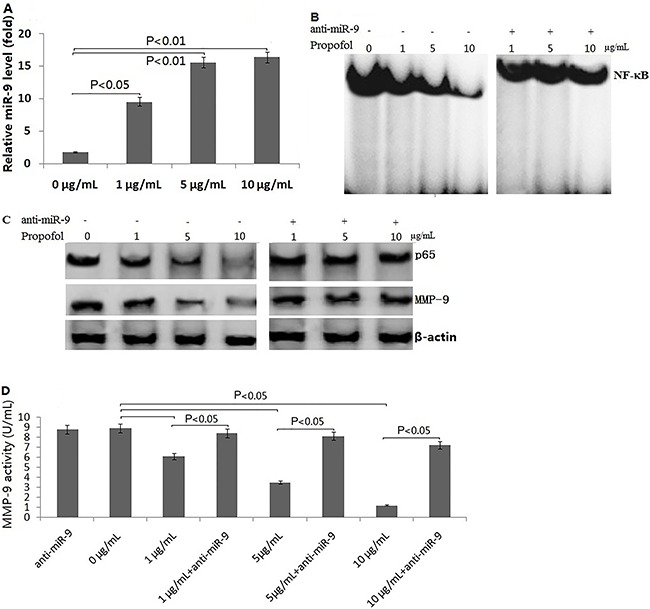
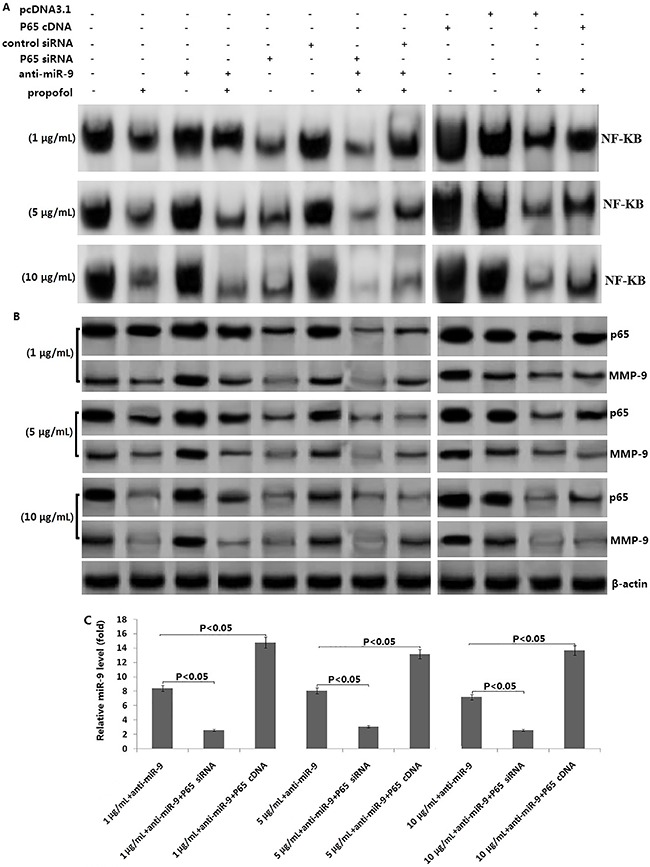
Propofol is one of the most commonly used intravenous anesthetic agents during cancer resection surgery. A previous study has found that propofol can inhibit invasion and induce apoptosis of ovarian cancer cells. However, the underlying mechanisms are not known. miR-9 has been reported to be little expressed in ovarian cancer cells, which has been related to a poor prognosis in patients with ovarian cancer. Studies have also demonstrated that propofol could induce microRNAs expression and suppress NF-κB activation in some situations. In the present study, we assessed whether propofol inhibits invasion and induces apoptosis of ovarian cancer cells by miR-9/NF-κB signaling. Ovarian cancer ES-2 cells were transfected with anti-miR-9 or p65 cDNA or p65 siRNA for 24 h, after which the cells were treated with different concentrations of propofol (1, 5, and 10 μg/mL) for 24 h. Cell growth and apoptosis were detected using MTT assay and flow cytometry analysis. Cell migration and invasion were detected using Transwell and Wound-healing assay. Western blot and electrophoretic mobility shift assay were used to detect different protein expression and NF-κB activity. Propofol inhibited cell growth and invasion, and induced cell apoptosis in a dose-dependent manner, which was accompanied by miR-9 activation and NF-κB inactivation. Knockdown of miR-9 abrogated propofol-induced NF-κB activation and MMP-9 expression, reversed propofol-induced cell death and invasion of ES-2 cells. Knockdown of p65 inhibited NF-κB activation rescued the miR-9-induced down-regulation of MMP-9. In addition, overexpression of p65 by p65 cDNA transfection increased propofol-induced NF-κB activation and reversed propofol-induced down-regulation of MMP-9. Propofol upregulates miR-9 expression and inhibits NF-κB activation and its downstream MMP-9 expression, leading to the inhibition of cell growth and invasion of ES-2 cells.
丙泊酚是癌症切除手术中最常用的静脉麻醉剂之一。先前的一项研究发现,丙泊酚可抑制卵巢癌细胞的侵袭并诱导其凋亡。然而,其潜在机制尚不清楚。据报道,miR-9在卵巢癌细胞中低表达,这与卵巢癌患者的不良预后有关。研究还表明,在某些情况下丙泊酚可诱导微小RNA表达并抑制NF-κB激活。在本研究中,我们评估了丙泊酚是否通过miR-9/NF-κB信号通路抑制卵巢癌细胞的侵袭并诱导其凋亡。将抗miR-9或p65 cDNA或p65 siRNA转染至卵巢癌ES-2细胞中24小时,之后用不同浓度的丙泊酚(1、5和10μg/mL)处理细胞24小时。使用MTT法和流式细胞术分析检测细胞生长和凋亡。使用Transwell和伤口愈合试验检测细胞迁移和侵袭。采用蛋白质免疫印迹法和电泳迁移率变动分析检测不同蛋白表达和NF-κB活性。丙泊酚以剂量依赖性方式抑制细胞生长和侵袭,并诱导细胞凋亡,同时伴有miR-9激活和NF-κB失活。敲低miR-9可消除丙泊酚诱导的NF-κB激活和MMP-9表达,逆转丙泊酚诱导的ES-2细胞死亡和侵袭。敲低p65可抑制NF-κB激活,挽救miR-9诱导的MMP-9下调。此外,通过p65 cDNA转染过表达p65可增加丙泊酚诱导的NF-κB激活,并逆转丙泊酚诱导的MMP-9下调。丙泊酚上调miR-9表达并抑制NF-κB激活及其下游MMP-9表达,从而抑制ES-2细胞的生长和侵袭。