Department of Biochemistry, Emory University School of Medicine, Atlanta, GA 30322, USA; Department of Neurology, Emory University School of Medicine, Atlanta, GA 30322, USA.
Department of Biochemistry, Emory University School of Medicine, Atlanta, GA 30322, USA.
Cell Syst. 2017 Jan 25;4(1):60-72.e4. doi: 10.1016/j.cels.2016.11.006. Epub 2016 Dec 15.
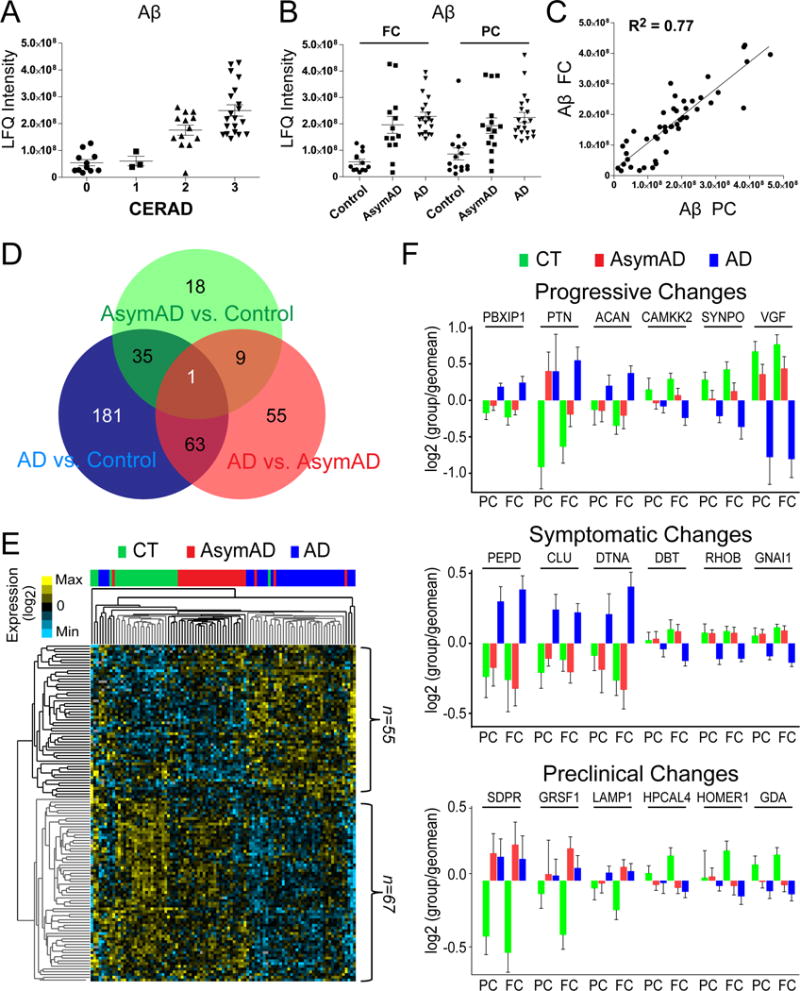
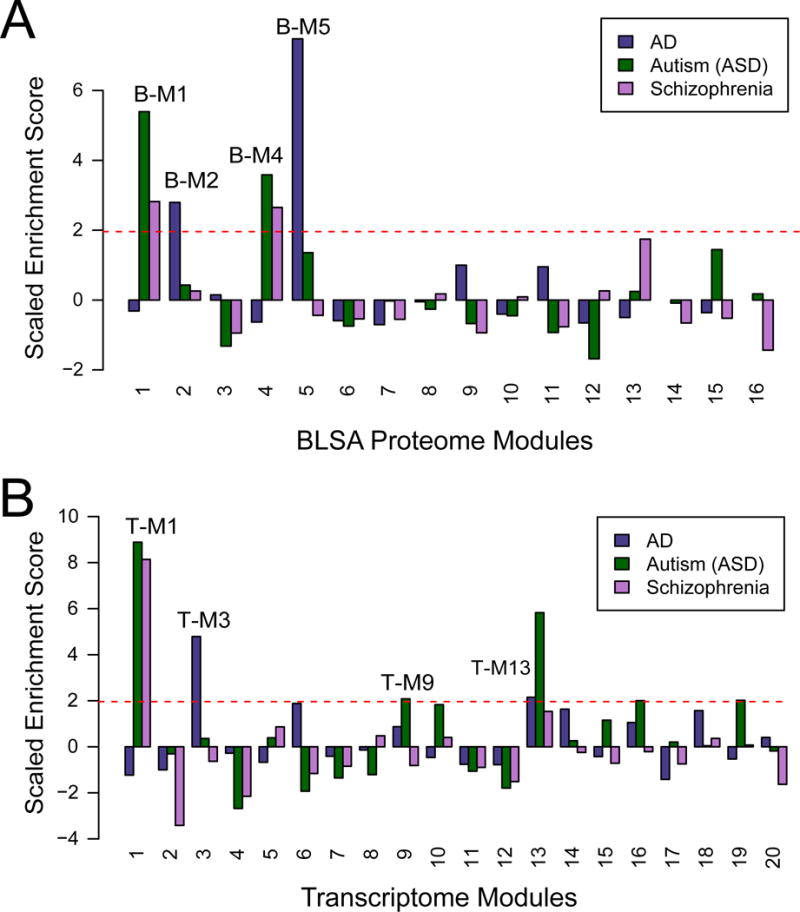
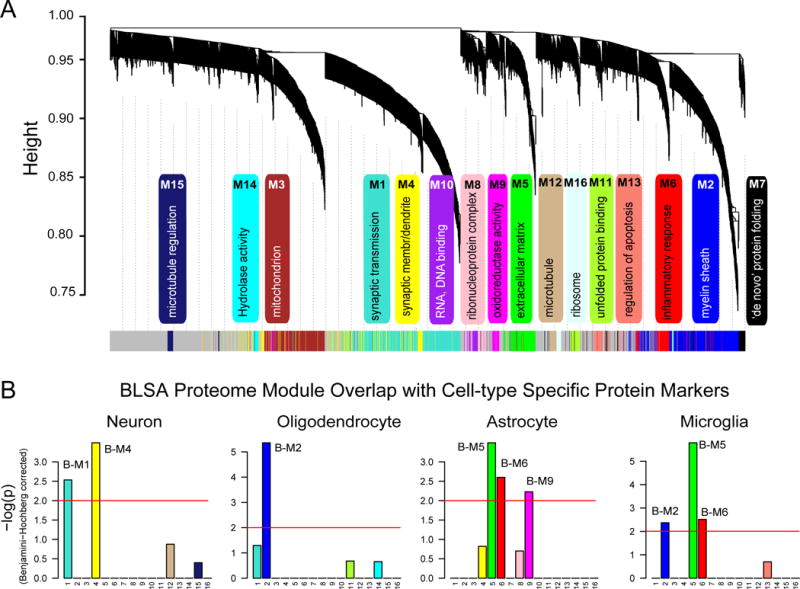
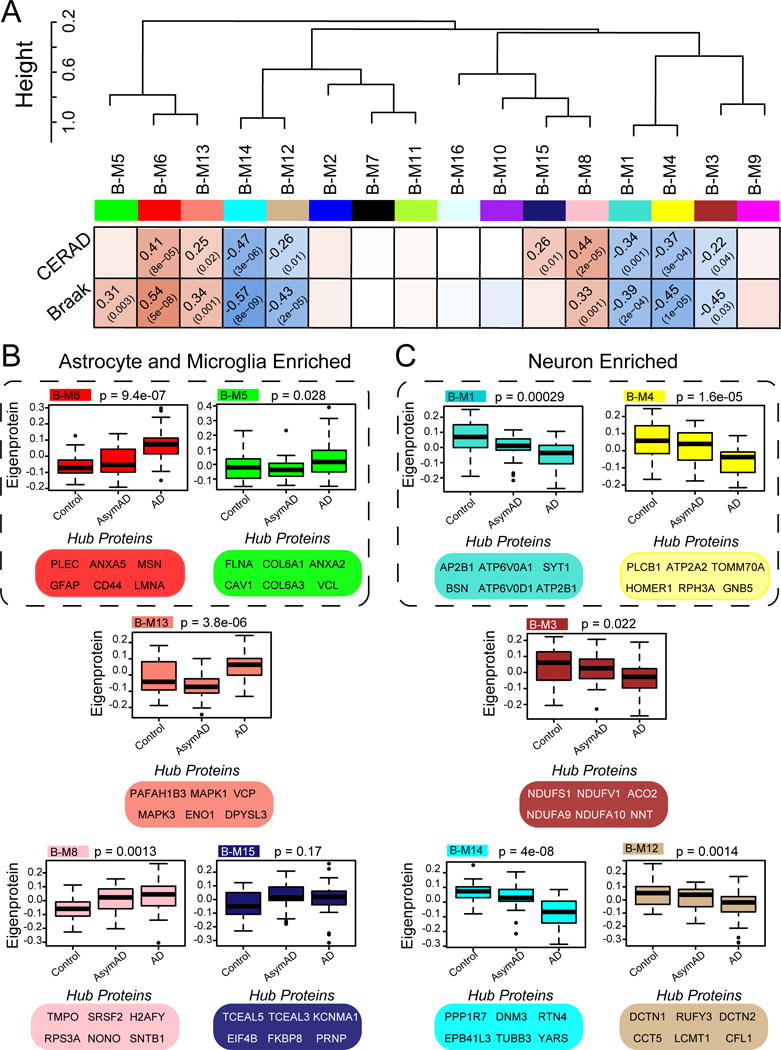
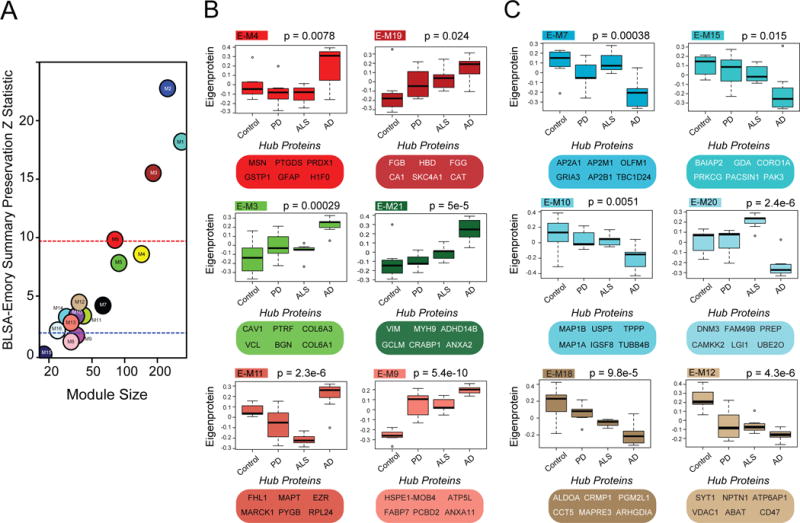
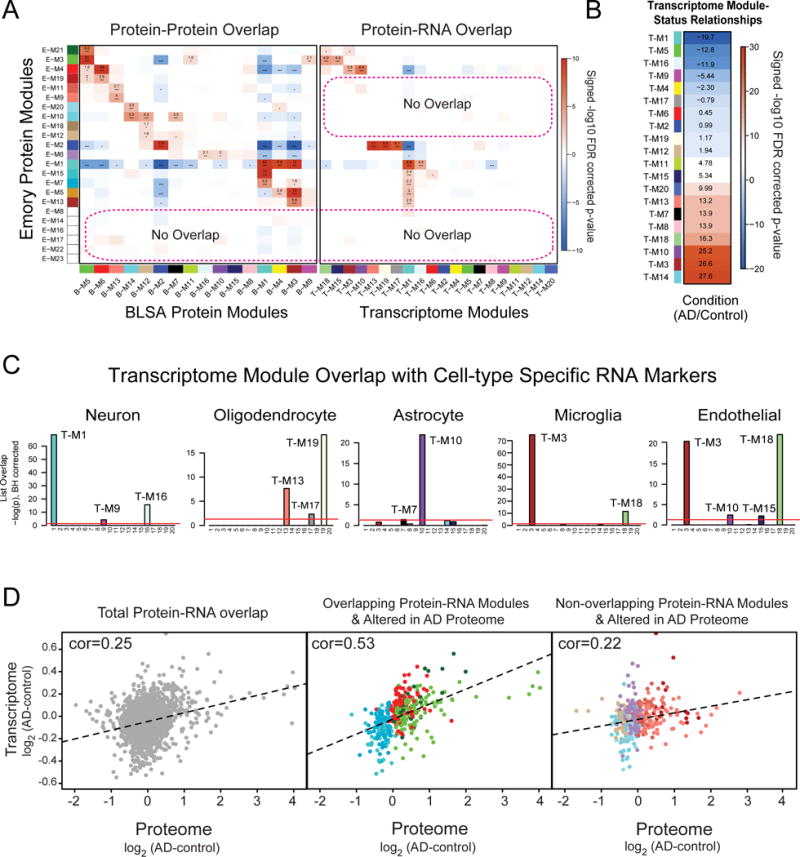
Here, we report proteomic analyses of 129 human cortical tissues to define changes associated with the asymptomatic and symptomatic stages of Alzheimer's disease (AD). Network analysis revealed 16 modules of co-expressed proteins, 10 of which correlated with AD phenotypes. A subset of modules overlapped with RNA co-expression networks, including those associated with neurons and astroglial cell types, showing altered expression in AD, even in the asymptomatic stages. Overlap of RNA and protein networks was otherwise modest, with many modules specific to the proteome, including those linked to microtubule function and inflammation. Proteomic modules were validated in an independent cohort, demonstrating some module expression changes unique to AD and several observed in other neurodegenerative diseases. AD genetic risk loci were concentrated in glial-related modules in the proteome and transcriptome, consistent with their causal role in AD. This multi-network analysis reveals protein- and disease-specific pathways involved in the etiology, initiation, and progression of AD.
在这里,我们报告了 129 个人类皮质组织的蛋白质组学分析,以定义与阿尔茨海默病(AD)无症状和有症状阶段相关的变化。网络分析显示了 16 个共同表达蛋白模块,其中 10 个与 AD 表型相关。一组模块与 RNA 共表达网络重叠,包括与神经元和星形胶质细胞类型相关的模块,即使在无症状阶段,AD 也表现出表达改变。RNA 和蛋白质网络的重叠程度否则较低,许多模块是蛋白质组特有的,包括与微管功能和炎症相关的模块。蛋白质组模块在独立队列中得到验证,证明了一些模块在 AD 中具有独特的表达变化,而在其他神经退行性疾病中也观察到了一些变化。AD 的遗传风险位点集中在蛋白质组和转录组中的神经胶质相关模块中,这与它们在 AD 中的因果作用一致。这种多网络分析揭示了参与 AD 的病因、发病和进展的蛋白质和疾病特异性途径。