Ng Dixon, Harn Tony, Altindal Tuba, Kolappan Subramania, Marles Jarrad M, Lala Rajan, Spielman Ingrid, Gao Yang, Hauke Caitlyn A, Kovacikova Gabriela, Verjee Zia, Taylor Ronald K, Biais Nicolas, Craig Lisa
Department of Molecular Biology and Biochemistry, Simon Fraser University, Burnaby, British Columbia, Canada.
Department of Microbiology and Immunology, Geisel School of Medicine at Dartmouth, Hanover, New Hampshire, United States of America.
PLoS Pathog. 2016 Dec 19;12(12):e1006109. doi: 10.1371/journal.ppat.1006109. eCollection 2016 Dec.
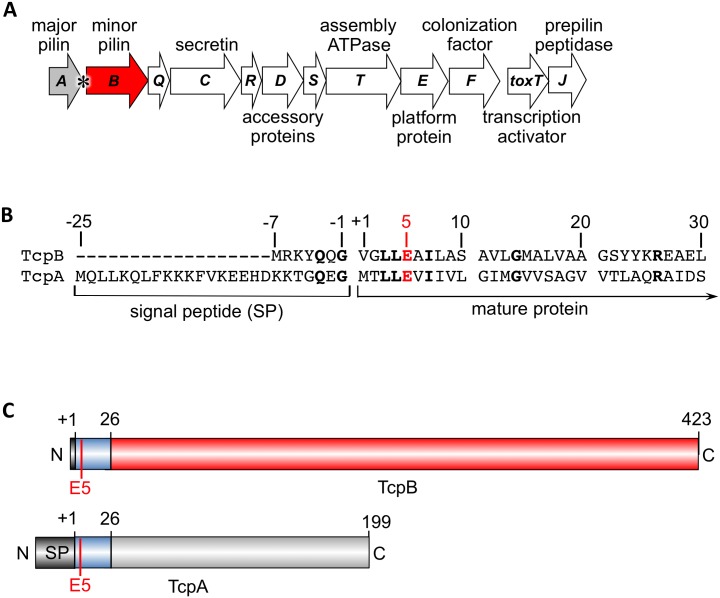
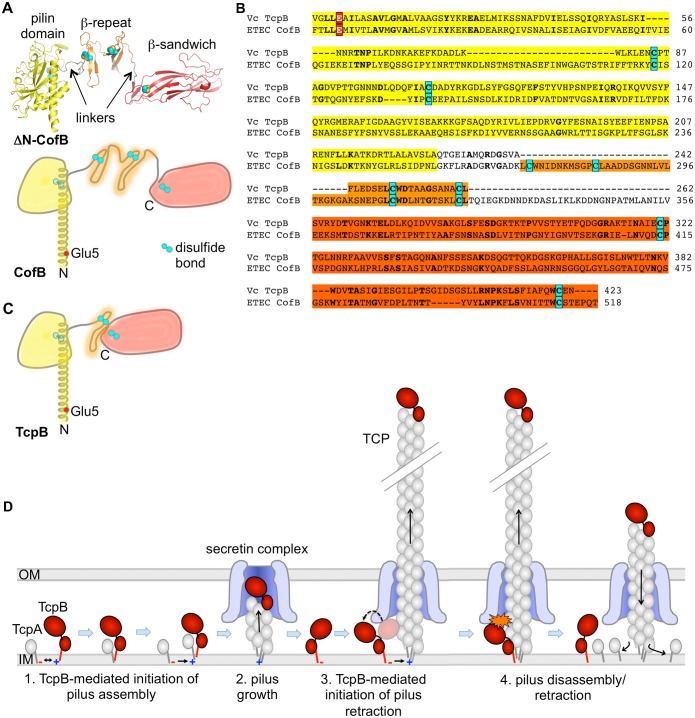
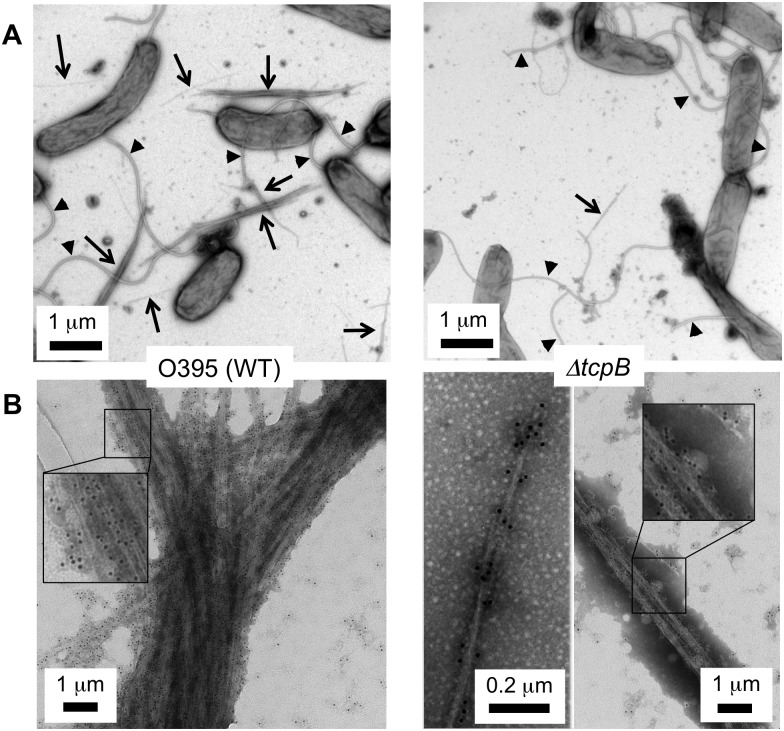
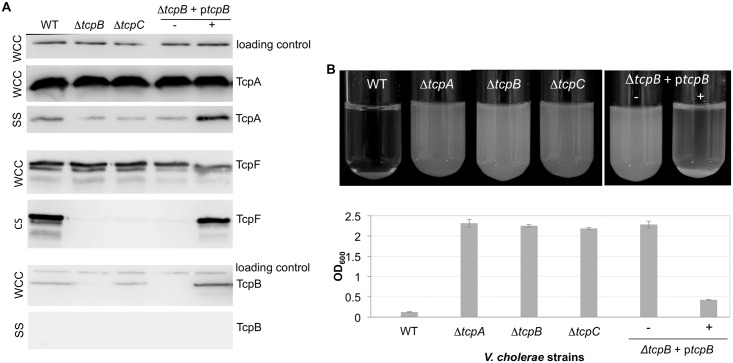
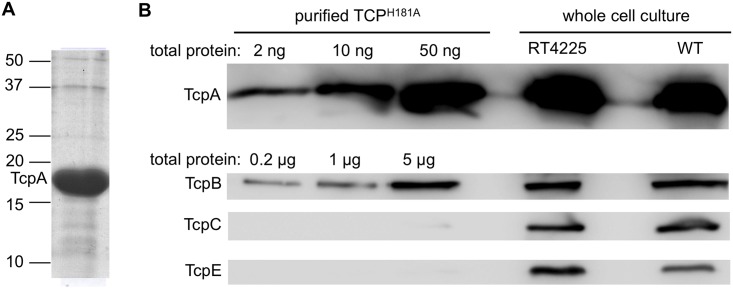
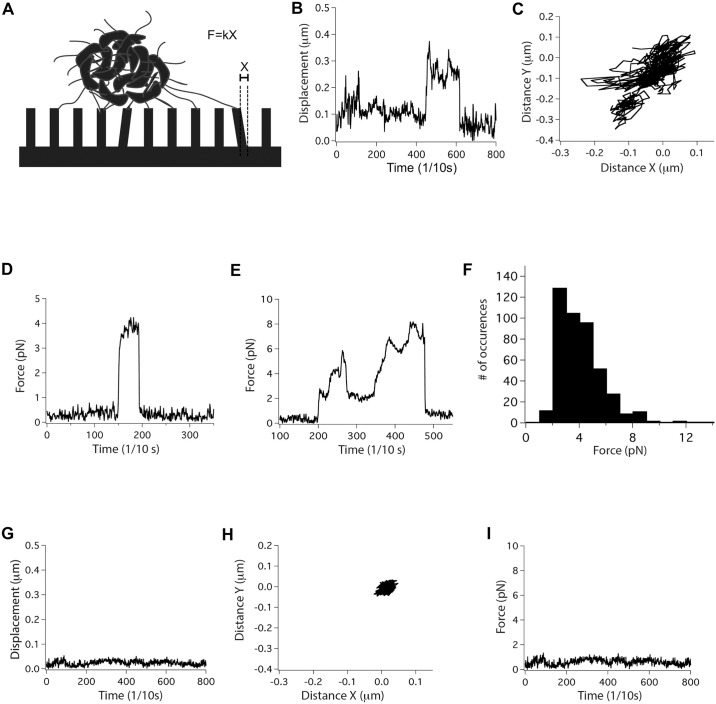
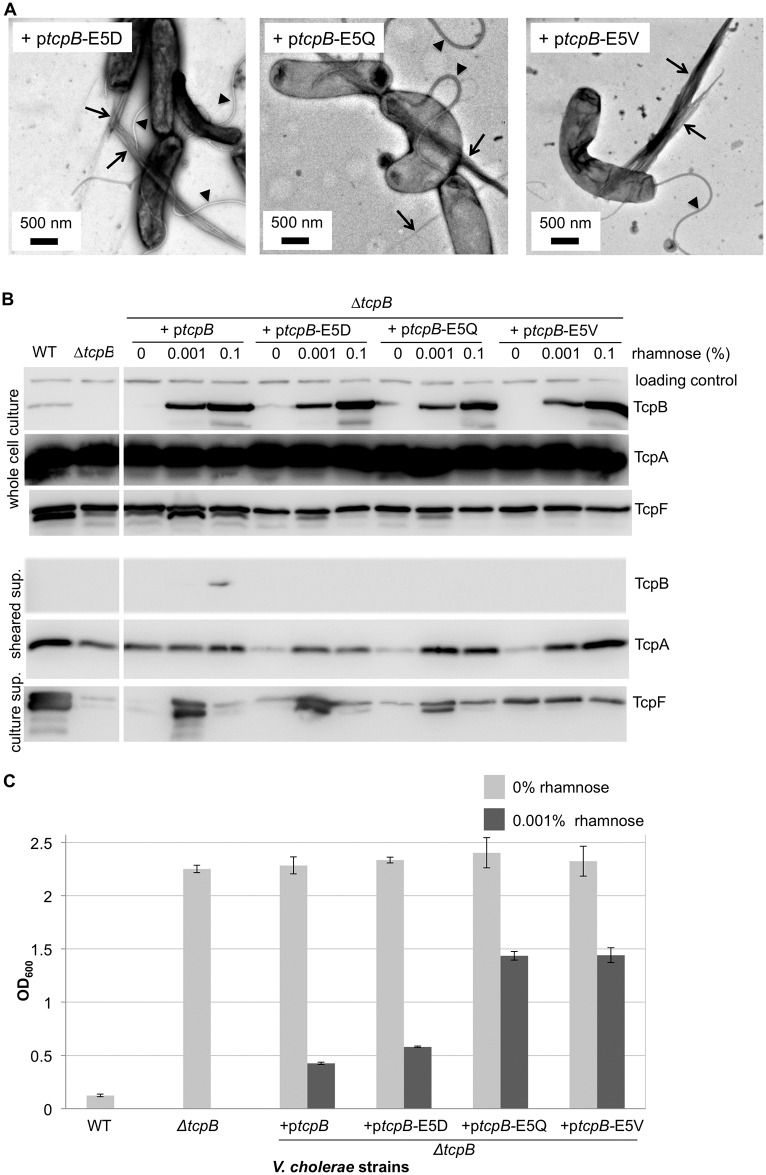
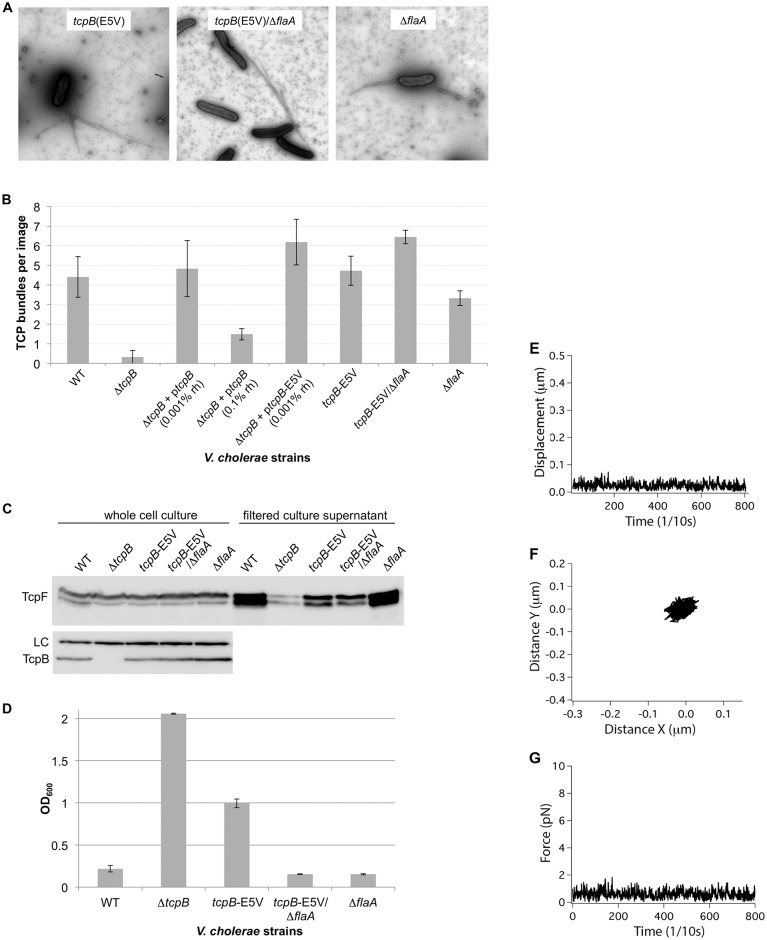
Type IV pilus (T4P) systems are complex molecular machines that polymerize major pilin proteins into thin filaments displayed on bacterial surfaces. Pilus functions require rapid extension and depolymerization of the pilus, powered by the assembly and retraction ATPases, respectively. A set of low abundance minor pilins influences pilus dynamics by unknown mechanisms. The Vibrio cholerae toxin-coregulated pilus (TCP) is among the simplest of the T4P systems, having a single minor pilin TcpB and lacking a retraction ATPase. Here we show that TcpB, like its homolog CofB, initiates pilus assembly. TcpB co-localizes with the pili but at extremely low levels, equivalent to one subunit per pilus. We used a micropillars assay to demonstrate that TCP are retractile despite the absence of a retraction ATPase, and that retraction relies on TcpB, as a V. cholerae tcpB Glu5Val mutant is fully piliated but does not induce micropillars movements. This mutant is impaired in TCP-mediated autoagglutination and TcpF secretion, consistent with retraction being required for these functions. We propose that TcpB initiates pilus retraction by incorporating into the growing pilus in a Glu5-dependent manner, which stalls assembly and triggers processive disassembly. These results provide a framework for understanding filament dynamics in more complex T4P systems and the closely related Type II secretion system.
IV型菌毛(T4P)系统是复杂的分子机器,可将主要菌毛蛋白聚合成展示在细菌表面的细丝。菌毛功能分别需要由组装和收缩ATP酶驱动的菌毛快速延伸和解聚。一组低丰度的次要菌毛蛋白通过未知机制影响菌毛动力学。霍乱弧菌毒素共调节菌毛(TCP)是最简单的T4P系统之一,只有一个次要菌毛蛋白TcpB且缺乏收缩ATP酶。在这里,我们表明TcpB与其同系物CofB一样,启动菌毛组装。TcpB与菌毛共定位,但水平极低,相当于每个菌毛一个亚基。我们使用微柱试验证明,尽管没有收缩ATP酶,TCP仍具有收缩性,并且收缩依赖于TcpB,因为霍乱弧菌tcpB Glu5Val突变体完全被菌毛覆盖,但不会引起微柱移动。该突变体在TCP介导的自凝集和TcpF分泌方面受损,这与这些功能需要收缩一致。我们提出,TcpB通过以Glu5依赖的方式掺入生长中的菌毛来启动菌毛收缩,这会使组装停滞并触发连续的拆卸。这些结果为理解更复杂的T4P系统和密切相关的II型分泌系统中的细丝动力学提供了一个框架。