Zhang Cai Fen, Zhang Chun Qing, Zhu Yu Hua, Wang Jing, Xu Hong Wei, Ren Wan Hua
Department of Gastroenterology, Provincial Hospital Affiliated to Shandong University, Jinan, China, 250021.
Gastroenterology Res. 2008 Dec;1(1):20-28. doi: 10.4021/gr2008.10.1220. Epub 2008 Nov 20.
Few clinical data are available regarding the effect of Ginkgo biloba extract (EGb 761) on liver microcirculation and fibrosis. This randomized, controlled trial is to investigate the effect of Ginko biloba extract EGb 761 on liver fibrosis and hepatic microcirculation in patients with chronic hepatitis B.
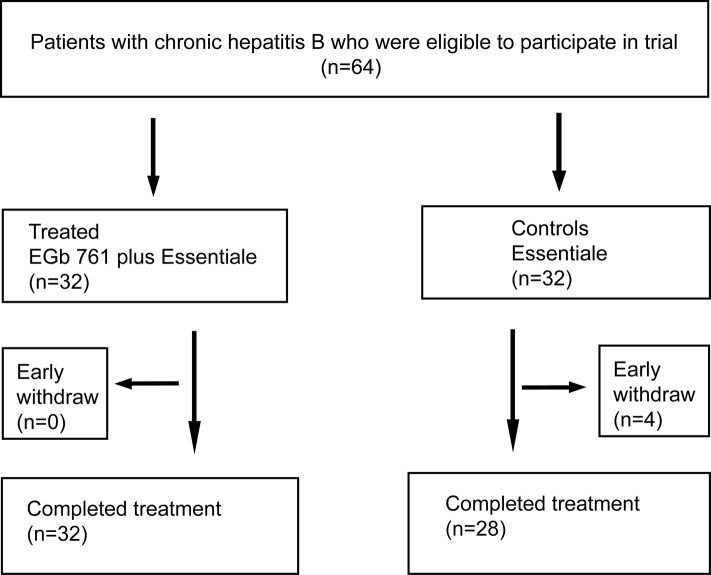
Sixty-four patients with chronic hepatitis B were randomized for intention-to-treat. Thirty-two patients were assigned to treated group receiving EGb 761 plus polyunsaturated phosphatidylcholine (Essentiale), 32 patients received Essentiale as controls. Blood samples were taken for measurement of transforming growth factor beta-1 (TGF-β1), platelet activate factor (PAF), endothelin 1 (ET-1). Twenty-six patients in treated group and 21 patients in control group underwent liver biopsies for histology before and after treatment. Ultrastructural study for sinusoidal microcirculation before and after treatment was carried out on 10 randomly selected patients in each group.
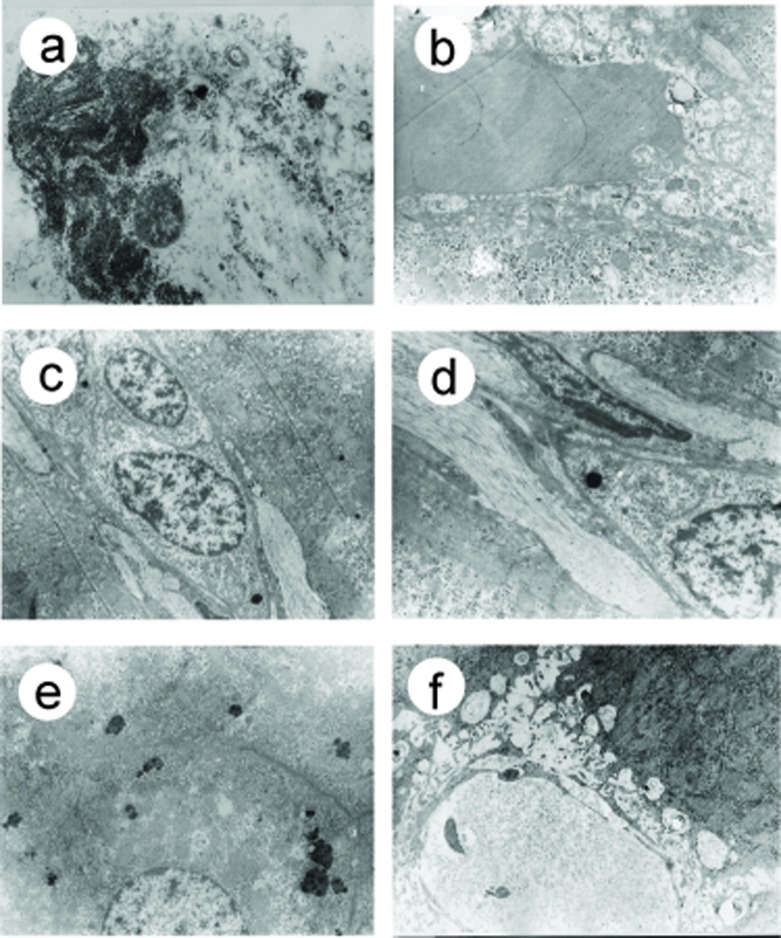
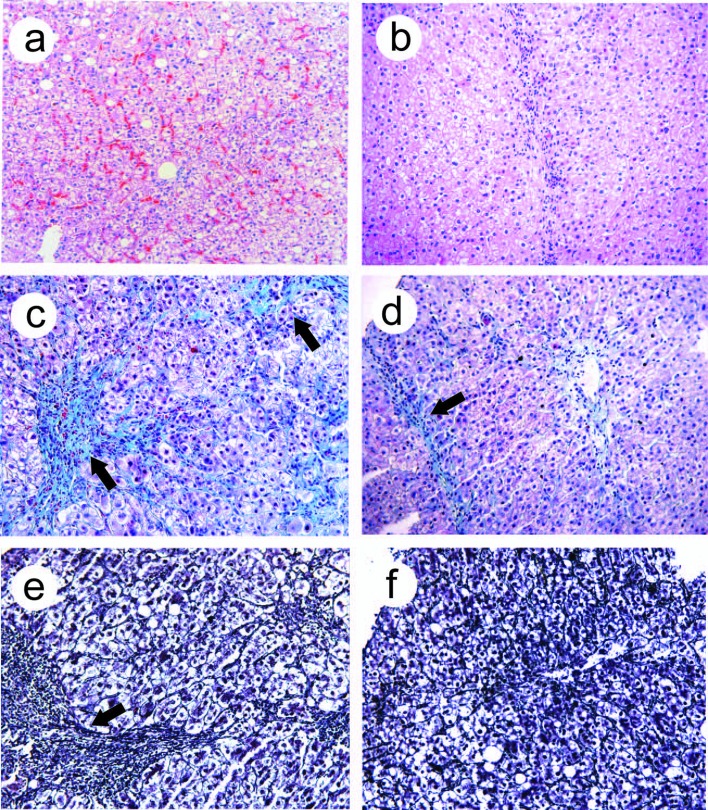
In the treated group, after EGb 761 treatment, there was a significant reduction of blood TGF- β1, PAF and ET-1 (p<0.05), whereas this was not observed in the controls. After treatment in both groups, there were significant decrease of ALT, TBil and PT (p<0.05), and significant increase of ALB (p<0.05). Hepatic inflammation and fibrosis significantly alleviated in the treated group, but not in the controls. After EGb 761 treatment, electron microscopy showed red blood cell aggregates and microthrombosis disappeared or decreased in sinusoids; collagen deposits in sinusoidal lumen and Disse space reduced; sinusoidal capillarization alleviated.
EGb 761 can improve sinusoidal microcirculation, alleviate inflammation and inhibit fibrosis through multiple mechanisms, it is effective in the treatment of chronic liver diseases.
关于银杏叶提取物(EGb 761)对肝脏微循环和纤维化的影响,临床数据较少。本随机对照试验旨在研究银杏叶提取物EGb 761对慢性乙型肝炎患者肝纤维化和肝微循环的影响。
64例慢性乙型肝炎患者按意向性治疗进行随机分组。32例患者被分配到治疗组,接受EGb 761加多不饱和磷脂酰胆碱(易善复)治疗,32例患者接受易善复作为对照。采集血样测定转化生长因子β-1(TGF-β1)、血小板活化因子(PAF)、内皮素1(ET-1)。治疗组26例患者和对照组21例患者在治疗前后进行肝脏活检以进行组织学检查。每组随机选取10例患者进行治疗前后肝血窦微循环的超微结构研究。
在治疗组中,EGb 761治疗后,血液中TGF-β1、PAF和ET-1显著降低(p<0.05),而对照组未观察到这种情况。两组治疗后,ALT、TBil和PT显著降低(p<0.05),ALB显著升高(p<0.05)。治疗组肝脏炎症和纤维化明显减轻,而对照组未减轻。EGb 761治疗后,电子显微镜显示肝血窦中红细胞聚集和微血栓消失或减少;肝血窦腔和狄氏间隙中的胶原沉积减少;肝血窦毛细血管化减轻。
EGb 761可通过多种机制改善肝血窦微循环、减轻炎症并抑制纤维化,对慢性肝病治疗有效。