Berry Neil, Manoussaka Maria, Ham Claire, Ferguson Deborah, Tudor Hannah, Mattiuzzo Giada, Klaver Bep, Page Mark, Stebbings Richard, Das Atze T, Berkhout Ben, Almond Neil, Cranage Martin P
Division of Virology, National Institute for Biological Standards and Control, South Mimms, United Kingdom.
Institute for Infection & Immunity, St George's, University of London, London, United Kingdom.
PLoS Pathog. 2016 Dec 21;12(12):e1006083. doi: 10.1371/journal.ppat.1006083. eCollection 2016 Dec.
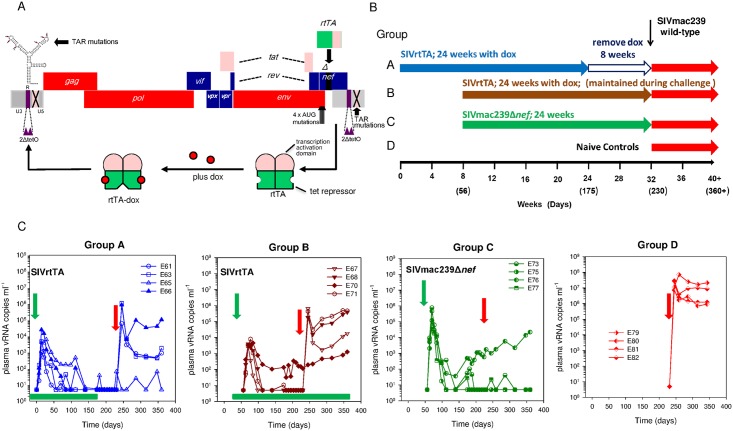
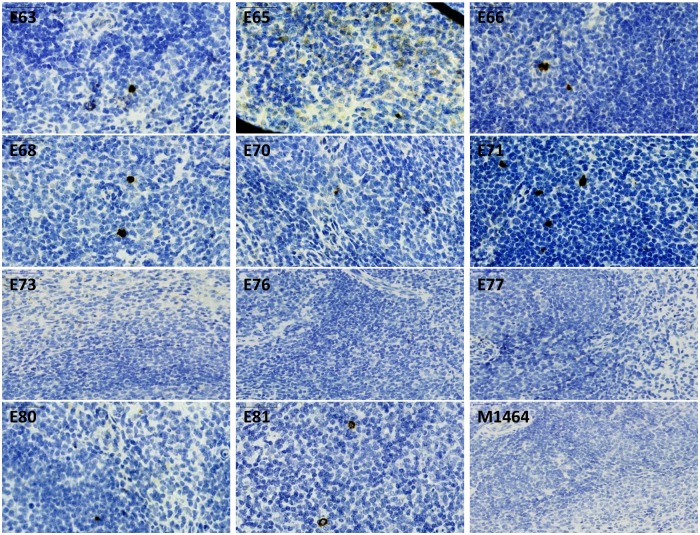
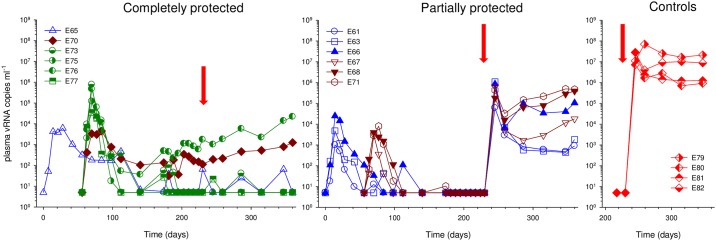
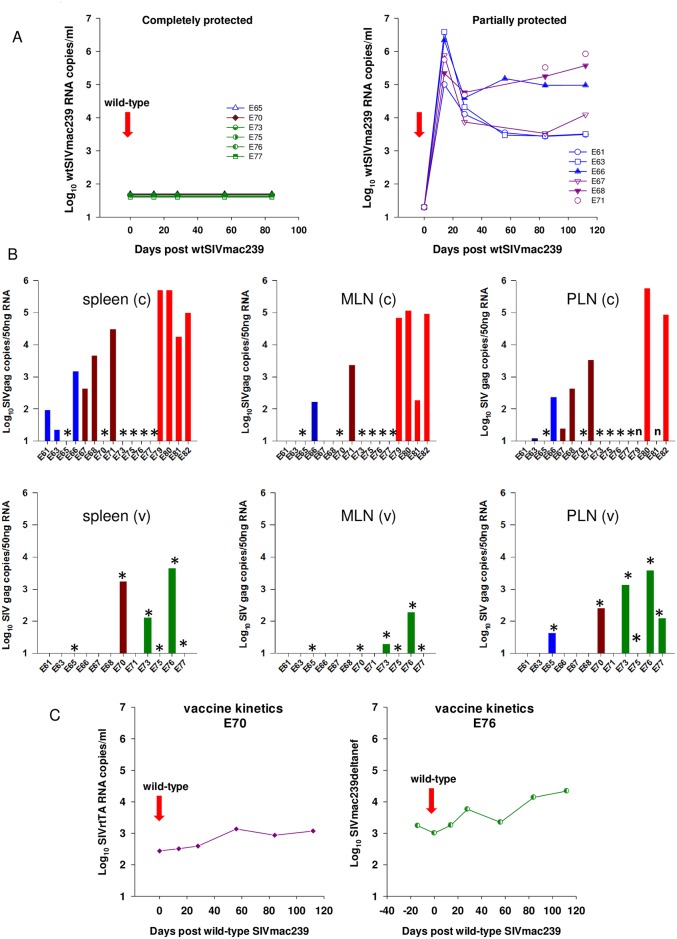
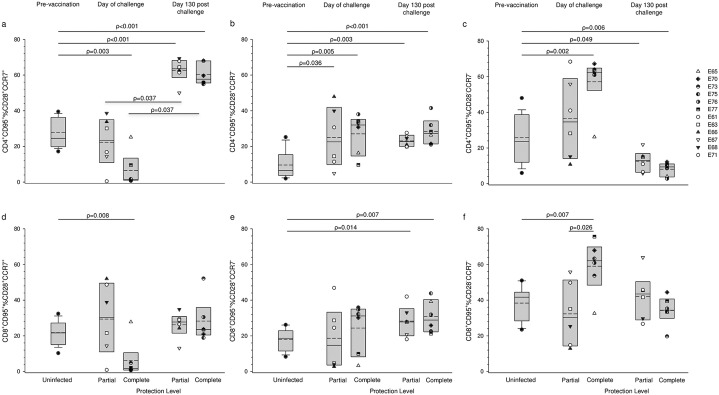
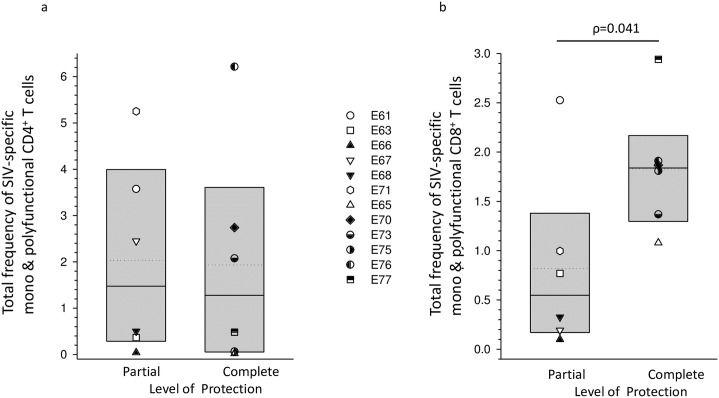
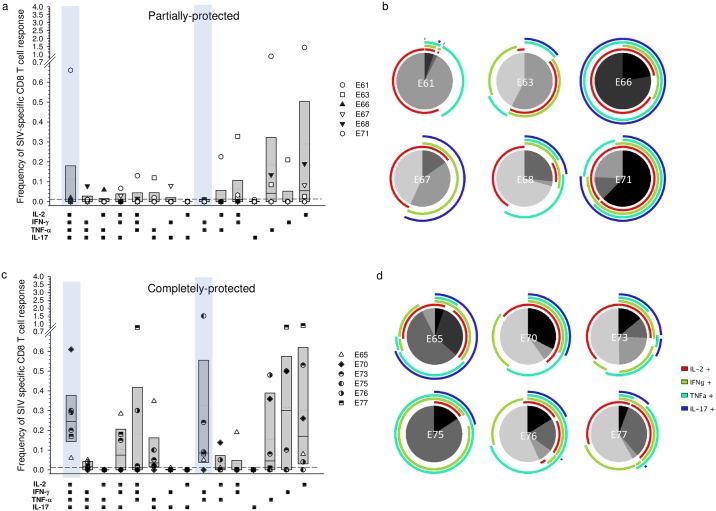
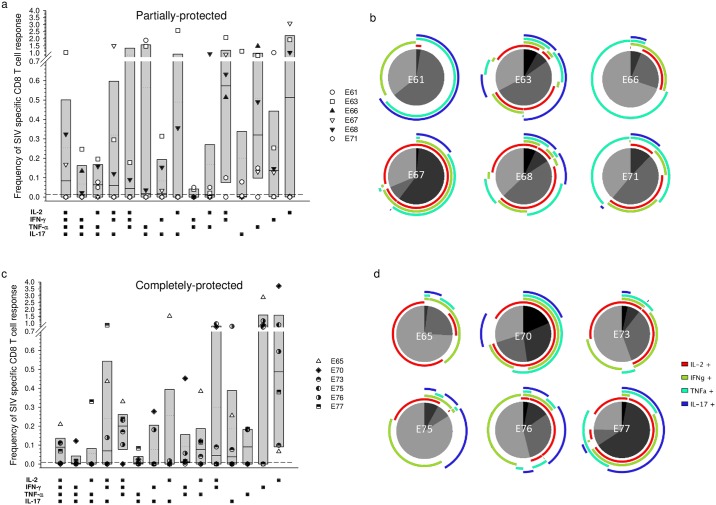
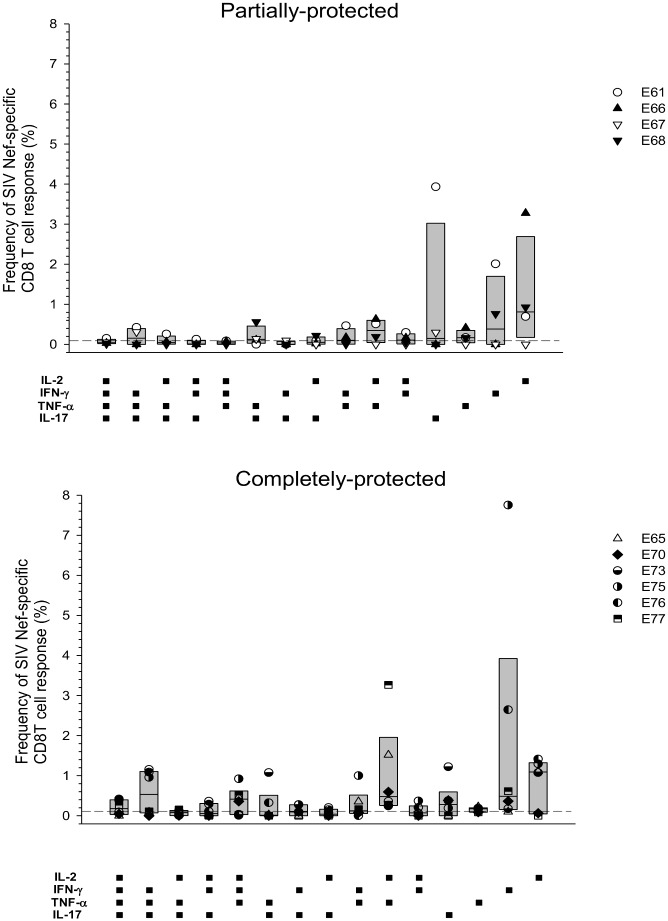
In order to evaluate the role of persisting virus replication during occult phase immunisation in the live attenuated SIV vaccine model, a novel SIVmac239Δnef variant (SIVrtTA) genetically engineered to replicate in the presence of doxycycline was evaluated for its ability to protect against wild-type SIVmac239. Indian rhesus macaques were vaccinated either with SIVrtTA or with SIVmac239Δnef. Doxycycline was withdrawn from 4 of 8 SIVrtTA vaccinates before challenge with wild-type virus. Unvaccinated challenge controls exhibited ~107 peak plasma viral RNA copies/ml persisting beyond the acute phase. Six vaccinates, four SIVmac239Δnef and two SIVrtTA vaccinates exhibited complete protection, defined by lack of wild-type viraemia post-challenge and virus-specific PCR analysis of tissues recovered post-mortem, whereas six SIVrtTA vaccinates were protected from high levels of viraemia. Critically, the complete protection in two SIVrtTA vaccinates was associated with enhanced SIVrtTA replication in the immediate post-acute vaccination period but was independent of doxycycline status at the time of challenge. Mutations were identified in the LTR promoter region and rtTA gene that do not affect doxycycline-control but were associated with enhanced post-acute phase replication in protected vaccinates. High frequencies of total circulating CD8+T effector memory cells and a higher total frequency of SIV-specific CD8+ mono and polyfunctional T cells on the day of wild-type challenge were associated with complete protection but these parameters were not predictive of outcome when assessed 130 days after challenge. Moreover, challenge virus-specific Nef CD8+ polyfunctional T cell responses and antigen were detected in tissues post mortem in completely-protected macaques indicating post-challenge control of infection. Within the parameters of the study design, on-going occult-phase replication may not be absolutely required for protective immunity.
为了评估在减毒活SIV疫苗模型的隐匿期免疫期间持续病毒复制的作用,对一种经过基因工程改造的新型SIVmac239Δnef变体(SIVrtTA)进行了评估,该变体在强力霉素存在下能够复制,以检测其抵御野生型SIVmac239的能力。印度恒河猴分别接种了SIVrtTA或SIVmac239Δnef。在用野生型病毒攻击之前,从8只接种SIVrtTA的猴子中取出4只的强力霉素。未接种疫苗的攻击对照组在急性期过后血浆病毒RNA峰值拷贝数持续维持在约107拷贝/毫升。6只接种疫苗的猴子,4只接种SIVmac239Δnef和2只接种SIVrtTA的猴子表现出完全保护,其定义为攻击后缺乏野生型病毒血症以及对死后回收组织进行病毒特异性PCR分析,而6只接种SIVrtTA的猴子免受高水平病毒血症的影响。至关重要的是,2只接种SIVrtTA的猴子中的完全保护与急性接种后立即增强的SIVrtTA复制有关,但与攻击时的强力霉素状态无关。在LTR启动子区域和rtTA基因中鉴定出了突变,这些突变不影响强力霉素控制,但与受保护接种动物急性期后增强的复制有关。在野生型攻击当天,总循环CD8 + T效应记忆细胞的高频率以及SIV特异性CD8 +单功能和多功能T细胞的更高总频率与完全保护相关,但在攻击后130天评估时,这些参数并不能预测结果。此外,在完全保护的猕猴死后组织中检测到攻击病毒特异性Nef CD8 +多功能T细胞反应和抗原,表明攻击后对感染的控制。在研究设计的参数范围内,保护性免疫可能并非绝对需要持续的隐匿期复制。