Eriksen Kamilla G, Johnson William, Sonko Bakary, Prentice Andrew M, Darboe Momodou K, Moore Sophie E
Medical Research Council (MRC) Elsie Widdowson Laboratory, Cambridge, United Kingdom;
Medical Research Council (MRC) Elsie Widdowson Laboratory, Cambridge, United Kingdom.
J Nutr. 2017 Feb;147(2):248-255. doi: 10.3945/jn.116.241737. Epub 2016 Dec 21.
The WHO recommends exclusive breastfeeding (EBF) for the first 6 mo of life.
The objective of this study was to assess the benefit of EBF to age 6 mo on growth in a large sample of rural Gambian infants at high risk of undernutrition.
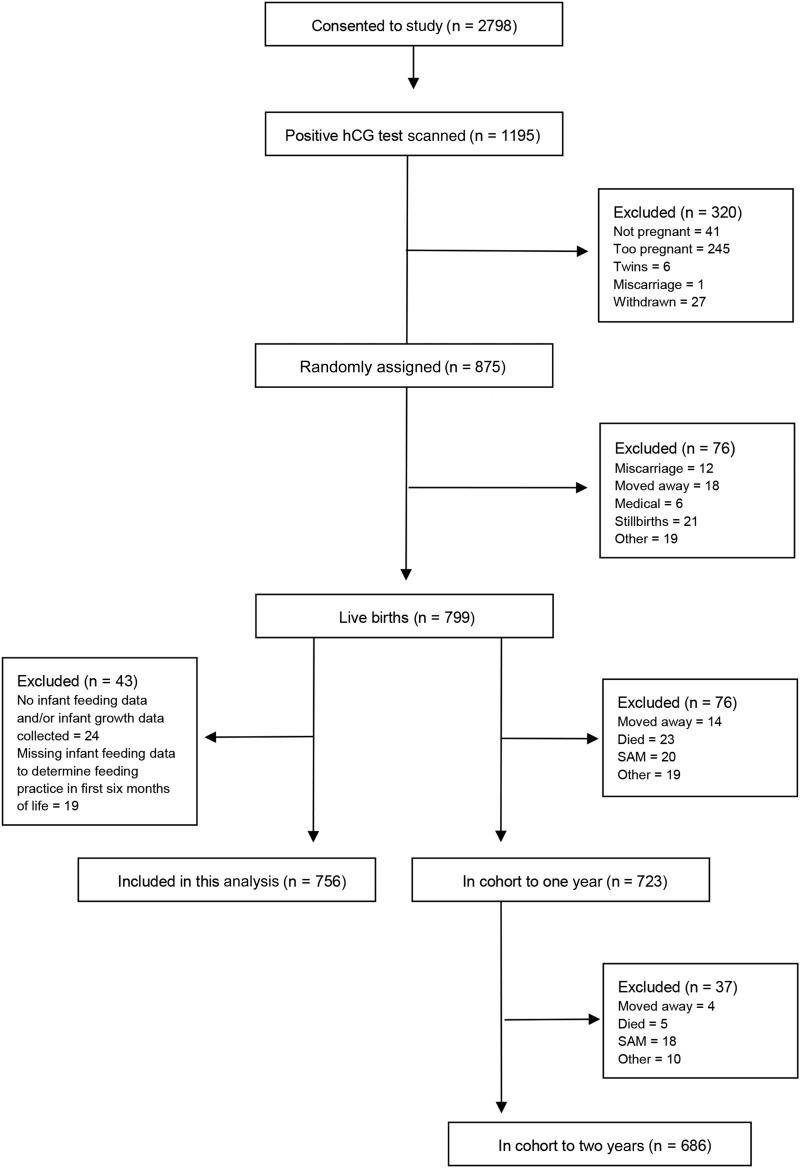
Infants with growth monitoring from birth to 2 y of age (n = 756) from the ENID (Early Nutrition and Immune Development) trial were categorized as exclusively breastfed if only breast milk and no other liquids or foods were given. EBF status was entered into confounder-adjusted multilevel models to test associations with growth trajectories by using >11,000 weight-for-age (WAZ), length-for-age (LAZ), and weight-for-length (WLZ) z score observations.
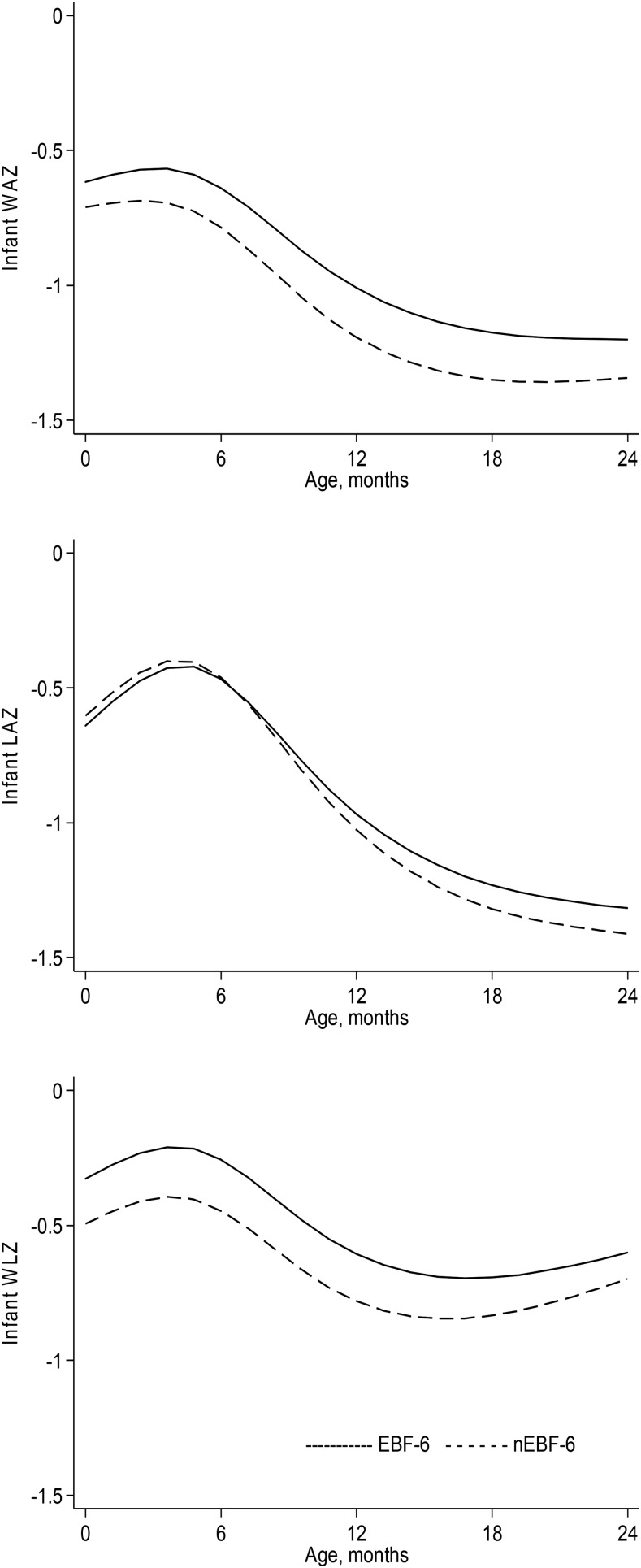
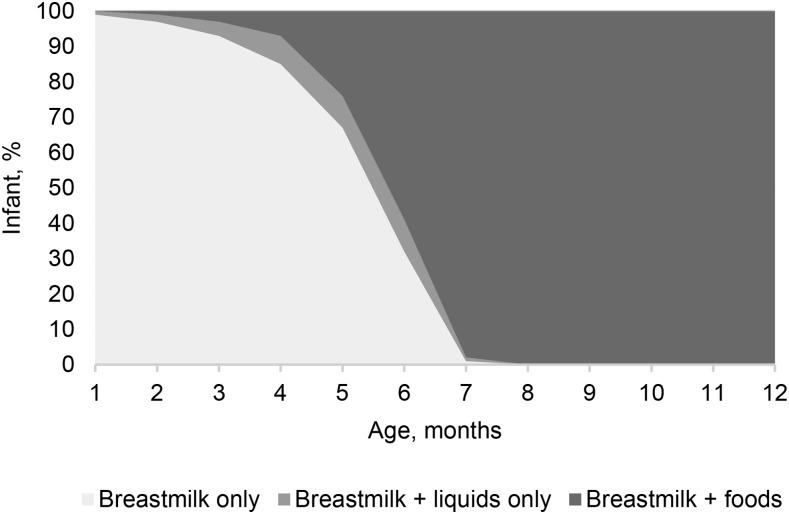
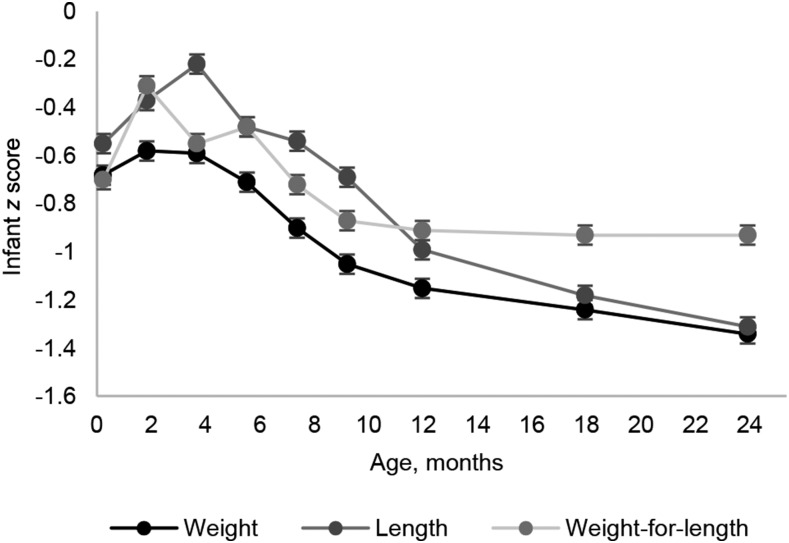
Thirty-two percent of infants were exclusively breastfed to age 6 mo. The mean age of discontinuation of EBF was 5.2 mo, and growth faltering started at ∼3.5 mo of age. Some evidence for a difference in WAZ and WHZ was found between infants who were exclusively breastfed to age 6 mo (EBF-6) and those who were not (nEBF-6), at 6 and 12 mo of age, with EBF-6 children having a higher mean z score. The differences in z scores between the 2 groups were small in magnitude (at 6 mo of age: 0.147 WAZ; 95% CI: -0.001, 0.293 WAZ; 0.189 WHZ; 95% CI: 0.038, 0.341 WHZ). No evidence for a difference between EBF-6 and nEBF-6 infants was observed for LAZ at any time point (6, 12, and 24 mo of age). Furthermore, a higher mean WLZ at 3 mo of age was associated with a subsequent higher mean age at discontinuation of EBF, which implied reverse causality in this setting (coefficient: 0.060; 95% CI: 0.008, 0.120).
This study suggests that EBF to age 6 mo has limited benefit to the growth of rural Gambian infants. This trial was registered at http://www.isrctn.com as ISRCTN49285450.
世界卫生组织建议在生命的前6个月进行纯母乳喂养。
本研究的目的是评估在大量营养不良风险高的冈比亚农村婴儿样本中,纯母乳喂养至6个月龄对生长发育的益处。
来自ENID(早期营养与免疫发育)试验中出生至2岁接受生长监测的婴儿(n = 756),如果仅给予母乳且未给予其他液体或食物,则归类为纯母乳喂养。将纯母乳喂养状况纳入经过混杂因素调整的多水平模型,通过使用超过11,000个年龄别体重(WAZ)、年龄别身长(LAZ)和身长别体重(WLZ)z评分观察值来测试与生长轨迹的关联。
32%的婴儿纯母乳喂养至6个月龄。纯母乳喂养停止的平均年龄为5.2个月,生长发育迟缓在约3.5个月龄时开始。在6个月和12个月龄时,发现纯母乳喂养至6个月龄(EBF - 6)的婴儿与未纯母乳喂养至6个月龄(nEBF - 6)的婴儿在WAZ和WHZ方面存在一些差异,EBF - 6儿童的平均z评分更高。两组之间z评分的差异幅度较小(6个月龄时:0.147 WAZ;95% CI: - 0.001,0.293 WAZ;0.189 WHZ;95% CI:0.038,0.341 WHZ)。在任何时间点(6、12和24个月龄),未观察到EBF - 6和nEBF - 6婴儿在LAZ方面存在差异的证据。此外,3个月龄时较高的平均WLZ与随后纯母乳喂养停止的较高平均年龄相关,这意味着在这种情况下存在反向因果关系(系数:0.060;95% CI:0.008,0.120)。
本研究表明纯母乳喂养至6个月龄对冈比亚农村婴儿的生长发育益处有限。该试验在http://www.isrctn.com注册,注册号为ISRCTN49285450。