Department of Animal Ecology and Tropical Biology, Biocenter, University of Würzburg, Am Hubland, Würzburg 97074, Germany.
Department of Plant Systematics, University of Bayreuth, Universitätsstraße 30, Bayreuth 95440, Germany.
Nat Commun. 2016 Dec 22;7:13736. doi: 10.1038/ncomms13736.
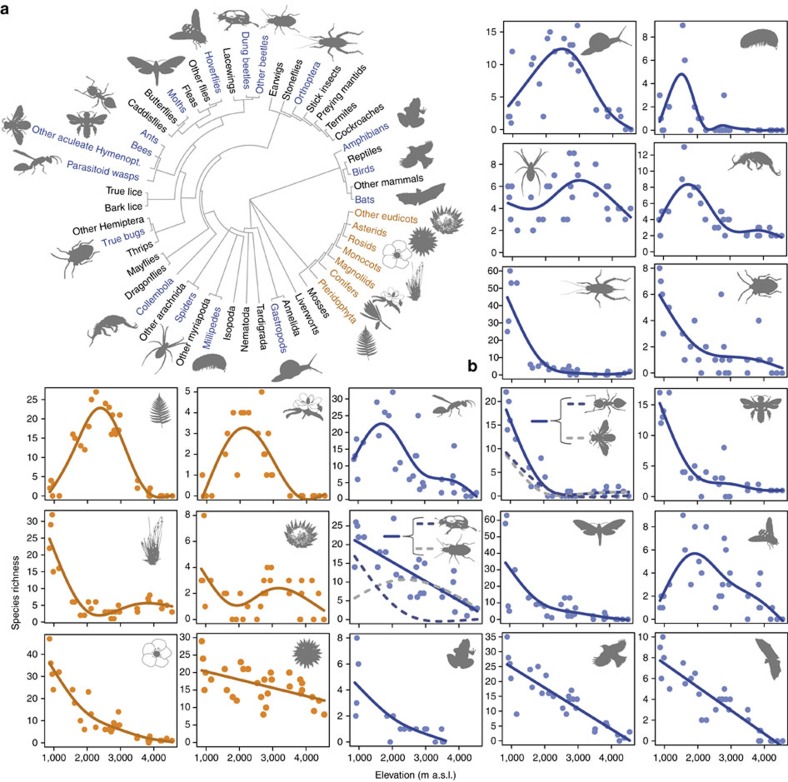
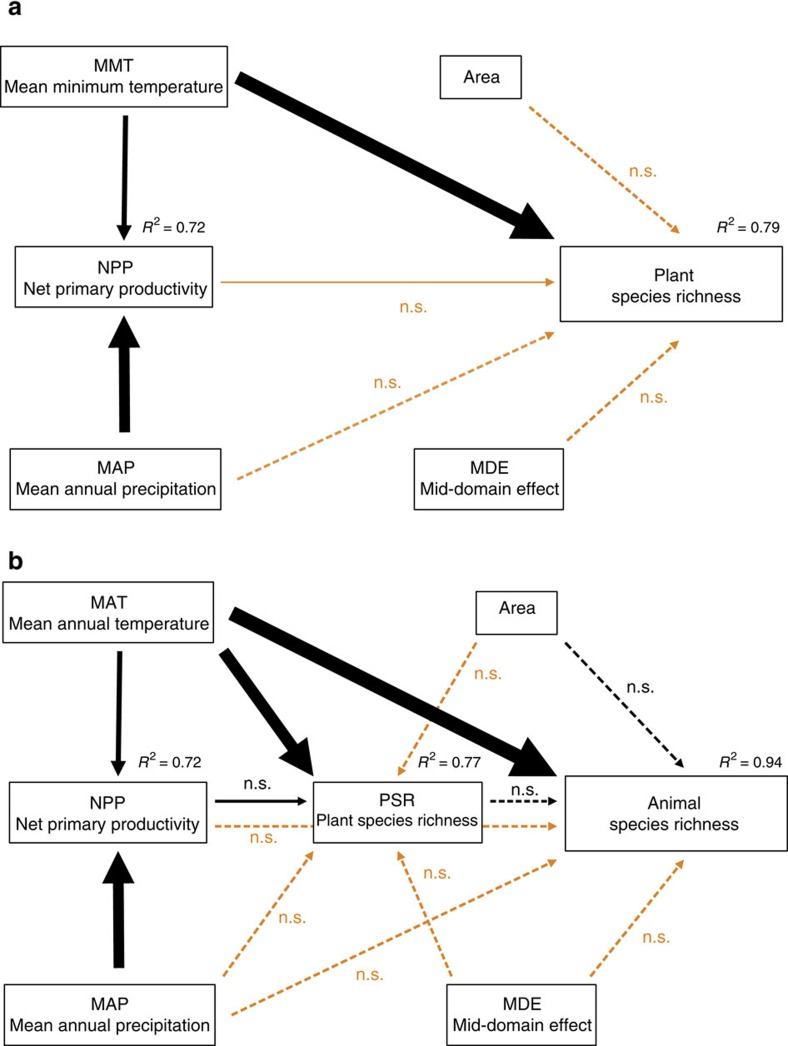
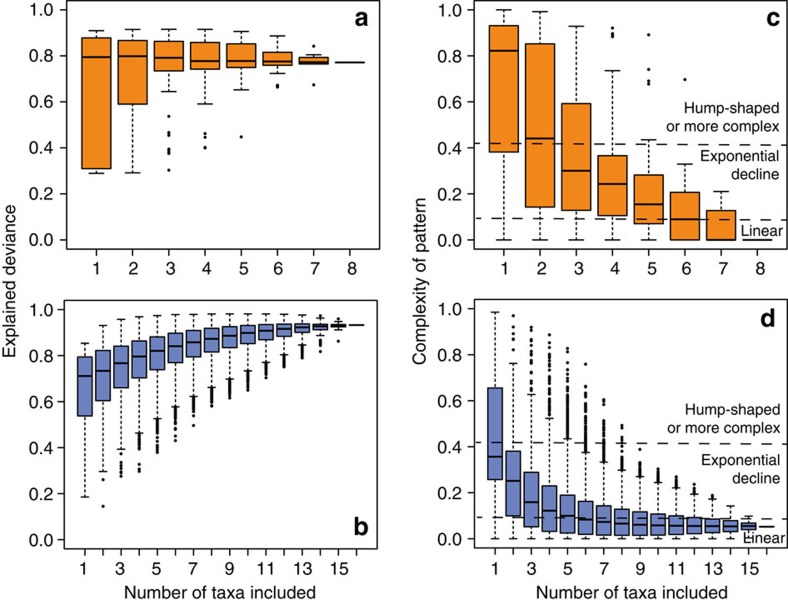
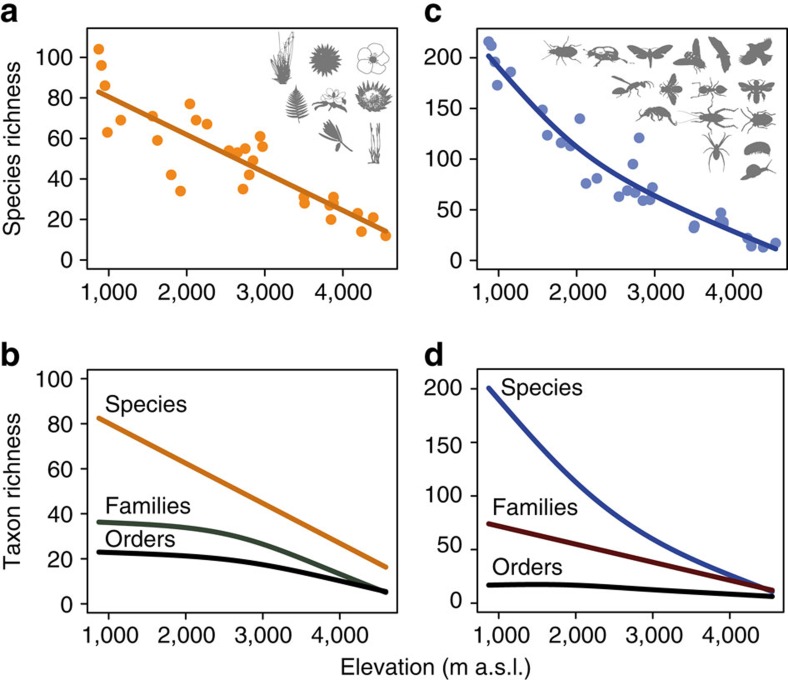
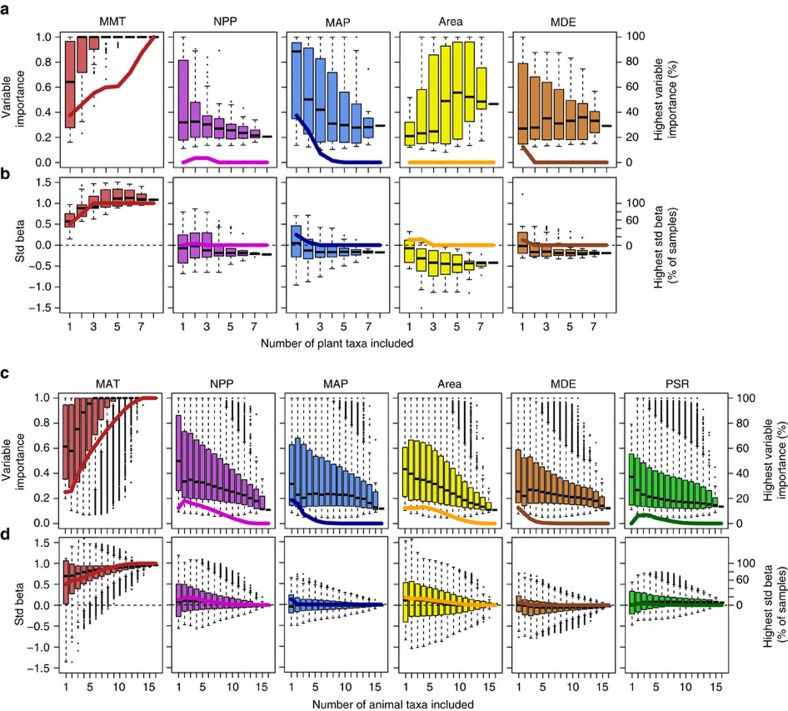
The factors determining gradients of biodiversity are a fundamental yet unresolved topic in ecology. While diversity gradients have been analysed for numerous single taxa, progress towards general explanatory models has been hampered by limitations in the phylogenetic coverage of past studies. By parallel sampling of 25 major plant and animal taxa along a 3.7 km elevational gradient on Mt. Kilimanjaro, we quantify cross-taxon consensus in diversity gradients and evaluate predictors of diversity from single taxa to a multi-taxa community level. While single taxa show complex distribution patterns and respond to different environmental factors, scaling up diversity to the community level leads to an unambiguous support for temperature as the main predictor of species richness in both plants and animals. Our findings illuminate the influence of taxonomic coverage for models of diversity gradients and point to the importance of temperature for diversification and species coexistence in plant and animal communities.
决定生物多样性梯度的因素是生态学中一个基本但尚未解决的课题。虽然已经分析了许多单一分类群的多样性梯度,但过去研究在系统发育覆盖范围方面的限制阻碍了向通用解释模型的进展。通过在乞力马扎罗山 3.7 公里海拔梯度上对 25 个主要动植物类群进行平行采样,我们定量了多样性梯度中跨分类群的一致性,并评估了从单一分类群到多分类群群落水平的多样性预测因子。虽然单一分类群表现出复杂的分布模式,并对不同的环境因素做出响应,但将多样性扩展到群落水平,明确支持温度是植物和动物物种丰富度的主要预测因子。我们的研究结果阐明了分类覆盖范围对多样性梯度模型的影响,并指出了温度对植物和动物群落中多样化和物种共存的重要性。